The news cycles hum with the familiar drone of AI advancements, each announcement more audacious than the last. OpenAI's GPT models and Google's Gemini are not just writing code or generating art anymore, they are drafting legal briefs, analyzing market trends, and even penning news reports. The global tech giants, largely headquartered far from our shores, are heralding a new era of efficiency, but for many of us in Aotearoa, the sound of these algorithms is starting to echo with the unsettling thrum of job displacement, particularly in what we once considered secure white-collar professions. Consulting firms are reportedly reducing junior staff, law offices are integrating AI for discovery, and newsrooms, well, we know that story all too well.
I have watched this unfold with a growing sense of unease, not just as a journalist, but as someone deeply rooted in the values of this land. The narrative coming out of Silicon Valley often frames this as an inevitable march of progress, a necessary evolution. But progress for whom, I ask? And at what cost to our communities, our unique ways of knowing, and our very sense of purpose? This is not merely an economic shift, it is a cultural one, and we in New Zealand must actively shape its trajectory rather than passively accept its dictates.
Let us consider the impact on sectors that have long been the backbone of our professional class. Consulting, for instance, has always relied on human insight, nuanced understanding of local contexts, and the ability to build relationships. When AI tools can synthesize vast amounts of data, identify patterns, and even generate strategic recommendations, the role of the entry-level analyst or even the mid-tier consultant becomes precarious. Reports from firms like McKinsey and Deloitte, while often couched in terms of 'augmentation,' clearly point to a future with fewer human hands performing rote analytical tasks. The promise is that humans will move to higher-value, more creative work. But what if those 'higher-value' roles are fewer and further between, or require skills that are not easily acquired by those displaced?
Similarly, in the legal profession, AI platforms are already transforming due diligence, contract review, and even predictive analytics for case outcomes. This is not some distant future, it is happening now. Law firms are investing heavily in these tools, seeing them as competitive advantages. "The legal industry has always been about information management," noted Brad Smith, Vice Chair and President of Microsoft, in a recent interview, "and AI is fundamentally changing how we manage and leverage that information." While this might streamline processes, it also means fewer opportunities for young lawyers to cut their teeth on foundational tasks, potentially altering the career pipeline in profound ways. The human element of empathy, ethical judgment, and client advocacy remains, but the landscape around it is shifting dramatically.
And then there is my own field, journalism. The irony is not lost on me as I write about AI's impact on newsrooms. Generative AI can draft articles, summarize reports, and even personalize content at scale. Major news organizations, including those that once prided themselves on their human-centric storytelling, are experimenting with or already deploying AI for routine reporting. This is a double-edged sword. While it can free journalists from mundane tasks, it also raises critical questions about journalistic integrity, the depth of inquiry, and the very soul of storytelling. Who decides what stories are told, and how, when the algorithms are increasingly in control?
Some will argue that this is simply the next wave of technological progress, no different from the industrial revolution or the rise of the internet. They will say that new jobs will emerge, that humans will adapt, and that overall productivity will increase, benefiting society as a whole. They point to the potential for AI to tackle complex problems, from climate change to medical diagnostics, and argue that freeing up human capital from repetitive tasks is a net positive. "We are seeing AI as a co-pilot, not a replacement," stated Sundar Pichai, CEO of Google, emphasizing the collaborative potential of tools like Gemini. This perspective suggests that the market will naturally rebalance, creating new opportunities as old ones fade.
However, this argument often overlooks the human cost of transition, the concentrated power in the hands of a few tech giants, and the inherent biases that can be amplified by unchecked algorithmic deployment. In Te Reo Māori, we have a word for this, manaakitanga, which speaks to the ethic of hospitality, generosity, and care for others. Where is the manaakitanga in a system that prioritizes efficiency and profit over the well-being and dignity of its workforce? The promise of new jobs often comes with the caveat of significant retraining and a widening skills gap, leaving many behind. The benefits of increased productivity are not always equitably distributed, often flowing upwards to shareholders and executives, rather than broadly across society. We have seen this pattern before, and it is a pattern we must consciously disrupt.
For Aotearoa, the stakes are particularly high. Our economy is smaller, our talent pool more concentrated, and our unique cultural heritage is a taonga, a treasure, that must be protected and nurtured, not subsumed by a globalized, homogenized AI narrative. If we allow these powerful AI tools to be developed and deployed without a strong ethical framework rooted in our values, we risk losing the very essence of what makes us unique. Our indigenous knowledge systems, our commitment to kaitiakitanga or guardianship of the environment, and our emphasis on community well-being must inform our approach to AI.
Instead of simply reacting to the waves of technological change, we must proactively shape them. This means investing in education and retraining programs that are culturally responsive and future-focused. It means fostering local AI innovation that addresses our specific needs, rather than merely importing solutions from overseas. It means demanding transparency and accountability from the tech giants whose products are reshaping our society. MIT Technology Review has extensively covered the need for ethical AI frameworks, and our nation has a unique opportunity to lead in this space.
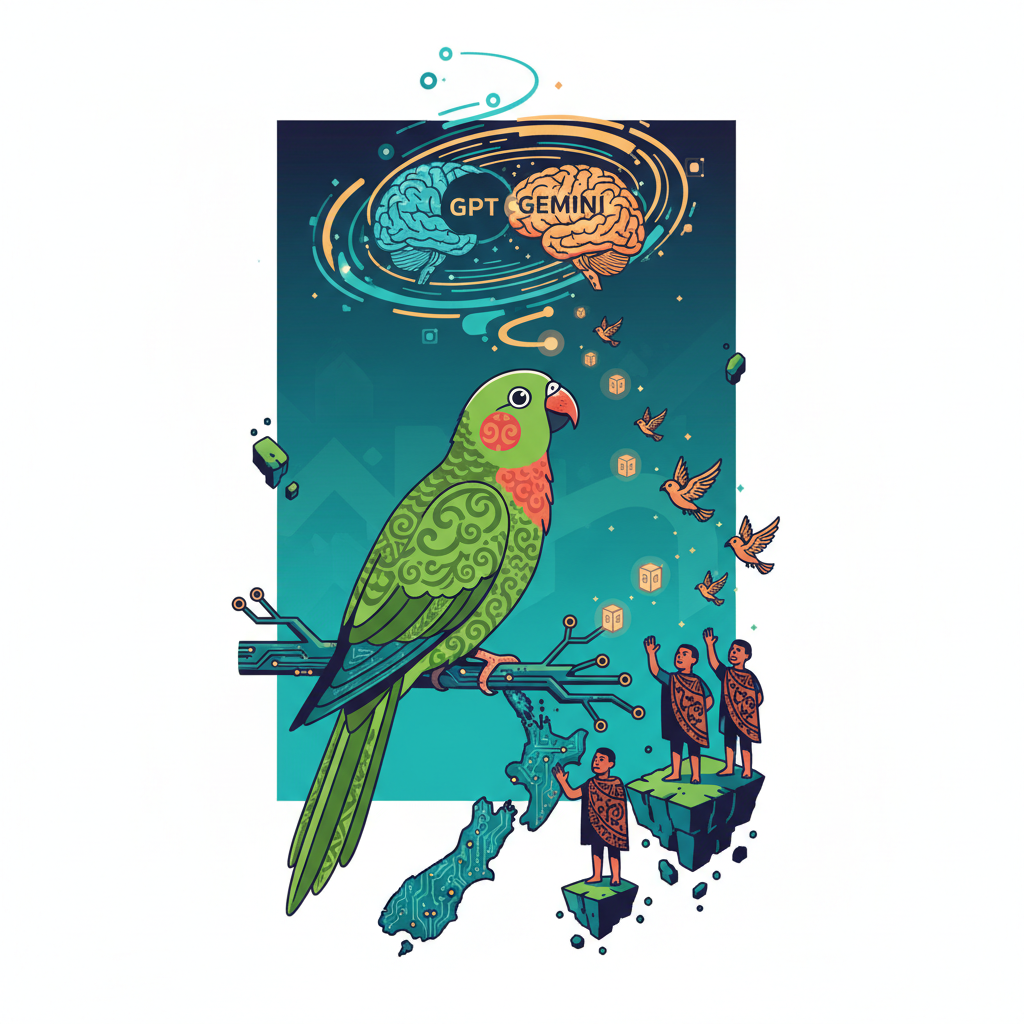
Furthermore, we need to explore new models of work and value creation. Perhaps the future of professional services in New Zealand lies not in competing on raw algorithmic efficiency, but in doubling down on uniquely human attributes: creativity, critical thinking, emotional intelligence, and the deep understanding of our local communities and their needs. This is where the kākāriki, our vibrant native parrot, comes into play. It is a symbol of our unique biodiversity, a creature that thrives in its specific environment. We must ensure our professional landscape also remains vibrant and distinct, not a monoculture dictated by global algorithms. Technology must serve the people, not the other way around.
Our government, our universities, and our businesses must collaborate to forge a path that prioritizes human flourishing alongside technological advancement. We need to ask ourselves: how can AI enhance our whanaungatanga, our sense of connection and belonging, rather than diminish it? How can it support our mauri, our life force and essence, instead of eroding it? This is not about rejecting AI, it is about consciously choosing how we integrate it into our lives and our economy, ensuring it aligns with our deepest values. We have the opportunity to show the world that a different path is possible, one where innovation and humanity walk hand in hand. The time for passive observation is over; the time for active rangatiratanga, for self-determination, in the age of AI is now. We must ensure our voice is heard, loud and clear, in this global conversation. For more insights on the broader ethical implications of AI, I often turn to resources like Wired's AI section. We must learn from global trends, but always filter them through our own unique lens.