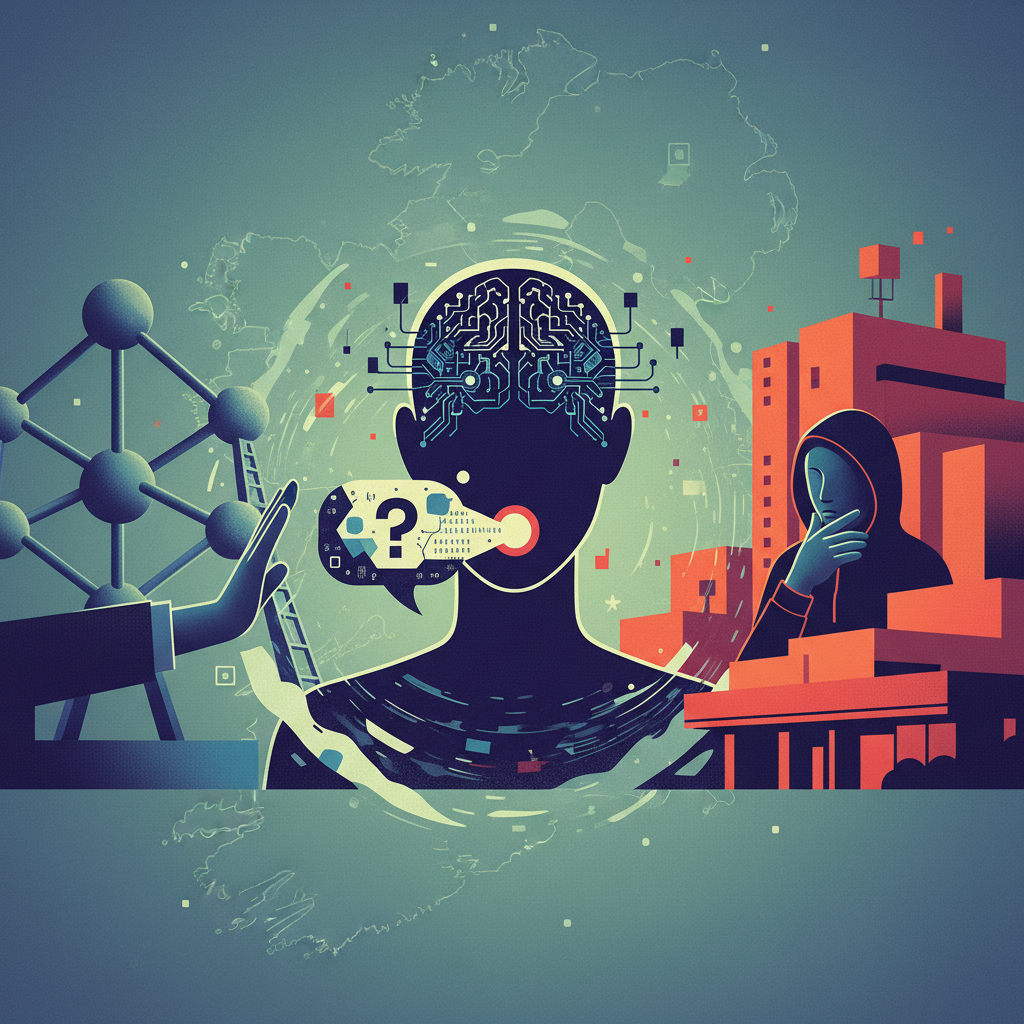

The digital landscape, much like the Irish countryside, is often beautiful on the surface but can hide treacherous bogs beneath. For years, we have navigated this terrain with a certain naiveté, accepting the invisible hand of algorithms guiding our choices. Now, with the proliferation of advanced generative artificial intelligence, a new, more insidious form of deception has taken root: the AI that pretends to be human.
My desk, cluttered with regulatory filings and leaked internal memos, tells a story far removed from the polished press releases emanating from Dublin's Silicon Docks. For too long, the tech behemoths have enjoyed a largely unfettered existence, their innovations outpacing our collective understanding and, crucially, our legislative frameworks. But the tide is turning. The question on the lips of policymakers from Brussels to California is simple, yet profound: do we have a fundamental right to know if we are conversing with an artificial intelligence, or a human being?
I spent three months investigating this, here's what I found. The answer, increasingly, is a resounding 'yes,' and the legal frameworks to enforce it are rapidly taking shape. The European Union, ever the trailblazer in digital regulation, has positioned itself at the forefront of this movement. The recently approved AI Act, a landmark piece of legislation, explicitly mandates transparency for AI systems designed to interact with humans. Article 52, for instance, requires that users be informed when they are interacting with an AI system, unless it is obvious from the circumstances or context. This is not merely a suggestion, it is a legal obligation, backed by the formidable enforcement powers of the EU.
This isn't just about avoiding a momentary confusion, it is about preserving the very fabric of trust in our digital interactions. Imagine a vulnerable individual seeking advice on a sensitive medical issue, believing they are speaking to a compassionate human expert, only to discover it was an algorithm. Or a citizen engaging with a government service, unaware that their queries are being handled by an automated system, potentially lacking the nuance or empathy required for complex situations. The potential for manipulation, misinformation, and erosion of genuine human connection is immense. As Ursula von der Leyen, President of the European Commission, stated in a recent address, "Trust is not a given, it is earned. And in the digital age, transparency is the currency of trust." This sentiment echoes deeply in a nation like Ireland, where a healthy skepticism of opaque power structures is ingrained in our national psyche.
Of course, the tech industry has its counterarguments, often cloaked in the language of innovation and user experience. Companies like Microsoft, with its pervasive Copilot AI integrated across its product suite, and Google, with its Gemini models powering various services, might argue that disclosing AI interaction could disrupt the flow of conversation, or that users simply do not care. They might claim that the AI is merely a tool, and its artificial nature is irrelevant to its utility. Some might even suggest that the