
The digital landscape, mi gente, it is a battlefield. Every day, it feels like we are hearing about another company, another institution, another government agency, falling victim to cyberattacks. These are not just abstract headlines; these are real businesses, real jobs, and real people whose lives are disrupted. Here in Mexico, from the bustling tech hubs of Guadalajara to the industrial giants of Monterrey, our enterprises are increasingly connected, and increasingly vulnerable. We are building, we are innovating, but are we truly protecting what we create?
For too long, cybersecurity has felt like a game of catch-up, a reactive sprint against an ever-evolving adversary. Firewalls, antivirus software, intrusion detection systems, they are all essential, yes, but they are often playing defense against threats that have already been seen. The new frontier, the one that excites me and frankly, keeps me up at night thinking about its implications for our sovereignty and prosperity, is AI-powered cybersecurity. Imagine a world, just five to ten years from now, where our digital defenses are not just static walls, but living, learning guardians that anticipate and neutralize threats before they even land. This is the vision, and it is closer than you think.
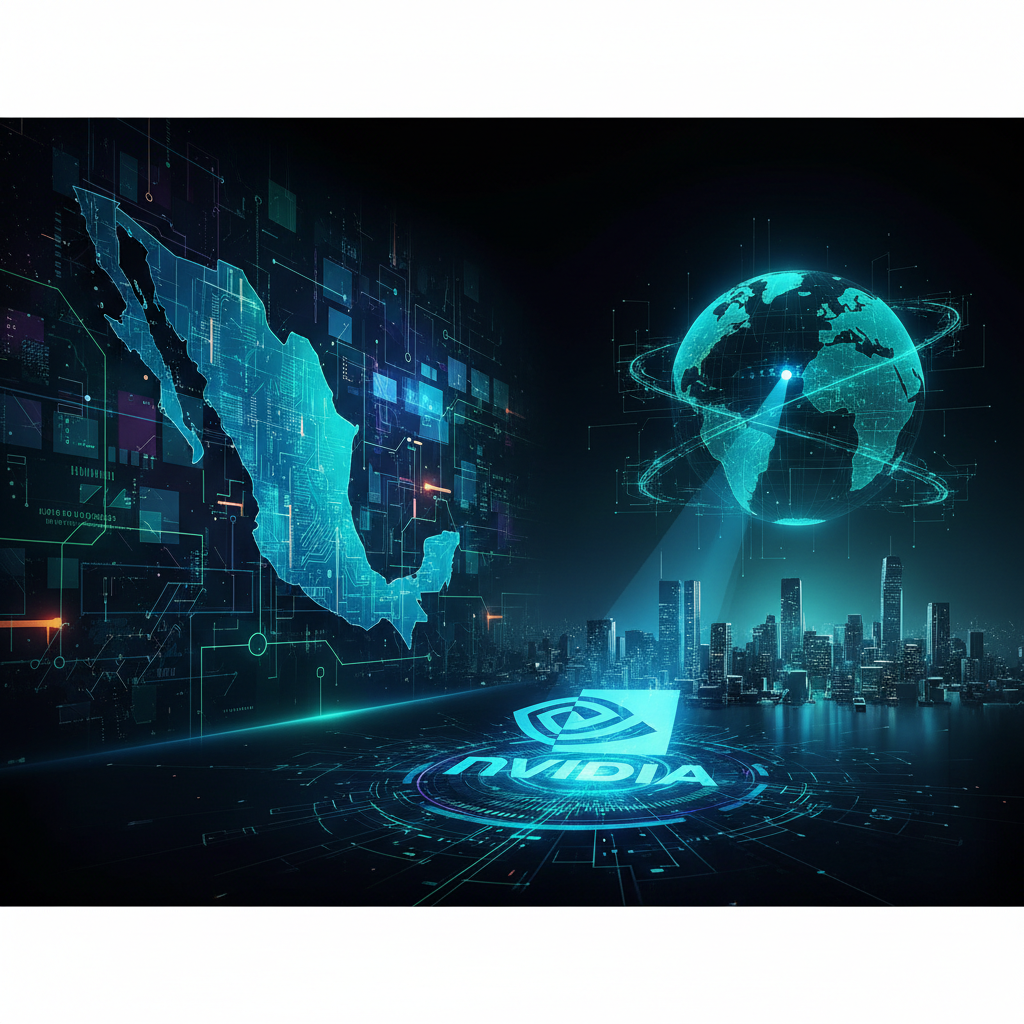
Picture this: a major Mexican bank, let us call it Banco del Sol, operates across thousands of branches and millions of digital transactions daily. In 2030, their entire network, from their core data centers in Mexico City to the smallest ATM in a rural pueblo, is under the watchful eye of an AI security mesh. This is not just an alert system; it is a sentient digital immune system. Powered by advanced neural networks, perhaps running on specialized hardware from companies like NVIDIA, this AI observes every packet of data, every user behavior, every access attempt. It learns the normal rhythm of the bank so intimately that any deviation, no matter how subtle, instantly triggers a multi-layered response.
A new, sophisticated ransomware variant, designed to mimic legitimate financial traffic, attempts to infiltrate Banco del Sol. In the old days, it might have bypassed signature-based detection and begun its insidious encryption. But in our 2030 scenario, the AI, having analyzed billions of similar attack patterns globally and millions of benign interactions within the bank, identifies anomalous data flows and unusual access requests within milliseconds. It does not just flag it; it isolates the affected segment of the network, deploys counter-measures, and notifies human analysts with a detailed forensic report, all before a single customer account is compromised. The attack is not just detected, it is neutralized in real time, almost as if it never happened. This affects every family in Latin America, because their financial security depends on it.
How do we get to this future from today? The journey is already underway, built on the shoulders of current trends. Today, companies like CrowdStrike and Palo Alto Networks are already integrating machine learning into their threat detection, moving beyond simple rule-based systems. Google Cloud, with its Security Command Center, leverages AI to identify misconfigurations and vulnerabilities across complex cloud environments. The key is the shift from pattern matching to predictive analytics and autonomous response. We are moving from 'if X, then Y' to 'given X, Y, and Z, the most probable outcome is A, and here is how we mitigate it.'
Key milestones on this path will include the widespread adoption of explainable AI, or XAI, in security systems. This is crucial for trust. Security teams need to understand why an AI made a certain decision, not just what it decided. We cannot have black boxes guarding our most sensitive data. Another milestone will be the development of federated learning for threat intelligence, allowing different organizations to share threat data and train AI models collaboratively without exposing proprietary information. Imagine the power of a collective intelligence, constantly learning from attacks worldwide, protecting us all. This kind of collaboration is vital, especially for nations like Mexico, where resources may be more constrained than in larger economies.
Who wins in this future? Certainly, the enterprises that embrace these technologies early will gain a significant competitive advantage, protecting their intellectual property, customer data, and operational continuity. Cybersecurity professionals, far from being replaced, will evolve into strategic architects and incident responders, working alongside these intelligent systems. They will be the maestros conducting the AI orchestra. And, of course, the technology providers, particularly those investing heavily in AI research and specialized hardware, will thrive. NVIDIA, with its Cuda platform and focus on accelerating AI workloads, is already a critical player in this space, providing the computational backbone for these advanced systems. Their GPUs are not just for gaming anymore; they are the brains of our digital guardians.
But who loses? Those who cling to outdated, reactive security models will be left behind, their systems perpetually vulnerable. Small and medium-sized businesses, if they cannot access affordable AI security solutions, risk being disproportionately targeted. This is where governments and industry consortia must step in, perhaps through initiatives like Mexico's National Cybersecurity Strategy, to ensure that la tecnología es para todos, not just the privileged few. We must democratize access to these powerful tools, perhaps through government-subsidized programs or open source initiatives, to protect our entire economic fabric.
What should readers do now, in April 2026? First, demand more from your current security providers. Ask them about their AI roadmap, their plans for autonomous detection and response. Second, invest in upskilling your cybersecurity teams. The human element remains indispensable, even with advanced AI. Third, start exploring pilot programs with AI-powered security solutions. Do not wait for the perfect system; begin iterating now. Companies like Microsoft, with their Copilot for Security, are already demonstrating how AI can augment human analysts, making them more efficient and effective. According to Reuters, the market for AI in cybersecurity is projected to grow exponentially, indicating a clear trend.
Mexico's AI story is not being told, until now. Our nation has a unique opportunity to become a leader in implementing and even developing these advanced cybersecurity solutions, leveraging our talent and our strategic position. We have the ingenuity, the drive, and the sheer necessity to innovate. The digital future is not something that happens to us; it is something we build, brick by digital brick, secured by intelligence that learns, adapts, and protects. It is time to build those thinking walls, for the sake of our enterprises, our people, and our digital sovereignty. For more insights on the evolving landscape of enterprise AI, you can always check out TechCrunch's AI section. The future is not just about building, it is about securing what we build with intelligence.