
The digital landscape, much like the ever-shifting dunes of the Belgian coast, is in constant flux. Today, the prevailing winds carry the whispers of 'multimodal AI,' a concept that has rapidly moved from theoretical musings to tangible, if still nascent, applications. These models, exemplified by Google's Gemini and OpenAI's latest iterations, are designed not merely to process text or images in isolation, but to understand and reason across multiple sensory inputs simultaneously. They see, they hear, they interpret, and they synthesize, promising a paradigm shift in how humans interact with artificial intelligence.
From my vantage point in Brussels, where policy often moves with the deliberate pace of a canal barge, the speed of this technological evolution is both fascinating and concerning. The claims are grand, often bordering on the hyperbolic. We are told these systems will revolutionize everything from medical diagnostics to personalized education, from industrial automation to creative arts. Yet, as a journalist, I am compelled to ask, does this actually work as advertised, and more importantly, are we, the policymakers and citizens of Europe, truly ready for what it entails?
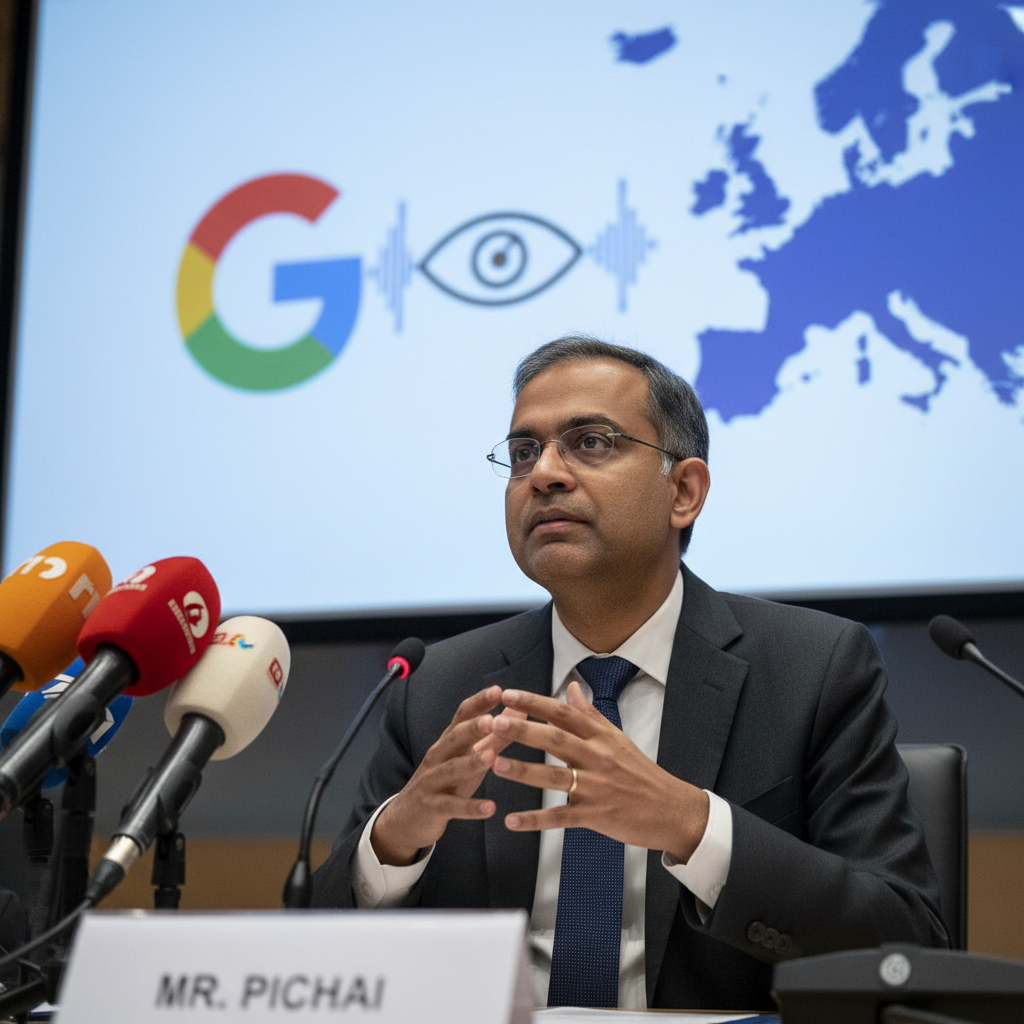
Consider the recent demonstrations. Google's Gemini, for instance, has showcased abilities to analyze complex visual information, understand spoken commands, and generate coherent responses, all within a single interaction. OpenAI's advancements, while perhaps less publicly dramatized, hint at similar capabilities. The technical prowess is undeniable, a testament to billions invested in compute power and data. NVIDIA's H100 GPUs, the workhorses behind much of this development, are selling at unprecedented rates, indicating a relentless pursuit of ever-larger, more capable models. The market capitalization of these tech giants reflects this optimism, with valuations soaring on the promise of integrated, human-like AI.
However, the European Union, with its characteristic prudence, has already laid foundational stones for regulation. The AI Act, set to be fully implemented, categorizes AI systems by risk, imposing stringent requirements on high-risk applications. But multimodal AI presents a unique challenge. Its very nature blurs the lines between categories. Is a system that interprets a patient's vocal tone, facial expression, and medical scans a medical device, a communication tool, or something else entirely? The classification, and thus the regulatory burden, becomes profoundly complex.
"The current regulatory frameworks, while robust for their time, were not designed with truly multimodal, context-aware AI in mind," stated Dr. Elara Vandenberg, a leading AI ethicist at the University of Leuven. "We are moving beyond systems that merely transcribe speech or classify images. These new models are attempting to infer intent, emotion, and causality across disparate data streams. The potential for misinterpretation, bias amplification, and even manipulative applications grows exponentially." Her concerns are not isolated; they echo through the corridors of European institutions.
Indeed, the data requirements for training such models are gargantuan. Petabytes of video, audio, and text data are ingested, much of it scraped from the public internet. The provenance of this data, the consent of the individuals captured within it, and the inherent biases it contains are critical questions. Belgian pragmatism meets AI hype at this juncture. We have seen how biases in simpler models can lead to discriminatory outcomes. What happens when an AI system can 'see' a person's ethnicity, 'hear' their accent, and then make a 'reasoned' decision based on deeply embedded, unacknowledged prejudices within its training data?
"The sheer scale of data acquisition and processing for these multimodal models raises significant questions regarding data sovereignty and privacy, particularly under GDPR," commented Monsieur Jean-Luc Dubois, a senior policy advisor at the European Commission's Directorate-General for Communications Networks, Content and Technology. "Brussels has questions and so should you, especially when considering the implications for individual rights and democratic processes. The ability of these systems to generate highly convincing, contextually relevant deepfakes across multiple modalities is a clear and present danger to information integrity." His point is well taken. The ease with which multimodal AI could fabricate entire scenarios, complete with realistic visuals and audio, poses an unprecedented threat to public trust and electoral processes.
Furthermore, the economic implications for Europe are profound. While American and Chinese tech giants lead the multimodal AI race, Europe risks becoming a consumer rather than a producer of these foundational technologies. Our focus on ethical AI and robust regulation, while commendable, must be balanced with investment in our own research and development capabilities. Companies like Mistral AI in France are making strides, but the capital and infrastructure required to compete at the multimodal frontier are immense. The EU's approach deserves more credit than it gets for attempting to balance innovation with responsibility, but this balance is precarious.
Consider the potential for job displacement. If an AI can not only diagnose medical images but also interact with patients, understand their emotional state, and synthesize information from various sources, what becomes of roles that require such integrated cognitive abilities? The Belgian economy, with its strong service sector and highly skilled workforce, is particularly vulnerable to shifts driven by such advanced automation. The transition must be managed proactively, with significant investment in retraining and social safety nets.
My skepticism is not born of a fear of progress, but rather a healthy respect for its consequences. The promise of multimodal AI is immense, offering tantalizing glimpses of a future where technology truly understands and assists humanity in profound ways. Yet, the path to that future is fraught with ethical dilemmas, regulatory gaps, and societal risks that demand rigorous scrutiny. We must move beyond the marketing presentations and delve into the technical specifications, the training data, and the real-world impact. The European AI Act is a crucial first step, but it is a living document, one that must evolve as AI itself evolves.
As we stand at this precipice, observing the rapid ascent of multimodal AI, it is incumbent upon us, the citizens and policymakers of Europe, to demand transparency, accountability, and a clear understanding of these powerful new tools. The future of our digital society, and indeed our very perception of reality, may well depend on it. For more on the broader implications of AI, one might consult the analysis provided by MIT Technology Review. The conversation is far from over; in fact, it has only just begun.