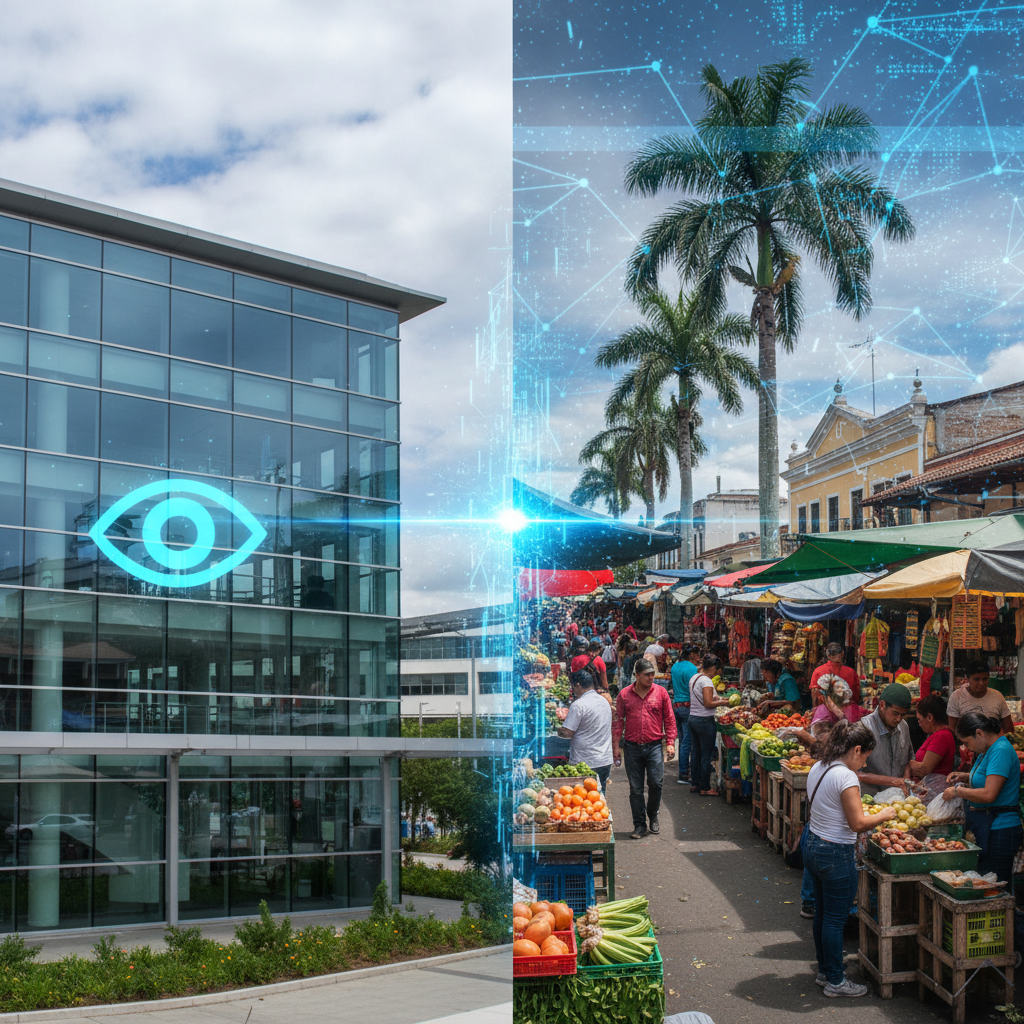
The morning mist still clings to the Central Valley as I navigate the familiar chaos of San José. For years, our capital has been a vibrant, if sometimes sprawling, heart of Costa Rica. Now, there is talk of 'smart city' initiatives, a phrase that often conjures images of sleek, futuristic metropolises. But when you peel back the layers of marketing, what you often find is a network of sensors, cameras, and artificial intelligence, all watching. The question for us, a nation that prides itself on 'pura vida' and a deep respect for nature and human dignity, is whether this digital gaze enhances our lives or erodes our fundamental freedoms.
Globally, the push for smart cities is undeniable. Companies like Google and NVIDIA are pouring billions into developing AI systems that can manage traffic, predict crime, optimize energy, and yes, monitor public spaces. We see headlines daily about new deployments in places like Singapore or London, where AI-powered cameras analyze crowd movements, identify suspicious behavior, and even track individuals. The promise is compelling: reduced crime rates, more efficient public services, a safer environment for everyone. But what does 'safer' truly mean when every step you take in public is logged and analyzed by an algorithm?
In Costa Rica, the conversation is just beginning to heat up. Our government has expressed interest in leveraging technology to improve urban living, particularly in areas like traffic management and public safety. The Ministry of Public Security, for instance, has been exploring advanced Cctv systems for some time. "We are looking at solutions that can augment our existing infrastructure, making our streets safer for citizens and tourists alike," stated Minister Mario Chacón in a recent press briefing. "The goal is not to spy on people, but to deter crime and respond more effectively when incidents occur. AI offers capabilities that traditional surveillance simply cannot match." This sentiment is echoed by many who face the daily realities of urban challenges.
However, the deployment of AI surveillance is not a simple matter of installing cameras and pressing a button. It involves complex ethical considerations that touch upon the very core of our democratic values. Data privacy, algorithmic bias, and the potential for misuse are not abstract concepts; they are real, tangible risks. Imagine an AI system, trained on data from other countries, misidentifying a local indigenous person as a suspect, or flagging innocent gatherings as potential threats. The potential for such errors, and the impact they could have on individuals, is profound.
Dr. Elena Vargas, a leading expert in digital rights from the University of Costa Rica, voiced these concerns during a recent symposium. "We must be incredibly cautious," she warned. "The data collected by these systems, especially facial recognition and behavioral analytics, can be aggregated to create detailed profiles of individuals. Who owns this data? How is it secured? And crucially, who has access to it? These are not questions to be answered after the technology is deployed, but before. We cannot allow a 'move fast and break things' mentality to compromise our citizens' privacy." Her words resonate deeply in a country that values its democratic traditions and individual liberties.
One of the biggest players in this space, Google, through its various smart city initiatives and cloud AI services, stands to gain significantly from these deployments. Their expertise in data analysis and machine learning is unparalleled. While they often emphasize anonymization and privacy by design, the sheer scale of data collection involved raises eyebrows. A recent report by Wired highlighted how cities are increasingly relying on private tech companies to build and manage their smart infrastructure, often leading to opaque contracts and limited public oversight. This trend is concerning for smaller nations like ours, which may lack the regulatory frameworks and technical expertise to fully scrutinize these powerful partnerships.
Costa Rica proves you don't need Silicon Valley to innovate, but we do need to be smart about the innovations we adopt. Our approach to technology has always been pragmatic, often focusing on sustainable solutions that benefit our people and our environment. The 'pura vida' approach to AI, if you will, means prioritizing human well-being over pure technological advancement. This means a careful, deliberate consideration of how AI surveillance aligns with our national ethos.
Consider the economic implications as well. The cost of implementing and maintaining these sophisticated AI systems is substantial. Are we prepared to divert resources from education, healthcare, or environmental protection to fund extensive surveillance networks? And what happens when these systems become outdated, or when the companies providing them decide to pull out or raise prices? Dependence on external technology providers can create vulnerabilities, both economic and strategic.
"The allure of 'smart' solutions is strong, but we must ensure they are truly smart for Costa Rica, not just for the companies selling them," commented Ricardo Solís, a local entrepreneur developing sustainable tech solutions. "We have a history of practical innovation in paradise, finding solutions that fit our unique context. Blindly importing surveillance models from vastly different societies would be a mistake. We need to develop our own ethical guidelines and perhaps even our own open-source solutions where possible, to maintain control over our digital future." This perspective emphasizes local agency and tailored solutions, rather than a one-size-fits-all approach.
The debate is not about whether technology can make our cities better; it is about how we define 'better' and at what cost. Can we leverage AI to improve traffic flow, manage waste, and enhance emergency response without creating a pervasive surveillance state? Perhaps. It requires robust public dialogue, clear legal frameworks, and a commitment to transparency from both government and technology providers. The National Assembly is currently considering a bill that would establish stricter guidelines for government data collection and AI use, a positive step towards addressing some of these concerns.
As we look to the future, the integration of AI into our urban fabric is inevitable. But how it integrates, and under what conditions, remains firmly within our control. We have the opportunity to set a global example, demonstrating that a small nation can embrace technological progress while fiercely protecting the privacy and dignity of its citizens. The challenge is immense, but so is our resolve. The world is watching how nations navigate this delicate balance, and Costa Rica has a chance to show that a truly smart city is one that prioritizes its people, not just its data points. You can find more discussions on global AI ethics and policy on MIT Technology Review.

This isn't just about cameras on a street corner; it is about the kind of society we want to build. It is about ensuring that our pursuit of safety does not inadvertently lead us down a path where privacy becomes a luxury, not a right. The decisions we make now will shape the digital landscape for generations to come, and we must make them with wisdom, foresight, and a deep understanding of our unique Costa Rican values. The future of our cities, and the freedom of our citizens, depends on it.