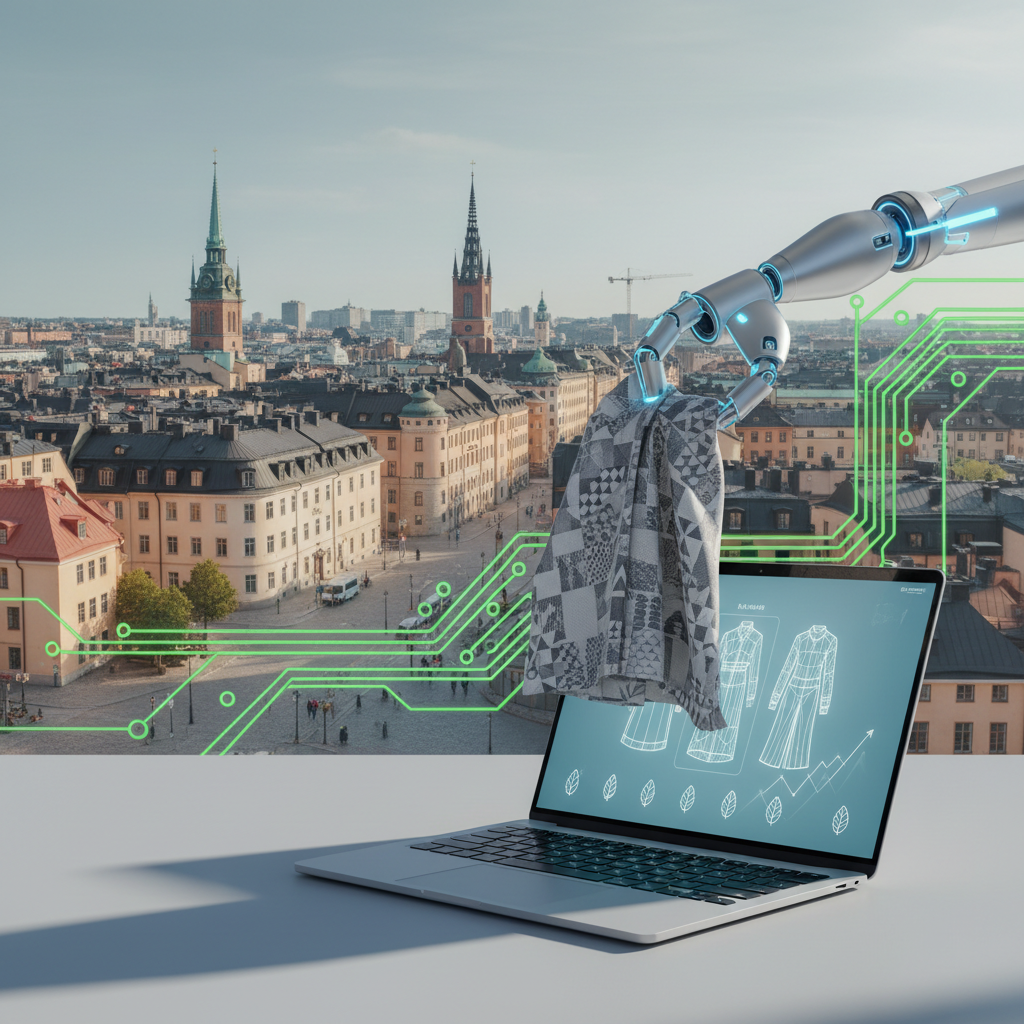

The ornate, yet crumbling, facades of Bucharest's historic Lipscani district tell a story of centuries: empires rising and falling, fortunes made and lost, and land changing hands through generations. Today, a new narrative is being etched onto these ancient stones, not by chisels, but by algorithms. We are told that artificial intelligence, with its promises of hyper-accurate property valuations, seamless virtual tours, and predictive market analytics, is poised to revolutionize the global real estate sector. But as a journalist who has spent years scrutinizing the intersection of technology, finance, and governance in Eastern Europe, I must ask: is this a genuine digital transformation, or merely a sophisticated new mechanism for entrenched interests to exert control? The Romanian tech boom hides a darker story, one that often begins with dazzling innovation and ends with opaque power structures.
Historically, property valuation has been an art as much as a science, relying on local expertise, comparable sales, and an intuitive understanding of market sentiment. Real estate agents, often deeply embedded within their communities, possessed an invaluable, almost visceral, knowledge of their territories. Virtual tours, once a novelty, were clunky affairs, a poor substitute for the tactile experience of walking through a potential home. Market prediction was largely the domain of economists and analysts, sifting through macroeconomic indicators and demographic shifts. This traditional landscape, however imperfect, fostered a degree of human oversight and local accountability. The arrival of AI, spearheaded by giants like Google DeepMind and specialized startups, threatens to dismantle this established order, replacing human judgment with algorithmic certainty.
Today, the landscape is dramatically different. Companies such as Zillow, a pioneer in algorithmic valuations with its 'Zestimate,' have long demonstrated the potential, and pitfalls, of AI in this sector. Now, more advanced models, leveraging machine learning and vast datasets, claim to offer unprecedented precision. Consider the advancements from firms like Black Ore, which recently secured significant funding to apply generative AI to real estate underwriting and valuation, promising to reduce appraisal times from weeks to mere minutes. These platforms ingest colossal amounts of data: satellite imagery, public records, transaction histories, demographic trends, social media sentiment, and even local news. They claim to identify patterns and predict future values with an accuracy that human appraisers simply cannot match. Virtual tours have evolved from static 360-degree photos to fully immersive, interactive experiences powered by computer vision and augmented reality, allowing prospective buyers to 'walk through' properties from anywhere in the world. Market prediction models, often utilizing neural networks, analyze thousands of variables to forecast price movements, rental yields, and investment opportunities with purported statistical rigor.
In Romania, this trend is palpable. Bucharest, Cluj-Napoca, and Timișoara, cities experiencing rapid economic growth and foreign investment, are becoming fertile ground for these AI applications. Local real estate firms, eager to modernize and attract international clients, are adopting these tools. I spoke with Dr. Elena Popescu, a senior economist at the National Bank of Romania, who expressed cautious optimism. "The efficiency gains are undeniable," she stated. "Automated valuation models can process information at a scale and speed impossible for humans. This could democratize access to market insights and reduce transaction costs, potentially making the market more transparent for the average citizen. However, the black box nature of some of these algorithms raises questions about fairness and accountability, particularly when they influence lending decisions or urban development plans." Her concerns are well-founded; transparency is often the first casualty when powerful algorithms meet complex financial markets.
My investigation uncovered several instances where the promise of AI-driven efficiency clashes with the realities of local markets. For example, a new platform, 'PropTech AI,' backed by a consortium of Western European investment funds, recently launched in Bucharest, promising to deliver instant valuations for residential properties. While their marketing materials boast accuracy rates exceeding 95%, local real estate agents I interviewed expressed skepticism. "These algorithms struggle with the nuances of our market," explained Mr. Andrei Dumitrescu, a veteran agent with over 30 years of experience in Bucharest's District 1. "They don't understand the subtle differences between a property on a quiet side street versus one facing a noisy boulevard, or the value of a well-maintained interwar apartment versus a poorly renovated communist-era block. They see square meters and location codes, but not the soul of a neighborhood, or the quality of a local school district that isn't reflected in public data. The human element, the 'feeling' for a property, is still crucial here." This sentiment resonates deeply in a country where personal connections and local knowledge often outweigh abstract data points.
Furthermore, the issue of data availability and quality is paramount. While Western markets boast extensive, standardized property databases, Romania's land registry system, though improving, still presents challenges. Inaccurate or incomplete data can lead to skewed algorithmic outputs, potentially disadvantaging sellers or inflating prices for buyers. "The integrity of the input data is the Achilles' heel of any AI system," noted Professor Mihai Georgescu, head of the AI Ethics Lab at the Polytechnic University of Bucharest. "If the data reflects historical biases, or if it is incomplete, the AI will simply amplify those flaws. We risk creating a system where valuations are not objective, but merely a reflection of past inequalities, codified by an algorithm. This is particularly concerning when considering vulnerable communities or properties with complex legal histories, which are common in Romania." The potential for algorithmic bias to exacerbate existing social and economic disparities is a specter that hangs over this technological advancement.
Another critical aspect is the concentration of power. As these sophisticated AI tools become indispensable, who controls them? Large tech companies, with their immense computational resources and access to vast datasets, are poised to dominate this space. Consider the role of NVIDIA, whose powerful GPUs are the backbone of most advanced AI models. Their hardware enables the rapid processing of complex real estate data, effectively becoming the picks and shovels of this new gold rush. This technological dependency raises concerns about market monopolies and the potential for these few dominant players to dictate terms, influence prices, or even restrict access to vital market intelligence. The EU funding trail, which often supports digital transformation initiatives in member states, must be scrutinized to ensure it does not inadvertently contribute to the creation of new, unchecked tech oligarchies.
My investigation also revealed the subtle ways these technologies could be used to manipulate perception. Virtual tours, while convenient, can be meticulously curated to highlight strengths and obscure weaknesses. Advanced rendering and lighting techniques can make a cramped apartment appear spacious, or a dark room seem bright. While not inherently malicious, this digital beautification can create an unrealistic expectation, leading to buyer disappointment or even disputes. "The line between enhancement and misrepresentation can become very blurry in the virtual realm," stated Ms. Ioana Vasile, a consumer protection advocate from Bucharest. "We need clear regulations and ethical guidelines to ensure that these virtual experiences are truthful and not designed to mislead." Transparency, once again, emerges as the key challenge.
So, is AI in real estate a fad or the new normal? The answer, like many things in this complex world, is nuanced. The underlying technology is undeniably powerful and offers genuine benefits in terms of efficiency and data processing. It is not a fad; it is here to stay. However, its implementation, particularly in markets like Romania, demands rigorous oversight and a healthy dose of skepticism. Without robust regulatory frameworks, independent auditing of algorithms, and a commitment to data transparency, this technological leap risks becoming a tool for consolidation and control, rather than a force for equitable progress. We must ensure that the algorithms serve the people, not the other way around. The ghosts of Bucharest's past remind us that unchecked power, no matter how technologically advanced, rarely serves the common good. We must be vigilant in ensuring that the digital future of real estate does not simply replicate the inequalities of its analogue past. For further insights into the global implications of AI in various sectors, consider exploring resources like MIT Technology Review and Reuters Technology News. The future of our cities, and the homes within them, depends on our ability to navigate this new digital frontier with wisdom and integrity. The whispers of the algorithms are growing louder, and we must learn to discern their true intent. The broader impact of AI on regional economies, particularly in Central Europe, is a topic I have explored previously, for instance, in From Bratislava's Garages to Global AI: How Meta's Llama Unlocks Central Europe's Quiet Revolution Against Silicon Valley's Giants [blocked].