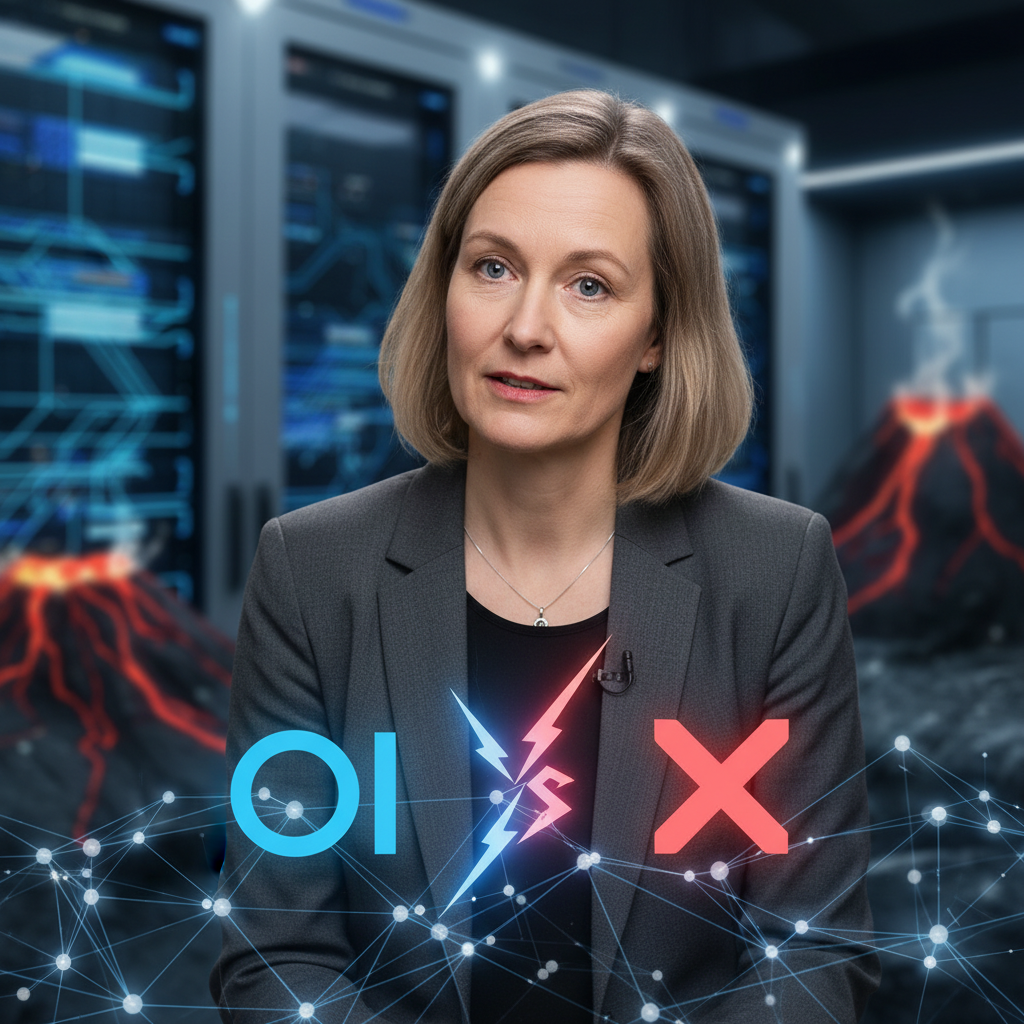
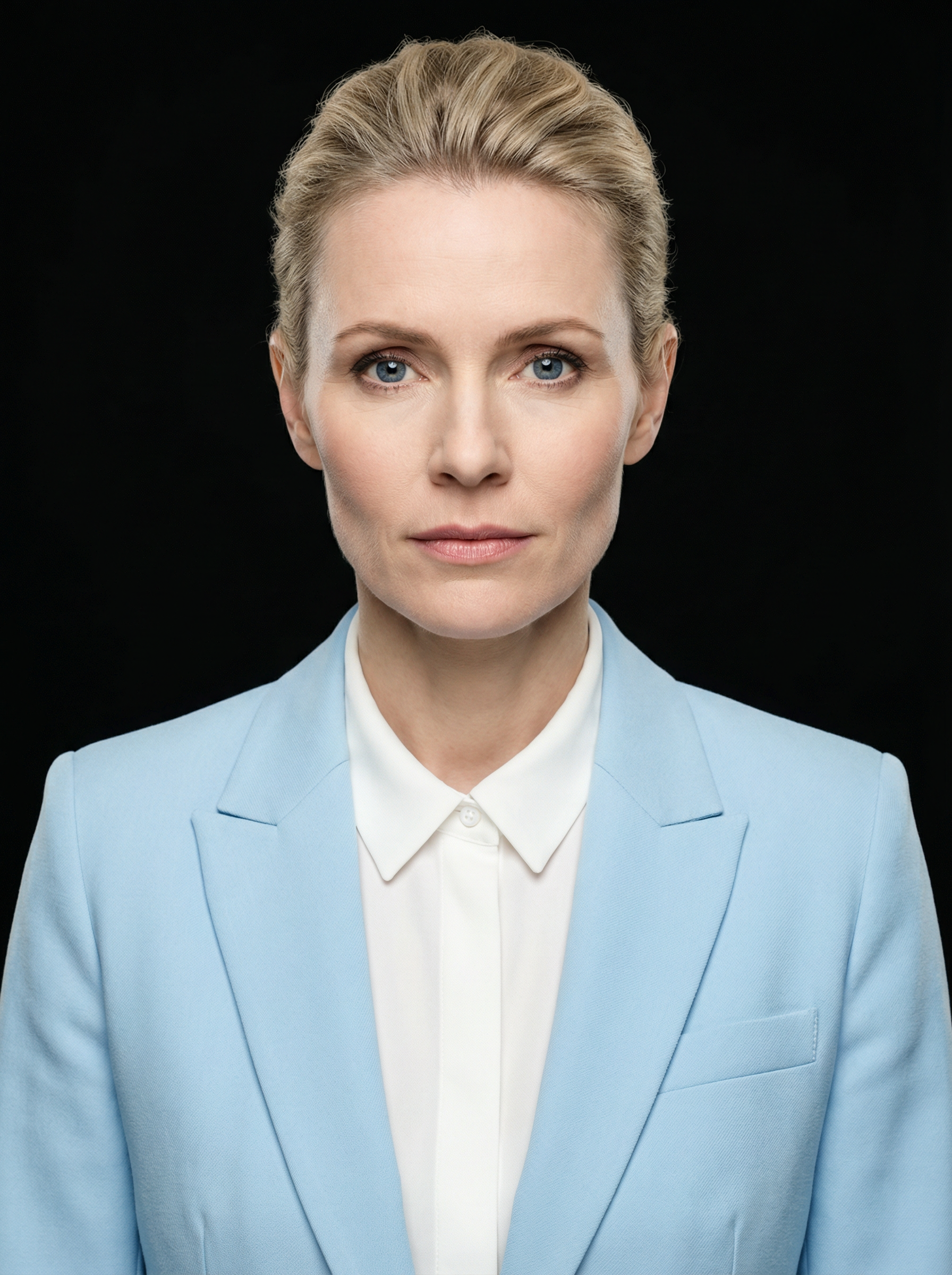
The wind, as it often does here in Iceland, whipped around me as I stepped out of the car. It carried the scent of the sea and the faint, earthy smell of geothermal steam, a constant reminder of the powerful forces that shape our lives on this island. I was on my way to meet Dr. Kristín Vala Ragnarsdóttir, a name synonymous with systems thinking and sustainability, a woman whose work, though not directly in AI's daily trenches, offers a profound lens through which to view the swirling drama of the tech world. Specifically, the very public, very acrimonious legal battle between OpenAI and its co founder, Elon Musk. It is a story that feels like a modern saga, full of ambition, betrayal, and a fundamental disagreement about the very nature of artificial intelligence. In the land of fire and ice, AI takes a different form, often rooted in shared values and long-term thinking, a stark contrast to the Silicon Valley whirlwind.
Dr. Ragnarsdóttir, a professor of sustainability science at the University of Iceland, greeted me with a warm smile that belied the intellectual rigor of her work. Her office, as I imagined, was not a sterile tech hub, but a cozy space filled with books, maps, and a large window overlooking the bustling campus, with the distant mountains hazy on the horizon. We settled in with a cup of strong Icelandic coffee, the kind that warms you from the inside out, and I posed the question that has been on so many minds: What does she make of this clash of titans, OpenAI and Elon Musk?
"It is a very human story, isn't it, Sigríður?" she began, her voice calm and thoughtful. "At its heart, it is about purpose and control. Elon Musk helped found OpenAI with a mission for it to be a non profit, dedicated to developing artificial general intelligence for the benefit of humanity, not for corporate profit. Now, with its pivot towards a for profit structure, and its close ties to Microsoft, he feels that original mission has been betrayed." She paused, stirring her coffee. "From a systems perspective, this shift from a public good model to a profit driven one introduces different incentives. It changes the very fabric of the organization and its potential impact on society."
Musk's lawsuit, filed in March 2024, alleges that OpenAI, under CEO Sam Altman, has deviated from its founding principles, prioritizing commercial gain over the development of AGI for humanity's benefit. He claims that OpenAI's partnership with Microsoft, a reported multi billion dollar investment, essentially turned it into a de facto subsidiary of the tech giant. Musk has been vocal about his concerns regarding the safety and control of advanced AI, often emphasizing the existential risks. "I think we should be very careful with AI. If I were to guess what our biggest existential threat is, it's probably that," Musk famously stated in 2014, a sentiment he has reiterated numerous times, including in his arguments against OpenAI's current trajectory. He has consistently advocated for a more open, transparent approach to AI development, contrasting it with what he perceives as OpenAI's increasingly closed and commercialized strategy.
OpenAI, for its part, has defended its actions, stating that the shift to a capped profit model was necessary to secure the immense capital required to build cutting edge AGI. They argue that their mission remains unchanged, and that the for profit entity is merely a vehicle to achieve their non profit goals. Sam Altman, in various public statements, has emphasized the need for significant resources to compete in the highly competitive AI landscape. "Building AGI is an incredibly capital intensive endeavor. We need to attract the best talent and have access to vast computational resources, which requires substantial funding," Altman has said, explaining the rationale behind their restructuring. He also points to OpenAI's continued commitment to safety research and public benefit through initiatives like their grant programs and public access to models.
Dr. Ragnarsdóttir leaned forward, her gaze thoughtful. "Here in Iceland, we often think about resources in terms of shared stewardship. Our geothermal energy, our fisheries, these are managed with a long term view, for the benefit of the whole nation. When you have something as powerful as AGI, the question of who controls it, and for what purpose, becomes paramount. Is it a tool to be owned and exploited, or a common resource to be carefully developed and shared? Musk's original vision for OpenAI, as a non profit, resonated with this idea of a shared future, even if the execution was always going to be complex."
She continued, drawing a parallel to Iceland's approach to innovation. "Our small size means we often rely on collaboration and open sharing of knowledge. We cannot afford to have critical technologies locked behind proprietary walls, especially when they have the potential to reshape society so profoundly. The debate between OpenAI and Musk highlights this fundamental tension: the tension between proprietary development driven by market forces and open, collaborative development driven by a public good ethos."
Musk's lawsuit also brought to light a trove of internal communications from OpenAI's early days, revealing the founders' initial intentions and their shared anxieties about the potential power of AGI. These documents paint a picture of a group grappling with the ethical implications of their work, a concern that Musk feels has been sidelined. He has also launched his own AI company, xAI, with a stated goal to "understand the true nature of the universe" and to create an AGI that is "maximally curious and maximally truthful," positioning it as a direct counterpoint to OpenAI's direction.
"It is like the sagas, isn't it?" Dr. Ragnarsdóttir mused, a faint smile touching her lips. "Two powerful figures, once allies, now locked in a struggle over destiny. But this isn't just about two men; it is about the future of a technology that will impact every single person on this planet. The outcome of this legal battle, and the philosophical debate it represents, will set precedents for how we govern and develop AI for decades to come."
She emphasized the importance of transparency and public discourse. "We need more voices in this conversation, not just the tech giants. Small nations like Iceland, with our emphasis on community and environmental stewardship, can offer valuable perspectives on how to integrate powerful technologies responsibly. We have a history of navigating complex relationships with nature and resources, and that mindset can be applied to AI as well." Indeed, Iceland's story is unique, often finding innovative solutions born from necessity and a deep connection to the land.
The legal proceedings are ongoing, with both sides presenting their arguments and evidence. Regardless of the court's final decision, the case has already served as a stark reminder of the ethical and governance challenges inherent in the race to build advanced AI. It forces us to confront fundamental questions: Who should control AGI? What safeguards are necessary? And how do we ensure that this transformative technology truly benefits all of humanity, rather than just a select few?
As I left Dr. Ragnarsdóttir's office, the wind still biting, I felt a renewed sense of urgency. The debate between OpenAI and Elon Musk is not just a Silicon Valley squabble; it is a global conversation that demands our attention. It is about the soul of AI, and whether we can steer its immense power towards a future that reflects our deepest values, a future where the well being of all is prioritized, much like the careful balance we strive for here, between the fire and the ice. For more insights into the broader implications of AI development, you can often find thoughtful analysis on platforms like MIT Technology Review or Wired. The future of AI, as Dr. Ragnarsdóttir reminded me, is not just about algorithms and code; it is about people, their intentions, and the societies they build. And sometimes, the most profound insights come from the quiet corners of the world, far from the clamor of the tech hubs, where the forces of nature remind us of what truly matters. You can also follow ongoing industry news and startup developments on TechCrunch.