
Is the human heart, that intricate organ of emotion and attachment, truly prepared to surrender its deepest yearnings to an algorithm? This provocative question lies at the core of a burgeoning trend: the proliferation of AI companions, virtual influencers, and digitally mediated relationships. What began as a niche curiosity has rapidly scaled into a global phenomenon, prompting us to scrutinize whether this is merely a fleeting digital novelty or a fundamental redefinition of companionship itself.
To understand the present, we must first glance at the past. The concept of artificial intimacy is not entirely new. From Eliza, the early natural language processing computer program developed at MIT in the 1960s, to Tamagotchis of the 1990s, humanity has long flirted with the idea of non-human entities fulfilling emotional roles. These early iterations were rudimentary, offering little more than programmed responses or simple caretaking loops. Yet, they hinted at a deeper human desire for connection, even if simulated. Fast forward to the early 2020s, and the advent of sophisticated large language models (LLMs) like those from OpenAI and Anthropic, coupled with advancements in generative AI for visuals and voice, has dramatically elevated the fidelity of these digital interactions. The barrier to creating compelling, seemingly empathetic AI entities has plummeted.
Today, the landscape is vibrant and, to some, unsettling. Data from market research firms indicates a staggering growth rate. A recent report by Statista projects the global AI companion market to exceed 1.5 billion USD by 2027, with a significant user base already established in Asia and North America. Europe is catching up, albeit with characteristic caution. Applications like Replika, Character.AI, and even specialized platforms for virtual influencers, now boast tens of millions of users worldwide. These platforms offer everything from casual conversation and emotional support to personalized content creation and even romantic simulations. The interactions are often so convincing that users report genuine feelings of attachment, sometimes indistinguishable from those experienced with human counterparts.
Consider the case of Lil Miquela, a virtual influencer with millions of followers across social media platforms. She 'collaborates' with major brands, 'releases' music, and 'shares' her life experiences, all while being a meticulously crafted digital construct. Her 'existence' blurs the lines between reality and simulation, commanding significant advertising revenue and shaping consumer trends. This commercialization of synthetic personality raises profound questions about authenticity and influence. "The economic model is robust, driven by attention and aspirational marketing," notes Dr. Elara Vance, a digital ethics researcher at Charles University in Prague. "But we must ask, at what cost to genuine human connection and critical thinking?" Her concerns echo a growing sentiment among academics and policymakers.
From a technical perspective, the advancements are undeniable. The underlying LLMs are continuously refined, capable of maintaining context over extended conversations, understanding nuanced emotional cues, and generating responses that are increasingly coherent and personalized. This is not merely pattern matching, but a sophisticated form of predictive text generation informed by vast datasets of human communication. Prague's engineering tradition meets modern AI in a multitude of startups exploring these frontiers, often with a focus on ethical development and data privacy, a distinctly European emphasis.
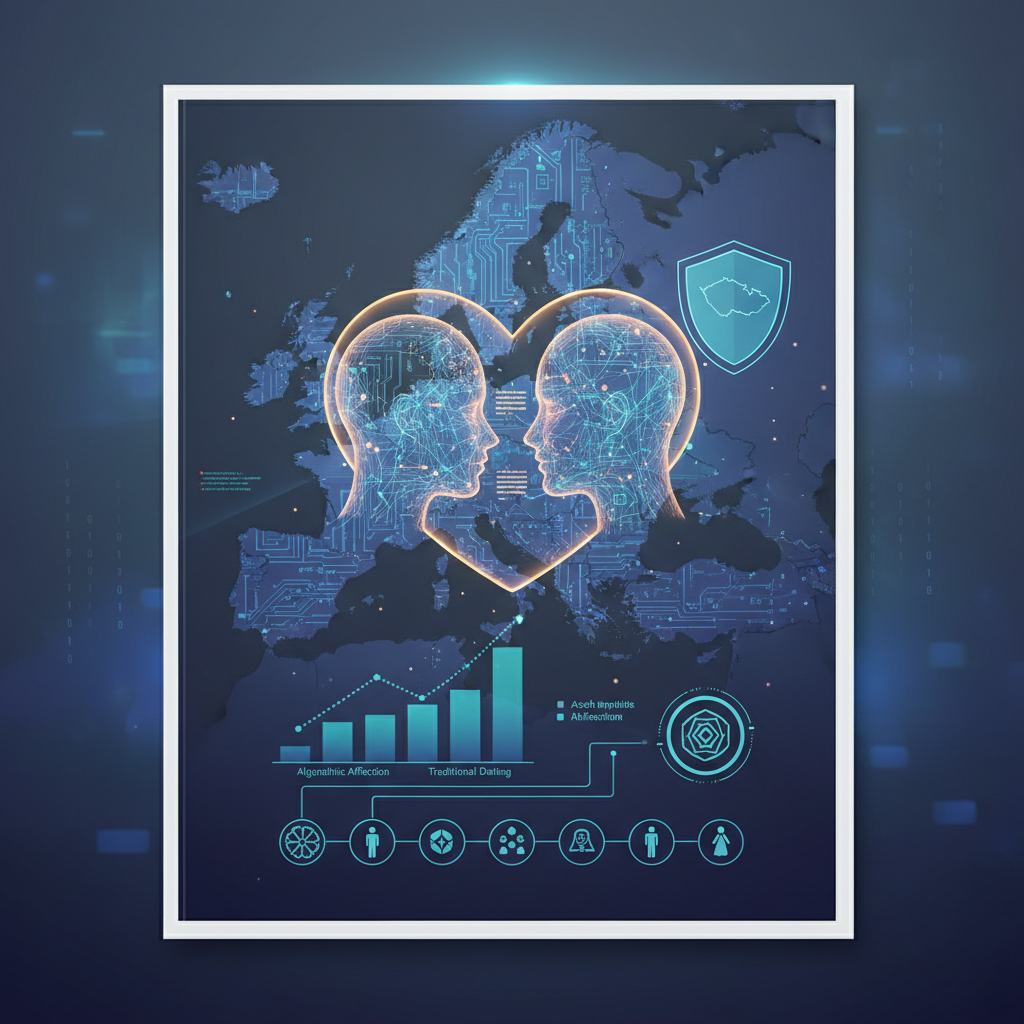
However, the ethical and psychological implications are complex. "We are witnessing the emergence of 'para-social relationships on steroids'," explains Professor Jan Kovář, a sociologist specializing in digital culture at Masaryk University in Brno. "Unlike traditional media figures, these AI entities offer direct, personalized interaction, creating a powerful illusion of reciprocity. For individuals experiencing loneliness or social anxiety, the appeal is immense, but the long term effects on human social skills and expectations are largely unknown." Indeed, a survey conducted by the European Commission's Joint Research Centre in late 2025 indicated that 28% of European respondents aged 18-35 had engaged with an AI companion at least once, with 7% reporting regular use. The primary motivations cited were companionship, entertainment, and emotional support.
The Czech approach is methodical and effective, often prioritizing robustness and security. Our regulatory bodies, alongside those across the European Union, are grappling with how to classify and govern these digital entities. Are they products, services, or something entirely new? What are the responsibilities of their creators? Who owns the 'personality' of a virtual influencer, and what rights do users have regarding their interactions? These are not trivial questions. The EU's proposed AI Act, for instance, aims to categorize AI systems by risk level, and it is highly probable that AI companions will fall under scrutiny for potential psychological manipulation or data privacy concerns. Reuters has extensively covered these regulatory debates.
Mr. Jakub Svoboda, a senior policy advisor at the Czech Ministry of Industry and Trade, articulated this challenge recently. "Our goal is to foster innovation while safeguarding our citizens. The line between helpful digital assistant and potentially harmful emotional surrogate is becoming increasingly blurred. We need clear guidelines on transparency, data handling, and psychological impact." This sentiment is echoed by consumer protection agencies across the continent, wary of the potential for exploitation, particularly among vulnerable populations.
From a developer's perspective, the technical hurdles are also significant. Ensuring ethical behavior, preventing bias amplification, and managing the vast computational resources required for these sophisticated models remain ongoing challenges. Let me walk you through the architecture of a typical AI companion application. It involves a robust backend powered by cloud-based LLMs, often fine-tuned on specific datasets to cultivate a particular 'personality'. This is coupled with sophisticated natural language understanding (NLU) and generation (NLG) modules, and for virtual influencers, advanced 3D rendering and animation pipelines. The user interface, whether text, voice, or visual, must be meticulously designed to foster engagement and perceived empathy. The sheer complexity demands a rigorous engineering approach, something deeply ingrained in our regional expertise.
So, is this a fad or the new normal? The data suggests it is far more than a passing trend. The underlying technological capabilities are advancing exponentially, and the human need for connection, particularly in an increasingly atomized world, remains constant. While the initial novelty might wane for some, the utility and emotional resonance for others will likely solidify its place in our digital ecosystem. The question is not if AI companions and virtual influencers will persist, but rather how we, as a society, will integrate them responsibly. Will they augment human relationships, providing support and entertainment without supplanting genuine connection? Or will they create a new form of digital dependency, eroding the very social fabric they claim to enhance? The answer will depend heavily on the ethical frameworks we build, the regulatory guardrails we erect, and the critical discernment we cultivate in ourselves and future generations. The conversation, much like these AI entities, is only just beginning. For more on the broader implications of AI in society, one might consult the insightful analyses found on MIT Technology Review. The path ahead requires careful navigation, much like traversing the winding cobblestone streets of Prague, where every turn reveals both beauty and potential peril.