
Ah, Italy. The land where every meal is a celebration, every street corner tells a story, and every product, from a bespoke suit to a perfectly aged Parmigiano, carries the weight of centuries of craftsmanship. We are a people who value beauty, precision, and the human touch above all else. So, when the world talks about large language models, about Cohere and its ambitious push into the enterprise market, my first thought isn't about algorithms or data centers. My first thought is always, 'How will this touch the lives of our people? How will it reshape our way of doing things?'
It's April 2026, and the air is buzzing with talk of AI. While giants like OpenAI and Google dominate the headlines with their consumer-facing models, a different kind of revolution is quietly brewing in the corporate world, spearheaded by companies like Cohere. Their focus, as many know, is not on writing poetry or generating fantastical images for the general public, but on building powerful, secure, and customizable LLMs specifically for businesses. Think of it: models that understand the intricate jargon of a financial institution, the subtle nuances of legal documents, or the specific product catalogs of a luxury fashion house. This is where the real economic impact often lies, far from the viral TikTok trends.
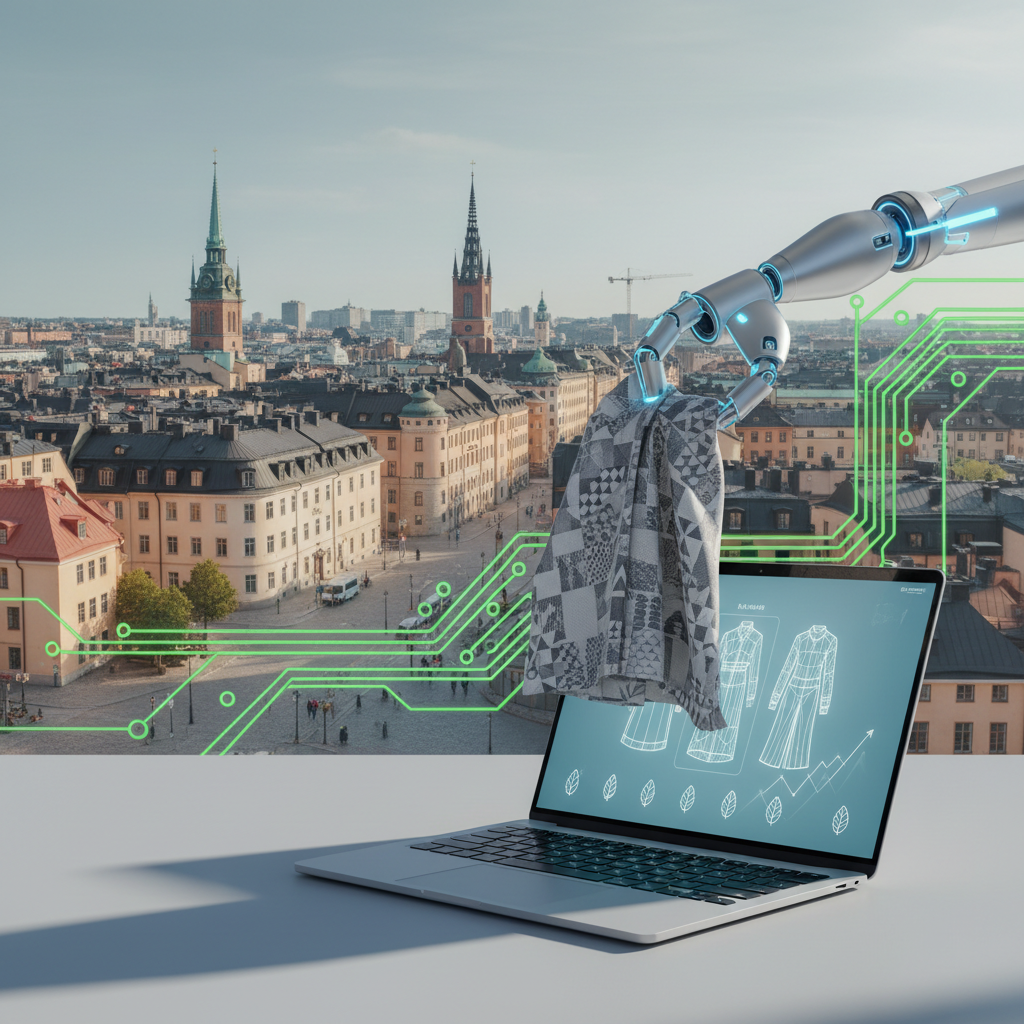
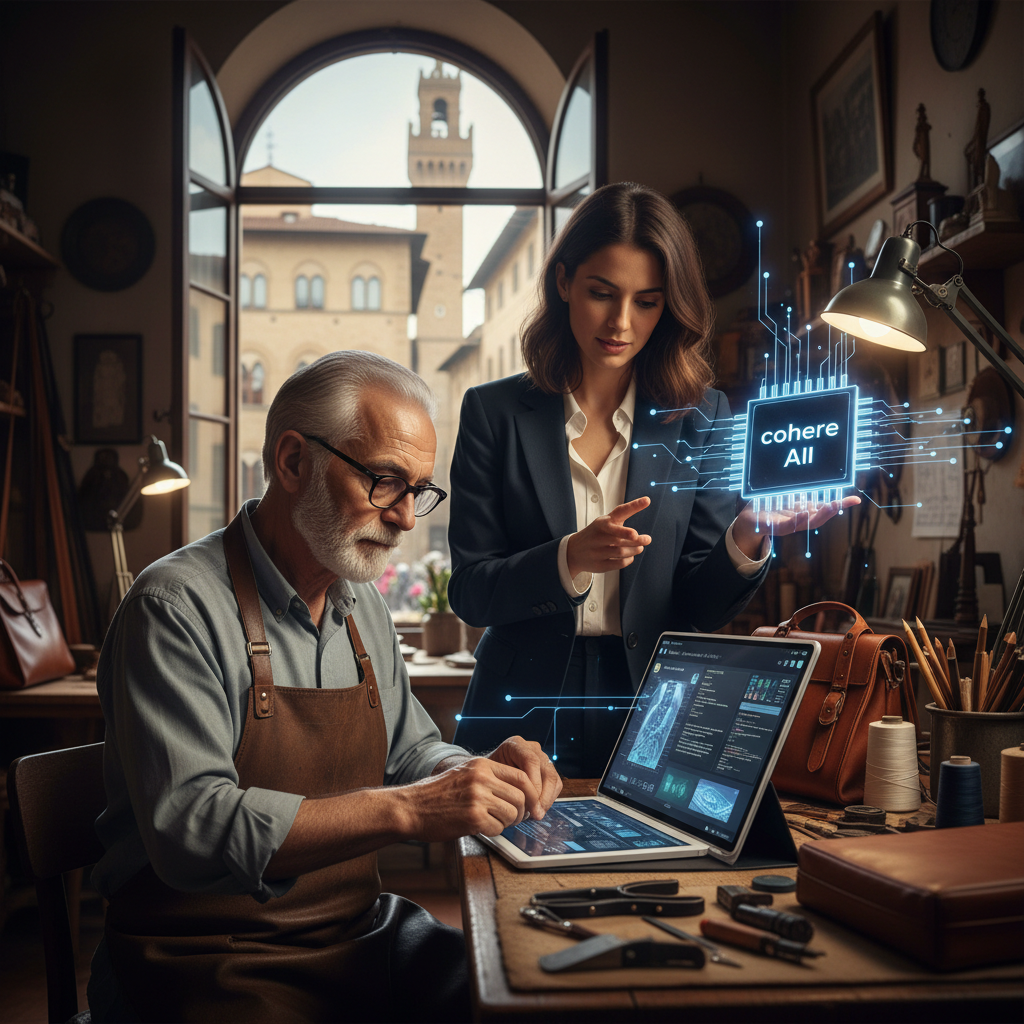
In a workshop in Milan, where the scent of leather and freshly cut fabric usually fills the air, I recently spoke with Isabella Rossi, the head of digital innovation for a renowned Italian design firm. "For us, AI isn't just a tool; it's a partner," she told me, gesturing with hands still dusted with fine textile fibers. "We've been experimenting with Cohere's models to streamline our design brief analysis. Imagine, an AI that can sift through thousands of customer feedback points, market trends, and historical sales data, then distill it into actionable insights for our creative team. It's not replacing creativity; it's amplifying it. It's giving our designers more time to design, to dream, instead of drowning in data." This, to me, is the essence of how Italy does AI differently, with style. We integrate it, we don't let it overwhelm us.
Cohere's strategy, under the leadership of Aidan Gomez, one of the original 'Attention Is All You Need' paper authors, has been to differentiate itself through enterprise-grade security, data privacy, and the ability for companies to fine-tune models on their proprietary data. This resonates deeply with Italian businesses, many of which are family-owned, fiercely protective of their intellectual property, and often operating in highly specialized, niche markets. The idea of sending sensitive business data to a generic, public-facing LLM is, frankly, a non-starter for many of our entrepreneurs. But a bespoke, secure solution? That's a different conversation entirely.
"The European landscape, with its stringent data regulations like GDPR, makes Cohere's approach particularly attractive," explained Dr. Marco Bianchi, a senior AI policy advisor at the Italian Ministry of Economic Development, when we met for espresso in Rome. "Companies here need assurances that their data remains sovereign, that the models they use are transparent, and that they can maintain control. Cohere understands this fundamental need, offering solutions that can even be deployed on-premise or in private cloud environments. This isn't just about compliance; it's about trust, which is paramount in our business culture." He emphasized that the focus on ethical AI and data protection, enshrined in initiatives like the EU AI Act, is not a hindrance but a guiding principle for European innovation. For more on how Europe is shaping its AI landscape, one might look to Reuters' technology section.
Indeed, the numbers are starting to reflect this shift. A recent report by DataGlobal Hub's own analysts indicated that enterprise spending on specialized LLMs across Europe is projected to grow by 45% in 2026, reaching an estimated €8.5 billion. While OpenAI and Google still hold significant market share, Cohere, along with European players like Mistral AI, is rapidly gaining ground in the enterprise segment, particularly in sectors like finance, manufacturing, and luxury goods. This isn't just a global trend; it's a local one, with Italian firms showing a 38% increase in pilot programs involving enterprise LLMs over the past year.
Take the automotive sector, another jewel in Italy's industrial crown. Companies like Ferrari and Lamborghini, known for their meticulous engineering and design, are exploring how LLMs can optimize everything from supply chain logistics to customer service. "We're not just building cars; we're crafting experiences," said Giovanni Moretti, a lead engineer at a prominent automotive design studio in Modena. "Cohere's models are helping us analyze vast amounts of sensor data from vehicles, predict maintenance needs with greater accuracy, and even personalize the in-car experience based on driver preferences. It's about enhancing the connection between human and machine, not replacing it. It's la dolce vita meets machine learning, in the most powerful way imaginable." The detailed insights from such applications are often discussed in publications like MIT Technology Review.
However, it's not all smooth sailing. The challenge for Cohere, and for any enterprise LLM provider, remains the integration into legacy systems and the upskilling of existing workforces. Many Italian SMEs, the backbone of our economy, are still grappling with basic digitalization, let alone advanced AI adoption. The cultural shift required to truly leverage these powerful tools is immense. "The technology is there, but the human element, the training, the understanding of how to ask the right questions and interpret the AI's responses, that's where the real work lies," noted Francesca Rizzo, a professor of AI ethics at the University of Bologna. "We need to ensure that these tools empower workers, not intimidate them, and that the unique knowledge held by generations of artisans and specialists is augmented, not rendered obsolete."
This is a critical point. Our Italian heritage teaches us the value of human skill, of knowledge passed down through generations. The fear that AI might erode this is a very real one. But what I see, what I hope for, is a future where AI becomes a sophisticated apprentice, learning from the masters, and then helping them to create even more extraordinary things, faster and more efficiently. It's about preserving the soul of our work while embracing the intelligence of the machine. The conversation around AI's impact on employment and skill development is a global one, often covered by TechCrunch.
As the sun sets over the Arno, casting long shadows on Florence's ancient bridges, I reflect on Cohere's journey and Italy's potential. The enterprise LLM market is a complex tapestry, woven with threads of innovation, security, and human ambition. For Italy, the challenge is to weave these new threads into our existing fabric, enriching it without losing its unique texture. It’s a delicate balance, but if anyone can achieve it with grace and ingenuity, it is us. We are, after all, masters of both art and adaptation.