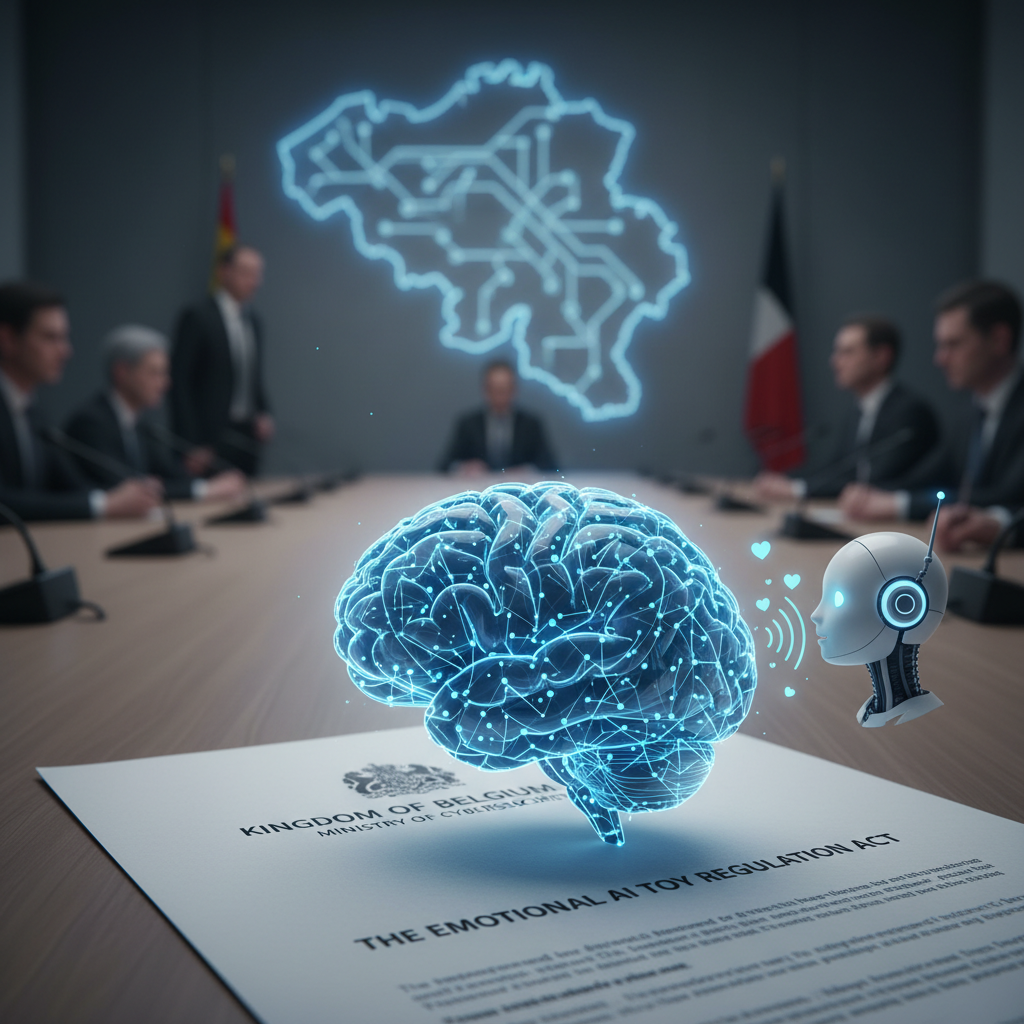

The digital landscape, much like the Ardennes forest, can appear serene on the surface, yet harbor complex, often unseen, challenges beneath its canopy. Today, that complexity extends into our homes, specifically into the hands of our children and the solitude of our elderly, through the proliferation of AI powered toys and companions. These devices, designed to learn, adapt, and even simulate emotional connection, are no longer science fiction, they are a burgeoning market segment, and Brussels has questions and so should you.
The European Commission, with its characteristic methodical approach, has been grappling with the implications of these 'emotional AI' systems. While the broader AI Act, set to be fully implemented by 2026, lays down a comprehensive framework for high risk AI, the nuances of AI that directly engage with human emotions, particularly in vulnerable populations, present a distinct ethical and regulatory quagmire. The recent guidance from the European Data Protection Board, Edpb, specifically highlighted concerns regarding data privacy, psychological manipulation, and the potential for these systems to blur the lines between human and machine interaction.
At the heart of this policy move is a recognition that AI companions are not merely sophisticated chatbots. They are designed to foster attachment, to mimic empathy, and to collect deeply personal data about their users' emotional states. Consider the popular 'Robo-Buddy' series, marketed to children as an interactive learning companion, or the 'Elder-Care Bot 5000', pitched as a solution for loneliness among seniors. These devices, often equipped with advanced natural language processing and facial recognition, are collecting biometric and behavioral data that could reveal intimate details about a user's mental health, social patterns, and even vulnerabilities. The EU's approach deserves more credit than it gets for attempting to pre empt these issues, rather than reacting once problems become endemic.
Who is behind this regulatory push, and why now? Primarily, it is a coalition of consumer protection agencies, child welfare organizations, and privacy advocates across the EU, with significant impetus from member states like Belgium, Germany, and France. "We are not against innovation, far from it," stated Marie-Claire Dubois, a Belgian Member of the European Parliament and a vocal proponent for stricter AI ethics, during a recent parliamentary debate in Strasbourg. "However, when an algorithm is designed to form an emotional bond with a child, or to become a sole confidant for an isolated senior, we enter a territory that demands extreme caution. The potential for exploitation, for data misuse, and for psychological harm is immense." Her concerns echo those of many Belgian parents and caregivers who are increasingly wary of the digital footprints left by these seemingly innocuous devices.
In practice, what does this mean? The updated guidelines, expected to be fully integrated into national laws by late 2026, will likely classify AI toys and companions that actively seek to form emotional bonds or collect sensitive emotional data as 'high risk' AI systems. This designation triggers a cascade of stringent requirements: mandatory conformity assessments, robust human oversight, stringent data governance protocols, and clear transparency obligations. Manufacturers will need to demonstrate that their products are designed with privacy by design principles, that they are not manipulative, and that they provide clear, understandable information about their data collection practices. Furthermore, there will be a strong emphasis on age appropriate design and the explicit consent of guardians for minors.
Industry reaction has been, predictably, mixed. Smaller European startups, often at the forefront of ethical AI development, generally welcome the clarity, viewing it as an opportunity to build trust with consumers. "For us, responsible AI is a competitive advantage," explained Dr. Elias Vandenberghe, CEO of 'EmotiTech Solutions', a Leuven based startup developing therapeutic AI companions. "These regulations, while demanding, force us to build better, safer products. It is Belgian pragmatism meets AI hype, ensuring that our innovation serves humanity, not just profit." However, larger international players, particularly those from outside the EU, have voiced concerns about the complexity and potential for market fragmentation. A recent report by Reuters highlighted how some US based tech giants are lobbying for more harmonized global standards, fearing that the EU's strict approach could stifle innovation or create barriers to entry for their products.
Civil society organizations, meanwhile, remain cautiously optimistic but vigilant. "The devil, as always, is in the details of enforcement," says Annelies De Clercq, Director of 'Digital Rights Belgium', a Brussels based advocacy group. "The framework is robust on paper, but ensuring that every AI teddy bear or robotic pet complies will require significant resources and continuous monitoring. We need clear mechanisms for redress for individuals whose data or emotional well being is compromised." Her organization has been particularly vocal about the need for independent auditing of these systems, beyond what manufacturers self declare.
Will it work? The ambition of the EU's regulatory framework is undeniable. By categorizing emotional AI as high risk, it aims to place the burden of proof for safety and ethical design squarely on the manufacturers. This proactive stance is commendable, especially when compared to the often reactive regulatory environments seen elsewhere. However, the sheer volume of AI products entering the market, combined with the rapid pace of technological advancement, presents a formidable challenge. The European Union Agency for Cybersecurity, Enisa, will play a crucial role in developing technical standards, but keeping pace with evolving AI capabilities, particularly in areas like synthetic emotions and advanced personalization, will be a constant uphill battle.
Ultimately, the success of these regulations will hinge on several factors: the political will to enforce them rigorously, the technical expertise to assess complex AI systems, and the informed participation of consumers. As AI becomes increasingly intertwined with our emotional lives, the line between helpful companion and manipulative algorithm becomes perilously thin. It is incumbent upon all of us, from policymakers in Brussels to parents in Ghent, to remain critically engaged. The future of our emotional well being, and that of our children, may very well depend on it. For further insights into the broader regulatory landscape, one might consult the detailed analyses provided by MIT Technology Review. The stakes are too high for complacency.