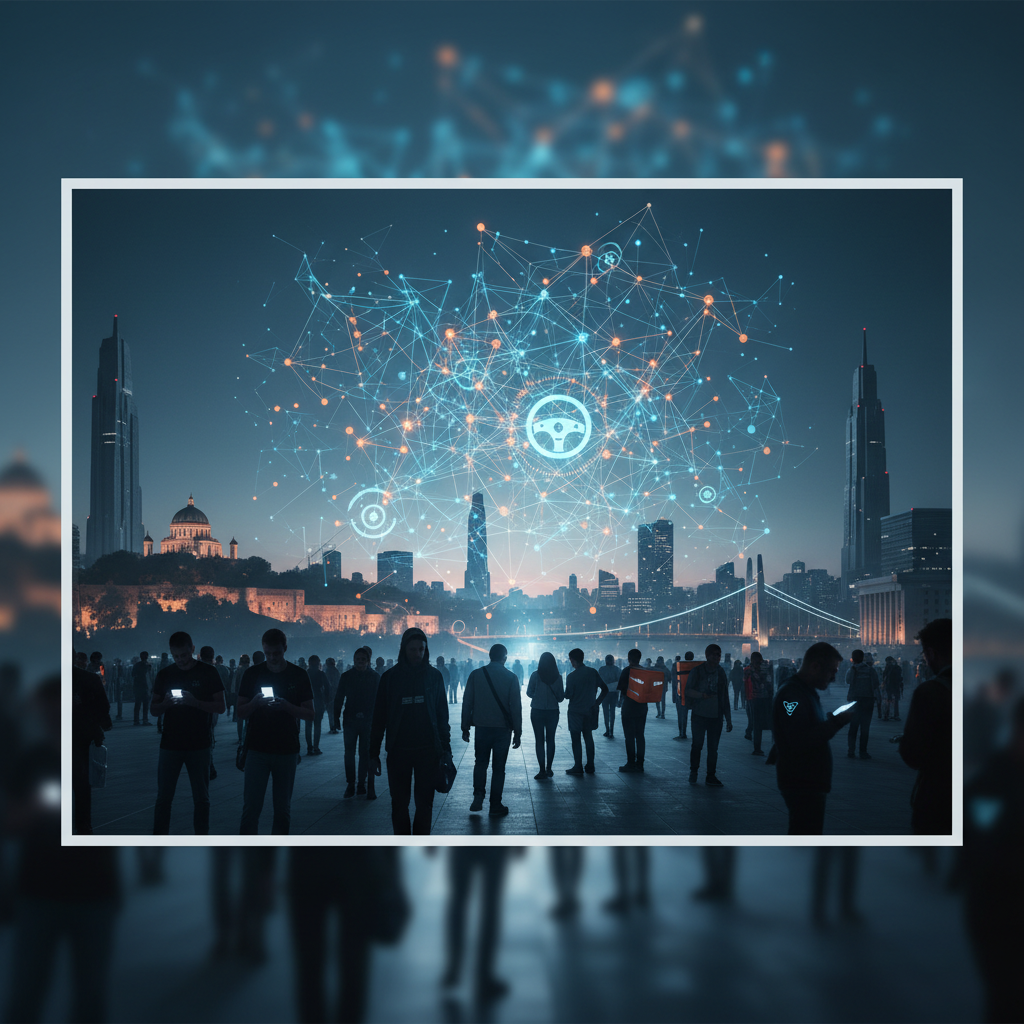

Walk through Belgrade any evening and you will see them, the scooters and bicycles of Glovo and Wolt couriers, weaving through traffic, delivering meals and groceries. Or perhaps you have hailed a ride through CarGo, our local answer to Uber. These services, once hailed as symbols of modern convenience and flexible work, are increasingly revealing a darker truth: the invisible hand of artificial intelligence is not just optimizing logistics, it is actively managing, and often controlling, the lives of millions of workers. This isn't just a Silicon Valley problem, it is a global reality, and the Balkans have a different relationship with technology, one that often brings these issues into sharper focus.
The Headline Development: Algorithms as the New Overseers
For years, the narrative around the gig economy was one of empowerment. Work when you want, be your own boss, earn extra cash. Companies like Uber, DoorDash, Glovo, and Bolt built empires on this promise, fueled by sophisticated algorithms. These algorithms, initially designed to match supply with demand and optimize routes, have evolved into powerful management tools. They dictate pricing, assign tasks, monitor performance, and even penalize workers, all without human intervention. From a platform's perspective, it is efficient. From a worker's perspective, it is often opaque, unfair, and profoundly disempowering. Recent reports from the European Union, for example, show a 30% increase in gig workers reporting algorithmic management as their primary source of stress, a figure that has climbed steadily since 2023.
Why Most People Are Ignoring It: The Attention Gap
Why does this quiet revolution in labor management often go unnoticed by the average consumer or even many policymakers? Part of it is the convenience factor. We order food, we get a ride, and the transaction feels seamless. We do not see the intricate system of incentives, penalties, and performance metrics that govern the person on the other side of the app. Another reason is the sheer complexity of these systems. Explaining how a reinforcement learning algorithm determines your next delivery assignment, or why your rating dropped, is not easy. It is far removed from the traditional employer-employee relationship, making it difficult to apply existing labor laws. Furthermore, the gig economy often attracts those in precarious situations, people who need the work and are less likely to challenge the system for fear of deactivation. Here in Serbia, where economic opportunities can be tighter, the allure of immediate income often overshadows concerns about long-term algorithmic control.
How It Affects You: Personal Impact on Readers
Even if you are not a gig worker, this shift has implications for you. First, it sets a precedent for how work might be managed in the future across various sectors. The algorithmic management techniques perfected in the gig economy are already being explored in logistics, customer service, and even some white-collar roles. Imagine your performance review being conducted by an AI, with little recourse for appeal. Second, it impacts the quality and stability of services you rely on. A demoralized, overworked, or unfairly penalized workforce is less likely to provide optimal service. Third, it raises ethical questions about fairness, transparency, and human dignity in the workplace. If AI can decide who gets work, how much they earn, and when they are 'fired' without explanation, what does that mean for our societal values of fair labor? The very concept of a 'living wage' becomes a moving target when an algorithm dynamically adjusts pay based on real-time demand and supply, often pushing earnings below sustainable levels.
The Bigger Picture: Societal, Economic, or Political Implications
The societal implications are vast. We are seeing the rise of a new class of 'algorithmically managed' workers, often without the benefits, protections, or collective bargaining power of traditional employees. This exacerbates income inequality and creates a more fragmented labor market. Economically, it can lead to a race to the bottom, where platforms compete by squeezing worker compensation, driven by algorithmic efficiency rather than human welfare. Politically, it presents a significant challenge for regulators. How do you regulate an invisible, constantly evolving digital manager? Countries like Spain have attempted to grant gig workers employee status, but enforcement remains complex. The European Union is also grappling with a directive on platform work, aiming to clarify employment status and introduce greater algorithmic transparency. This is not just about a few delivery drivers, it is about the future of work itself, and whether technology will be a tool for liberation or a new form of digital serfdom.
Here in Serbia, the issue resonates deeply. Many young people, facing limited traditional job prospects, turn to gig work. Belgrade's tech scene is real, not hype, but much of its innovation focuses on creating these very platforms, not necessarily on protecting the workers who power them. We need to ask ourselves if we are building a sustainable future or just replicating exploitative models with a digital veneer.
What Experts Are Saying: Three Perspectives
"The core problem is the power imbalance," explains Dr. Jelena Petrović, a labor economist at the University of Belgrade. "Platforms hold all the data, control the algorithms, and workers have no insight into the decision-making process. It is a black box that determines their livelihood. We need mechanisms for algorithmic accountability and worker representation." Dr. Petrović's research indicates that over 60% of Serbian gig workers feel their earnings are unpredictable due to algorithmic fluctuations, a figure higher than the EU average.
"Companies like Uber and Glovo argue efficiency, but efficiency at what cost?" asks Marko Jovanović, a legal expert specializing in digital rights from the Serbian Bar Association. "The current legal frameworks are struggling to keep up. Is an algorithm an employer? Can an algorithm be sued for unfair dismissal? These are not theoretical questions anymore; they are daily realities for thousands of people. We need to define algorithmic responsibility." He points to ongoing legal battles in several European countries where courts are attempting to classify gig workers as employees, a move often resisted by the platforms.
From a technological perspective, Professor Ana Kovačević, head of AI ethics at the University of Novi Sad, offers a nuanced view. "The algorithms themselves are not inherently malicious. They are designed to optimize for specific metrics, usually profit and efficiency. The issue arises when these metrics are not balanced with human factors like fair pay, safety, and well-being. We can design ethical AI, but it requires intentionality and regulation. It is about embedding human values into the code, not just market logic." She suggests that open-source auditing of platform algorithms could be a step towards greater transparency, a concept gaining traction in academic circles see more on AI ethics here.
What You Can Do About It: Actionable Takeaways
So, what can be done? For workers, understanding your rights, however limited, is crucial. Join worker associations or unions where they exist; collective action is often the only way to gain leverage against powerful platforms. Document everything, from earnings to unfair penalties. For consumers, consider the human cost behind the convenience. Support platforms that demonstrate ethical labor practices, if you can identify them. For policymakers, the path is clear, though difficult: develop robust regulations that ensure algorithmic transparency, accountability, and fairness. This includes defining employment status, guaranteeing minimum wages, and providing avenues for appeal against algorithmic decisions. Researchers and technologists must also push for ethical AI development, prioritizing human well-being alongside efficiency. We need to demand that these systems are built with human dignity in mind, not just profit margins. Let's talk about what's actually working, and what is not, in this new digital labor landscape.
The Bottom Line: Why This Will Matter in 5 Years
In five years, the algorithmic control over workers will either be a widely accepted, regulated aspect of the global economy, or it will have led to significant social unrest and legislative upheaval. The current trajectory, if left unchecked, points towards a future where more and more jobs, from driving to data entry, are managed by unseen digital overlords. This will reshape our understanding of work, employment, and human rights in ways we are only beginning to grasp. The battle for fair labor in the digital age is being fought right now, on the streets of Belgrade and in the code of Silicon Valley. If we do not pay attention, the algorithms will not just be managing jobs, they will be managing our expectations for what a fair working life even means. The stakes are high, and the time for action is now. For further reading on the broader impact of AI on society, I recommend exploring MIT Technology Review's AI section. The future of work is being written in lines of code, and we must ensure it is a future we can all live with, not just one optimized for profit. You can also find more business-focused AI news on Reuters Technology.