Walk into almost any insurance company's digital back office today, and you will find a quiet revolution underway. It is not a loud, disruptive kind of change, but a subtle, pervasive shift driven by artificial intelligence. From automated claims processing to sophisticated fraud detection and granular risk pricing, AI is reshaping the very foundations of how we understand and manage uncertainty. But is this a genuine step forward for fairness and efficiency, or are we inadvertently creating new digital divides, particularly for communities like ours here in Aotearoa?
For generations, insurance has been built on the bedrock of data and actuarial science. Human underwriters, with their experience and intuition, would pore over applications, assess risks, and set premiums. Claims adjusters would visit sites, interview people, and make judgments. It was a laborious, often subjective process, prone to human error and, yes, human bias. The promise of AI was to strip away this subjectivity, to bring cold, hard data and logic to the fore, creating a system that was faster, cheaper, and inherently more equitable.
Historically, the journey towards data driven insurance began with simple statistical models in the mid 20th century. These evolved into complex econometric models and eventually, in the early 2000s, into early machine learning applications for things like customer segmentation. The real acceleration, however, has come in the last five years, fueled by massive computational power, vast datasets, and advancements in deep learning. Companies like Lemonade, a US based insurer, built their entire model around AI from the ground up, promising instant claims payouts and fairer pricing. Established giants such as Allianz and IAG, a major player in New Zealand and Australia, are now pouring billions into AI integration, aiming to catch up and redefine their operations.
Today, the landscape is almost unrecognizable. Automated claims processing, powered by natural language processing and computer vision, can assess damage from uploaded photos or descriptions in minutes, not days. Fraud detection systems, using anomaly detection algorithms, can flag suspicious patterns in claims data with an accuracy that far surpasses human capabilities. And risk pricing models, fed by everything from telematics data in cars to smart home sensor information and even publicly available social media data, are creating hyper personalized premiums. The global AI in insurance market, valued at around 12 billion USD in 2023, is projected to reach over 100 billion USD by 2030, according to some industry reports. This is not a fad, it is a tsunami.
Yet, beneath the surface of this technological marvel, questions linger. My concern, living here in New Zealand, is always about equity. Will these powerful algorithms truly serve all people, or will they inadvertently disadvantage those who are already marginalized? In Te Reo Māori, we have a word for this, manaakitanga, which speaks to the ethic of care, hospitality, and respect for others. Does AI in insurance embody manaakitanga?
I recently spoke with Dr. Hina Te Whaiti, a leading expert in Māori data sovereignty at Te Herenga Waka Victoria University of Wellington. She articulated a profound unease. "The algorithms are trained on historical data," she explained. "If that historical data reflects systemic biases, if certain communities have been historically underinsured, overcharged, or simply not well represented in the data, then the AI will learn and perpetuate those biases. It is not just about fairness in pricing, it is about access to essential services. If your postcode, your name, or even your digital footprint, which might reflect socioeconomic factors, leads to higher premiums or even refusal of coverage, then AI is not solving inequity, it is cementing it." Dr. Te Whaiti's point is critical: the past shapes the present, and without careful intervention, AI can project historical injustices into the future.
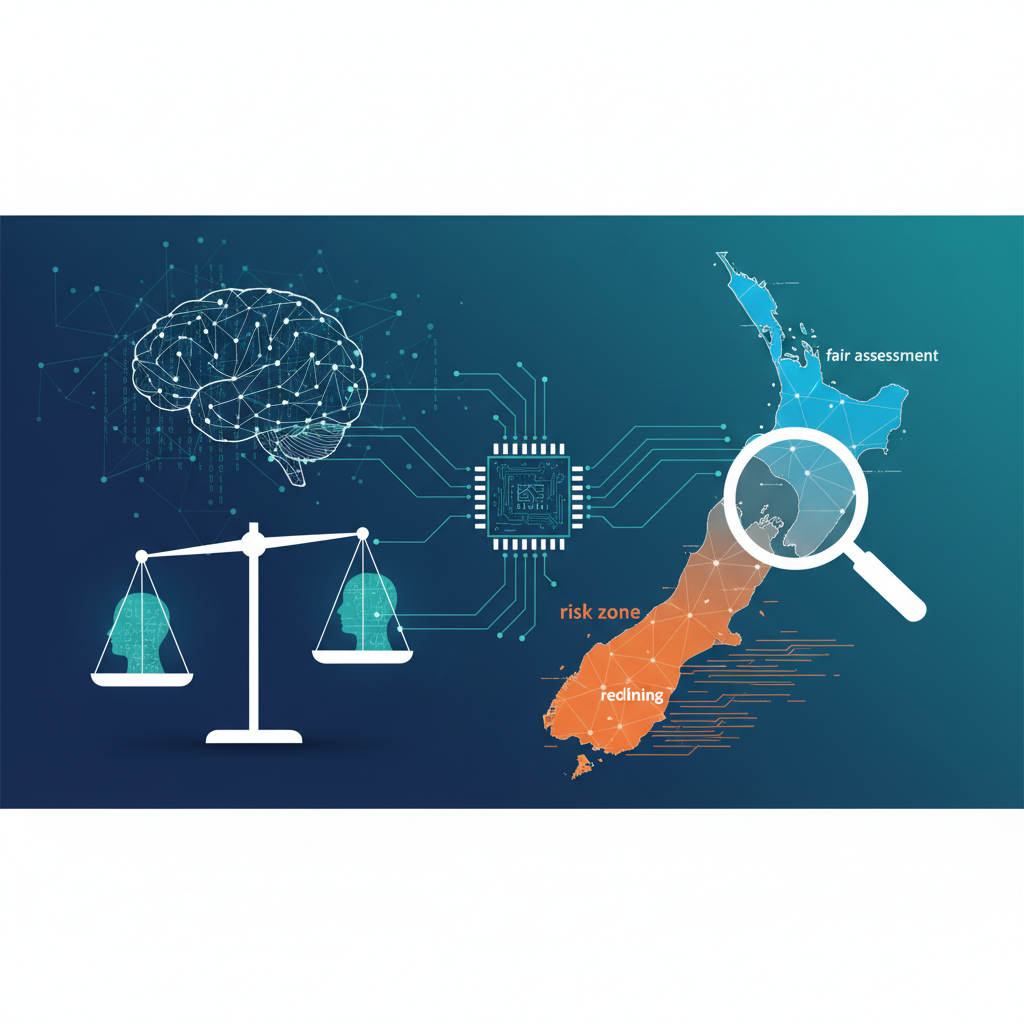
Consider the implications for risk pricing. If an AI model determines that certain geographic areas, often those with lower socioeconomic status or higher proportions of Māori and Pasifika families, present a higher 'risk' due to factors like crime rates or environmental hazards, premiums in those areas could skyrocket. This is not a hypothetical. We have seen historical examples of redlining, where certain areas were deemed high risk and denied services. AI, if unchecked, could become a digital redliner, making essential insurance unaffordable for those who need it most.
"The data is never neutral," asserted Michael Chen, Head of AI Ethics at a major global insurer, during a recent virtual conference I attended. "We are actively working on explainable AI and bias detection tools, but it is a monumental challenge. The sheer volume of data and the complexity of the models mean that sometimes, even we do not fully understand why an algorithm made a particular decision. Transparency is key, but it is incredibly difficult to achieve." Chen's candid admission highlights a central problem: the 'black box' nature of many advanced AI systems.
Here in New Zealand, our regulatory bodies, like the Reserve Bank of New Zealand and the Financial Markets Authority, are beginning to grapple with these issues. There is a growing recognition that Aotearoa's approach to AI is rooted in indigenous wisdom, emphasizing collective well being and long term sustainability. This means not just focusing on efficiency, but also on ethical implications and societal impact. "We are not just looking at the bottom line," said Sarah Williams, a policy advisor at the Ministry of Business, Innovation and Employment. "Our focus is on ensuring that AI adoption in critical sectors like insurance aligns with our national values, including fairness and equitable access for all New Zealanders. This requires robust regulatory frameworks and continuous dialogue with affected communities." This sentiment is encouraging, but policy often lags behind technological advancement.
My verdict on whether AI in insurance is a fad or the new normal is clear: it is undeniably the new normal. The efficiencies and cost savings are too significant for the industry to ignore. However, whether it is a beneficial new normal depends entirely on how we choose to implement and govern these technologies. The potential for good is immense: faster claims for those in genuine need, more accurate pricing for low risk individuals, and more effective detection of criminal fraud. But the potential for harm, particularly for vulnerable populations, is equally significant.
We must demand transparency from these systems. We need explainable AI that can justify its decisions, rather than operating as an opaque oracle. We need diverse teams building and auditing these algorithms, ensuring that a wide range of perspectives, including indigenous worldviews, are embedded in their design. Furthermore, robust regulatory oversight is essential, with clear guidelines on data usage, bias mitigation, and appeal processes for individuals who feel unfairly treated. The conversation about AI in insurance cannot just be about profit margins and efficiency gains; it must be about fundamental human rights and social justice. Technology must serve the people, not the other way around. For more on the broader implications of AI in society, you might find this article on AI ethics and society insightful. We also need to consider how these systems might impact privacy, a topic often discussed on platforms like TechCrunch. The insights from MIT Technology Review often highlight the deep research behind these advancements and their societal impacts.
The journey ahead is complex, but it is one we must navigate with intention and a strong ethical compass. The future of insurance, and indeed, the future of fairness, hangs in the balance.