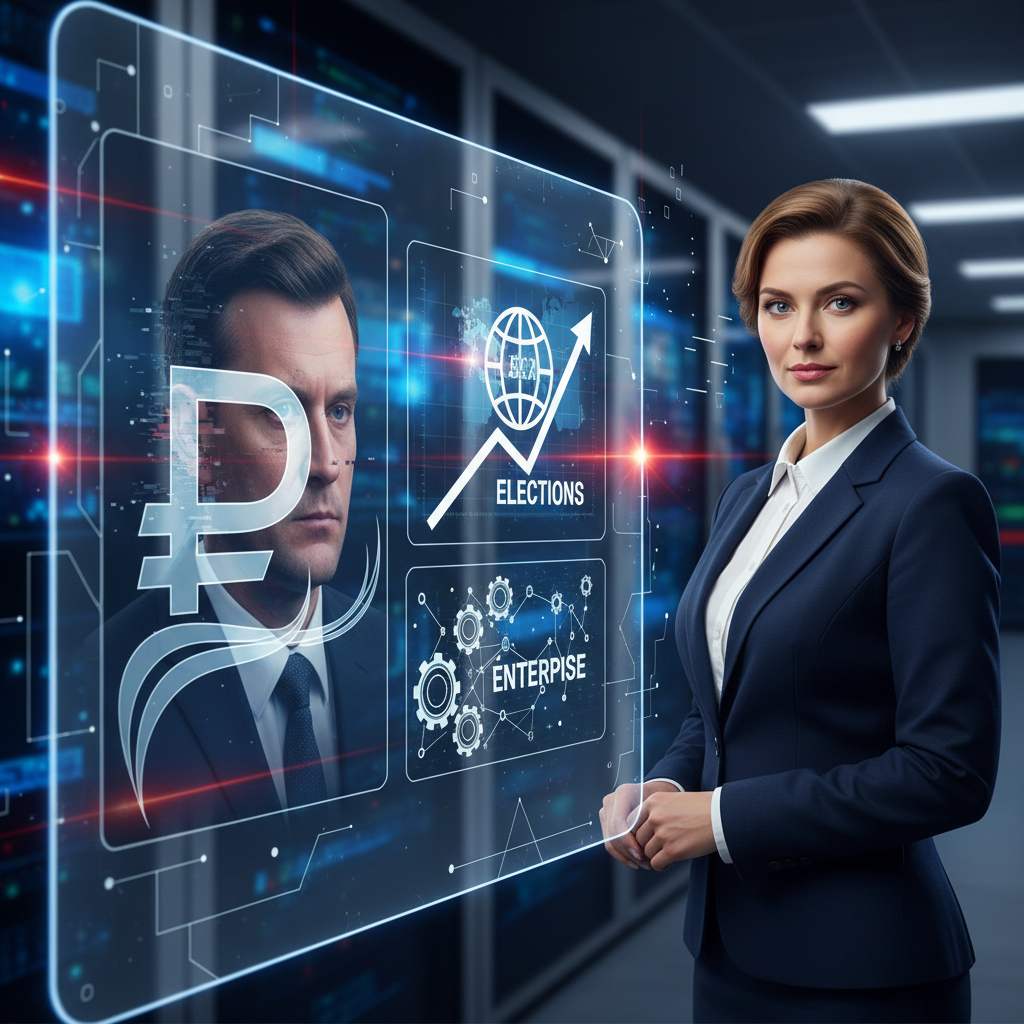
The digital landscape, particularly in Russia, has always been a complex tapestry of innovation and constraint. Yet, the current surge in AI-generated deepfakes, particularly those aimed at influencing political narratives, introduces a new stratum of complexity, one that reverberates far beyond the ballot box. It is not just about elections in distant lands, it is about the very fabric of trust within our own enterprises and the stability of our digital economy. The official story doesn't add up when we consider the pervasive, yet often unacknowledged, impact on everyday businesses and the livelihoods of ordinary Russians.
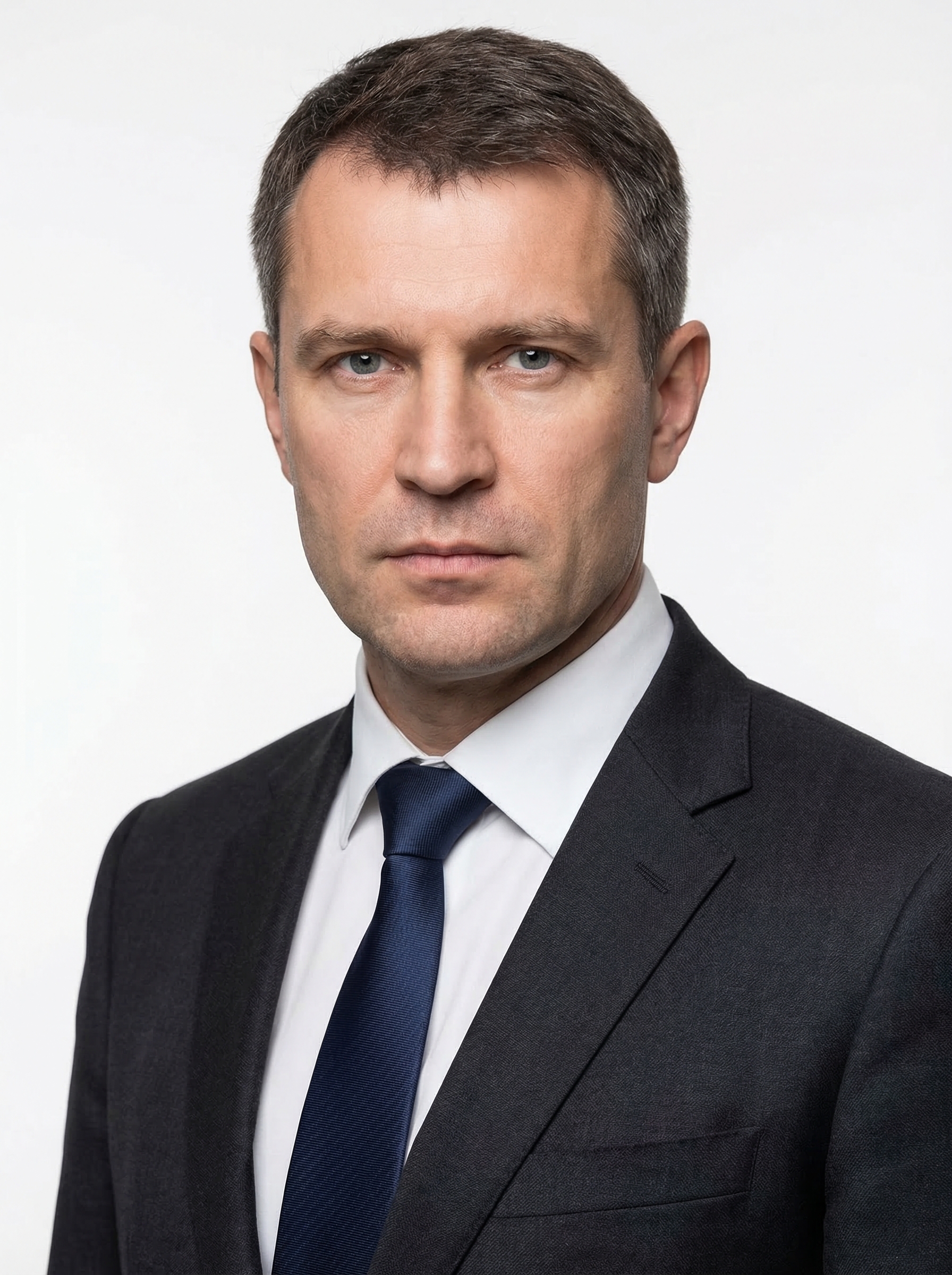
Consider the recent incident involving RusNet Security, a prominent cybersecurity firm based in Moscow. In late 2025, a deepfake video emerged depicting their CEO, Ivan Volkov, allegedly endorsing a controversial political candidate, a figure he had publicly criticized. The video, expertly crafted, circulated rapidly across Telegram channels and lesser-known social media platforms. Within hours, RusNet Security's stock dipped by 8 percent, and several key international contracts were placed under review. "We spent three days in damage control, diverting resources from critical development projects," stated Elena Petrova, RusNet's Head of Corporate Communications. "The financial loss was substantial, but the erosion of trust, that is far more damaging and difficult to quantify. Our reputation, built over two decades, was questioned because of a few minutes of fabricated video."
This is not an isolated incident. A recent, albeit unofficial, survey conducted by the Moscow Institute of Digital Forensics suggests that over 60 percent of Russian businesses with significant online presence reported encountering AI-generated disinformation targeting their brand or personnel in the past 12 months. Of these, 15 percent attributed direct financial losses exceeding 5 million rubles to such incidents. The adoption rate of deepfake detection technologies among Russian enterprises remains surprisingly low, at approximately 28 percent, largely due to cost and the rapid evolution of generative AI models. This stark reality underscores a critical vulnerability.
The winners in this shadowy new economy are, predictably, those who offer solutions. Cybersecurity firms specializing in AI forensics and digital authentication, such as Kaspersky Lab and InfoWatch, are seeing increased demand. Their deepfake detection suites, often powered by advanced neural networks from NVIDIA and Google DeepMind, are becoming indispensable. "The market for verifiable digital identity and content authentication is exploding," explained Dr. Sergei Antonov, a leading researcher at the Skolkovo Institute of Science and Technology. "Companies are realizing that a simple watermark is no longer sufficient. They need robust, AI-driven solutions to combat AI-driven threats. It is an arms race, and the stakes are incredibly high."
Conversely, the losers are often smaller businesses, those without the capital to invest in sophisticated defense mechanisms. Local media outlets, for example, are particularly susceptible. Sputnik Digital, a regional news agency operating out of Nizhny Novgorod, found itself embroiled in a scandal when a deepfake audio clip, seemingly from their chief editor, was used to spread false information about local election results. "Our journalists were threatened, our advertisers pulled out, and our credibility was shattered," recounted Maria Kuznetsova, a veteran reporter at Sputnik Digital. "We are a small team, we rely on public trust. When that is gone, what do we have left? We cannot compete with the resources of those who create these fakes, nor can we afford the cutting-edge tools to definitively debunk them quickly enough. It is a slow, agonizing death for honest journalism."
The human cost is equally profound. For workers, the threat of being deepfaked is a new form of digital harassment. Personal reputations, career prospects, and even mental well-being are at risk. "I know a colleague who was deepfaked into a compromising situation online," shared a software engineer from Yandex, who requested anonymity due to the sensitivity of the topic. "He left the company, left the country even. The psychological toll was immense. It is not just about the company, it is about the individual's sense of security in the digital world. Russian AI talent deserves better than to be subjected to such insidious attacks, or to be forced to build the tools that enable them."
Expert analysis paints a grim picture. "The current regulatory frameworks are woefully inadequate," stated Oksana Petrova, a renowned legal scholar specializing in digital rights at the Higher School of Economics in Moscow. "We have laws against defamation, but proving intent and attribution in the age of generative AI is a labyrinthine task. The technology evolves faster than our ability to legislate or even comprehend its full implications. We need international cooperation, clear ethical guidelines for AI developers like OpenAI and Meta, and robust legal precedents. Without these, we are simply patching leaks in a dam that is about to burst." Her assessment highlights the systemic challenges that transcend national borders, yet are acutely felt within Russia's unique digital ecosystem.
The implications for enterprise are clear: the cost of inaction is rapidly outpacing the cost of prevention. Companies must integrate deepfake detection and digital authentication into their core cybersecurity strategies. This includes not only investing in technology but also educating employees on how to identify and report suspicious content. Furthermore, there is a growing need for internal protocols to address deepfake incidents swiftly and transparently, preserving employee morale and external trust.
Looking ahead, the trajectory suggests an intensification of this digital arms race. As AI models become more sophisticated, generating increasingly realistic and contextually relevant deepfakes, the challenge will only grow. We may see the emergence of 'AI-proof' digital identities, perhaps leveraging blockchain technologies, becoming standard practice for high-profile individuals and critical infrastructure personnel. The demand for ethical AI development and deployment will reach a fever pitch, pushing companies like Anthropic and Google to prioritize safety and transparency over raw generative power. Wired has extensively covered the ethical dilemmas surrounding AI, and this particular issue is perhaps the most pressing.
Behind the sanctions curtain, Russian businesses and researchers are not merely observers; they are active participants in this struggle. While access to certain Western technologies may be restricted, the ingenuity of Russian developers, many of whom contribute to global open-source AI projects, ensures that the fight against deepfakes, and the development of new generative models, continues unabated. The question remains, however, whether our collective societal and corporate structures can adapt quickly enough to protect themselves from the truth that is being increasingly manufactured and distorted. The integrity of information, and by extension, the stability of our enterprises and elections, hangs precariously in the balance. The future of digital trust is not merely a technical problem; it is a profound societal challenge that demands immediate and concerted action from Moscow to Menlo Park. For more insights into the broader technological landscape, one might consult TechCrunch for the latest industry developments.