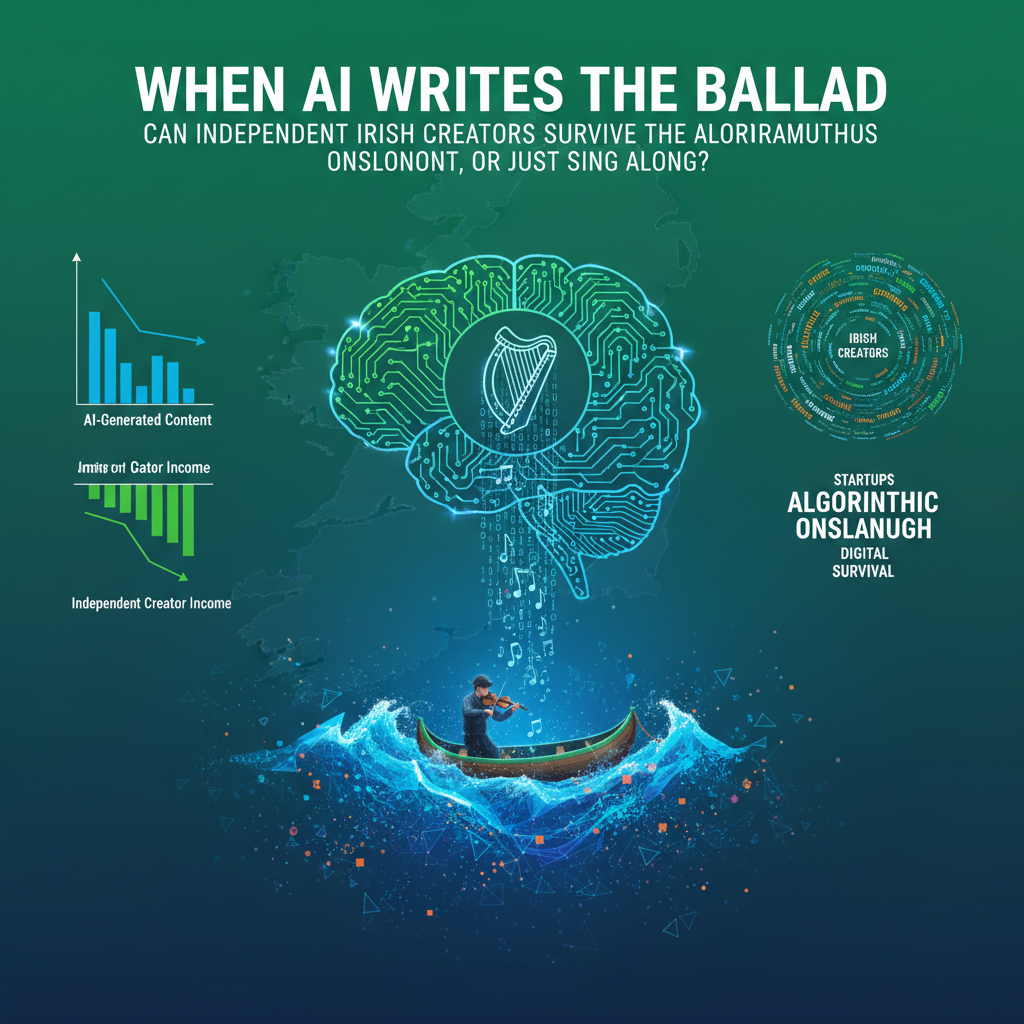

Is the digital easel now painting itself, or is there still room for the human touch, especially here in Ireland? That's the question rattling around the creative corners of the internet, and indeed, within the pubs and studios across our green isle. The AI revolution, as they're fond of calling it, has well and truly landed in the creator economy, promising to democratise creation, speed up workflows, and open new avenues for independent artists, writers, musicians, and designers. But like a perfectly poured pint of stout, there's a frothy head of hype and a dark, complex body of reality underneath.
For years, the independent creator was the plucky underdog, armed with a laptop, a dream, and perhaps a Patreon account. They built their empires pixel by pixel, note by note, word by word. The digital age, with its platforms like YouTube, Spotify, and Etsy, offered a direct line to audiences, bypassing the gatekeepers of old. It was a beautiful, if often exhausting, struggle. Fast forward to April 2026, and suddenly, these same creators are staring down the barrel of generative AI tools that can produce art, music, text, and even video at speeds and scales that would make a human head spin. The question isn't just about efficiency anymore, it's about existence.
Historically, technology has always reshaped creative industries. The printing press didn't kill writers, it amplified them. The synthesiser didn't silence musicians, it gave them new sounds. But those were tools that extended human capability. What we're seeing now, with the likes of OpenAI's DALL-E, Google's Gemini, and Meta's various generative models, feels different. These aren't just brushes, they're artists in their own right, albeit ones trained on the collective output of human endeavour. The data points are stark: a recent report by the World Intellectual Property Organization suggested that over 70% of creative professionals surveyed felt threatened by AI's potential to devalue their work or replace them entirely, with only 15% seeing it as purely empowering. That's a significant shift in sentiment, a clear signal that the fear isn't just a whisper anymore, it's a chorus.
Here in Ireland, a country that punches well above its weight in both creative output and tech adoption, the impact is particularly keenly felt. Dublin's Silicon Docks have a story to tell, not just of corporate giants, but of a vibrant ecosystem of independent developers and artists who often collaborate with these tech behemoths. We've seen a surge in Irish startups leveraging AI for creative applications, from music composition assistants to AI-powered storytelling platforms. But for every startup promising to empower, there's an artist wondering if their unique style will soon be just another dataset for an algorithm to mimic.
Take the case of Fiona O'Connell, a freelance graphic designer based in Galway, who told me last week, "I'm spending more time now trying to prove my value against AI than actually creating. Clients are asking, 'Can AI do this cheaper?' It's a race to the bottom, and I'm not sure how long I can keep up." Her sentiment is echoed by many. The sheer volume of AI-generated content flooding platforms means that standing out, that unique 'voice' or 'style' that independent creators cultivate, is becoming increasingly difficult to discern. It's like trying to find a specific shamrock in a field full of them, only now, half the shamrocks are synthetic.
However, it's not all doom and gloom. Some see AI as a powerful co-pilot, a means to elevate their craft. "AI isn't taking my job, it's taking the tedious parts of my job," says Liam McCarthy, a Cork-based indie game developer. "I can use it for generating placeholder assets, brainstorming ideas, or even writing basic dialogue. It frees me up to focus on the truly creative, human-centric aspects of game design." Liam's perspective aligns with a growing number of creators who are learning to harness AI as a productivity tool, rather than seeing it as a direct competitor. This is where the distinction lies: is it a tool for augmentation or for automation?
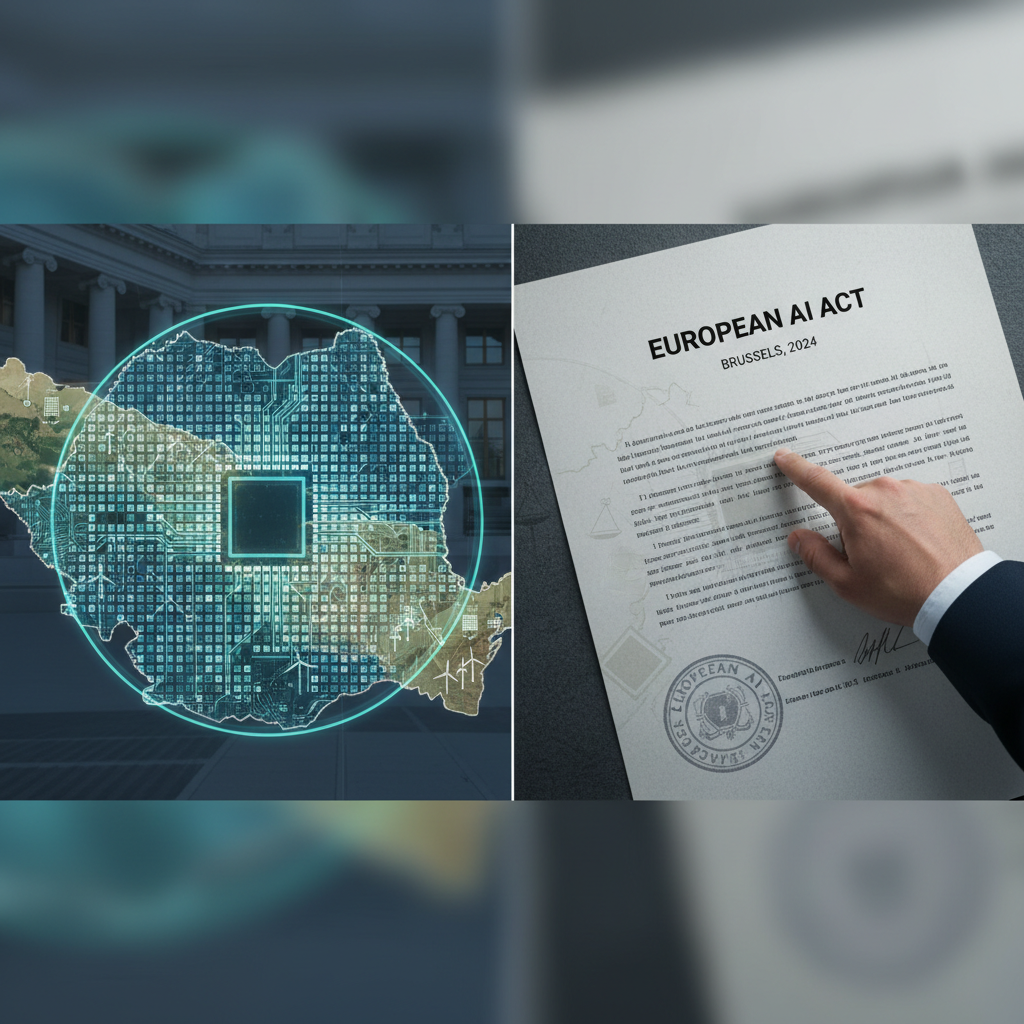
Dr. Aoife Kelly, a leading researcher in creative AI at University College Dublin, offered a nuanced view. "The initial shock is understandable, but we've seen this pattern before with every disruptive technology," she explained during a recent symposium. "The key is adaptation and regulation. We need robust frameworks for intellectual property in the age of generative AI, and creators need to understand how to leverage these tools ethically and effectively. It's not about stopping the tide, it's about learning to surf." Her point about regulation is particularly pertinent in Europe, where the EU AI Act is attempting to lay down ground rules, albeit slowly, for this rapidly evolving landscape. The craic is mighty in Irish AI, but the legalities are still a bit of a muddle.
Another expert, Professor Mark O'Sullivan, an economist specializing in digital markets at Trinity College Dublin, pointed out the economic implications. "The barrier to entry for content creation has plummeted, which is a double-edged sword," he stated. "While it allows more people to create, it also saturates the market, driving down prices for human-made content. Independent creators need to find new ways to differentiate themselves, perhaps by focusing on authenticity, live experiences, or highly personalised services that AI currently struggles to replicate." This suggests a pivot towards what AI cannot do, at least not yet: genuine human connection, empathy, and the unpredictable spark of true originality.
My own take? This isn't a fad, but it's not a simple 'new normal' either. It's a seismic shift, a redefinition of what 'creator' even means. For independent creators in Ireland and beyond, the threat is real for those who simply offer commoditised skills. If your value is purely in generating content that an AI can now produce faster and cheaper, then yes, your livelihood is on shaky ground. However, for those who embrace AI as a powerful assistant, who understand its limitations, and who double down on their unique human perspective, the opportunities are immense. It's about becoming a 'curator-creator' or a 'prompt-engineer-artist', guiding the algorithms rather than being replaced by them.
The real challenge, and where I believe the focus should be, is on intellectual property and fair compensation. If AI models are trained on the vast ocean of human creativity without proper attribution or remuneration, then we're not just threatening independent creators, we're undermining the very wellspring of future innovation. Only in Ireland would you find such a rich tapestry of storytelling and artistry, and it would be a shame to see it diluted by algorithms that feast on the past without contributing to the future. The conversation needs to shift from 'can AI do it?' to 'should AI do it, and if so, how do we ensure fairness for the human hands and minds that built the foundation?' The answer will determine whether independent creators sing a lament or a new anthem in the years to come. For now, the jury's still out, but the debate is certainly lively, like a good session in a trad pub on a Saturday night. You can find more insights into how AI is shaping various industries on The Verge's AI section and for a deeper dive into the ethical considerations, MIT Technology Review is always a good shout. The future of creativity, it seems, is a collaborative dance, sometimes awkward, between human ingenuity and artificial intelligence, and it's one we're all learning the steps to, one algorithm at a time. For more on the intersection of technology and human creativity, consider exploring articles on Creative AI [blocked].