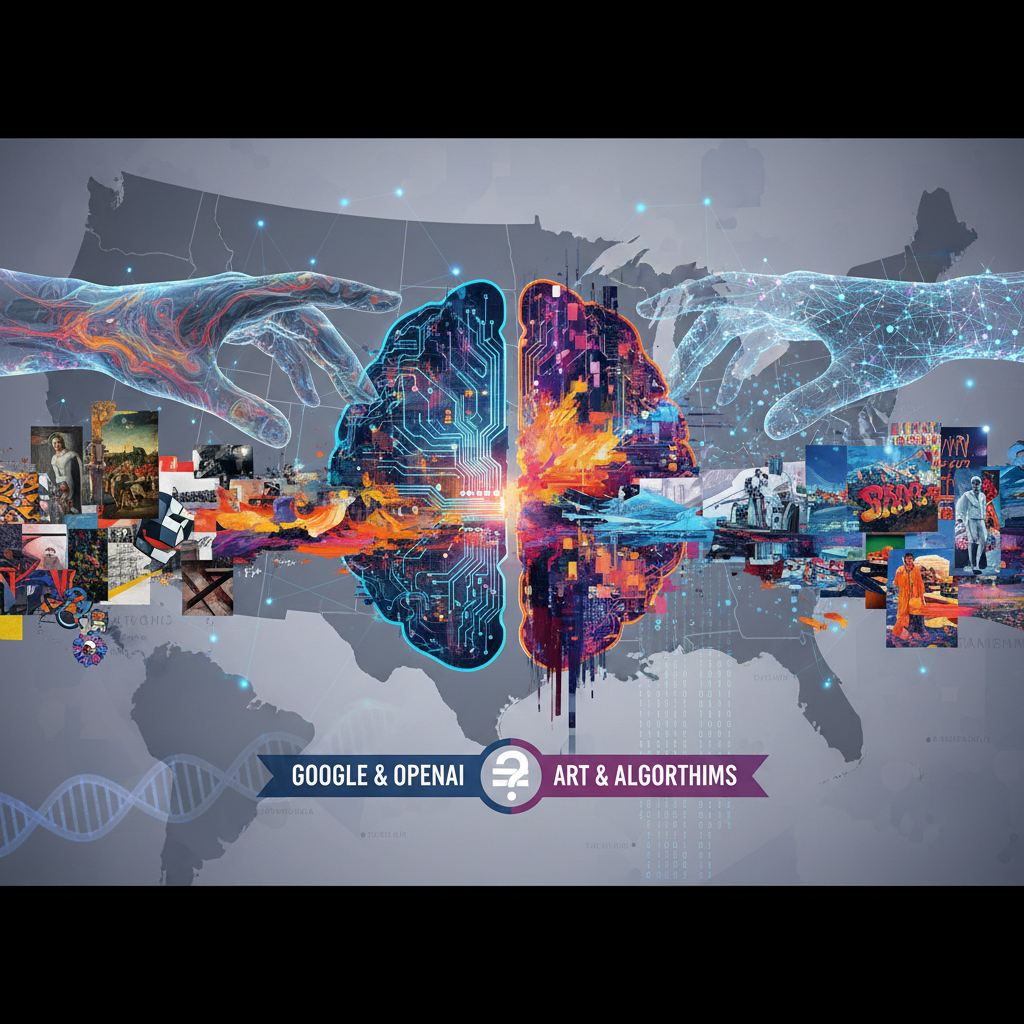
Walk into any art gallery in Chelsea, New York, or listen to the latest indie track echoing through a coffee shop in Portland, Oregon, and you'll feel the pulse of human creativity. It's vibrant, deeply personal, and often, the product of countless hours of dedication. Now, imagine that entire body of work, from the brushstrokes of a master to the lyrical genius of a songwriter, being ingested by an artificial intelligence model in mere seconds. That's not science fiction anymore, my friends, that's the core of the burgeoning AI copyright war, and it's playing out right here in America's courtrooms.
Is this legal battle a fleeting fad, a momentary blip on the radar of technological progress, or is it the new normal for how we define ownership and originality in the age of generative AI? As a journalist who spends her days sifting through the technical blueprints of these algorithms and the human stories behind them, I can tell you, the architecture tells the real story. This isn't just about money, it's about the very soul of creative endeavor.
To understand where we are, we need a quick trip down memory lane. Copyright law in the United States has always been a delicate dance between protecting creators and fostering innovation. Think back to the early days of sampling in hip hop. Artists like De La Soul faced legal challenges for using snippets of existing songs, leading to clearer rules and licensing agreements. Then came the digital age, and the music industry's epic battles against Napster and file-sharing. Those fights, often characterized as David versus Goliath, ultimately reshaped how we consume media, leading to streaming services and new revenue models.
Each technological leap has forced a re-evaluation of copyright. AI is not just another leap; it's a quantum jump. Large language models (LLMs) and generative AI systems, developed by powerhouses like OpenAI, Google, and Meta, are trained on colossal datasets. These datasets often include vast swaths of copyrighted material: books, articles, images, music, and code, scraped from the internet without explicit permission or compensation to the original creators. The argument from the tech companies is often rooted in fair use, claiming their models are transformative, learning from the data rather than simply copying it. They liken it to a human reading a book or listening to music to learn and be inspired. But for many creators, that analogy falls flat.
The current state of affairs is a flurry of legal action. The Authors Guild, representing writers across the nation, has been at the forefront, suing OpenAI and other companies. They argue that their copyrighted books were used to train models like GPT, which can then generate text that competes with or even mimics their styles. Sarah Silverman and other authors filed a class-action lawsuit against OpenAI and Meta, alleging infringement. The National Music Publishers' Association and individual artists have also joined the fray, citing concerns that AI models are generating music that sounds suspiciously like their work, without any licensing or royalty payments. Visual artists are not immune either, with lawsuits targeting image-generating AI platforms for using their artwork without consent.
Consider the sheer scale. OpenAI's GPT models, for instance, are reportedly trained on trillions of tokens, a significant portion of which is derived from publicly available text and code. While the exact composition of their training data is proprietary, it's widely understood to include a substantial amount of copyrighted material. Reuters has reported extensively on the various lawsuits emerging, detailing the claims from different creative sectors. This isn't a fringe movement; it's a coordinated effort from established creative industries.
Here's what's actually happening inside OpenAI and other labs: these models are not just memorizing. They are learning patterns, structures, and styles. When you prompt a model to write a poem in the style of Emily Dickinson or generate an image reminiscent of Van Gogh, it's drawing on the statistical relationships it learned from ingesting countless examples of those artists' works. The output might be novel, but its genesis is undeniably rooted in existing human creations. This is where the legal and ethical quandary truly deepens.
Experts are divided, reflecting the complexity of the issue. Maria Pallante, President and CEO of the Association of American Publishers, has been vocal. She argues,