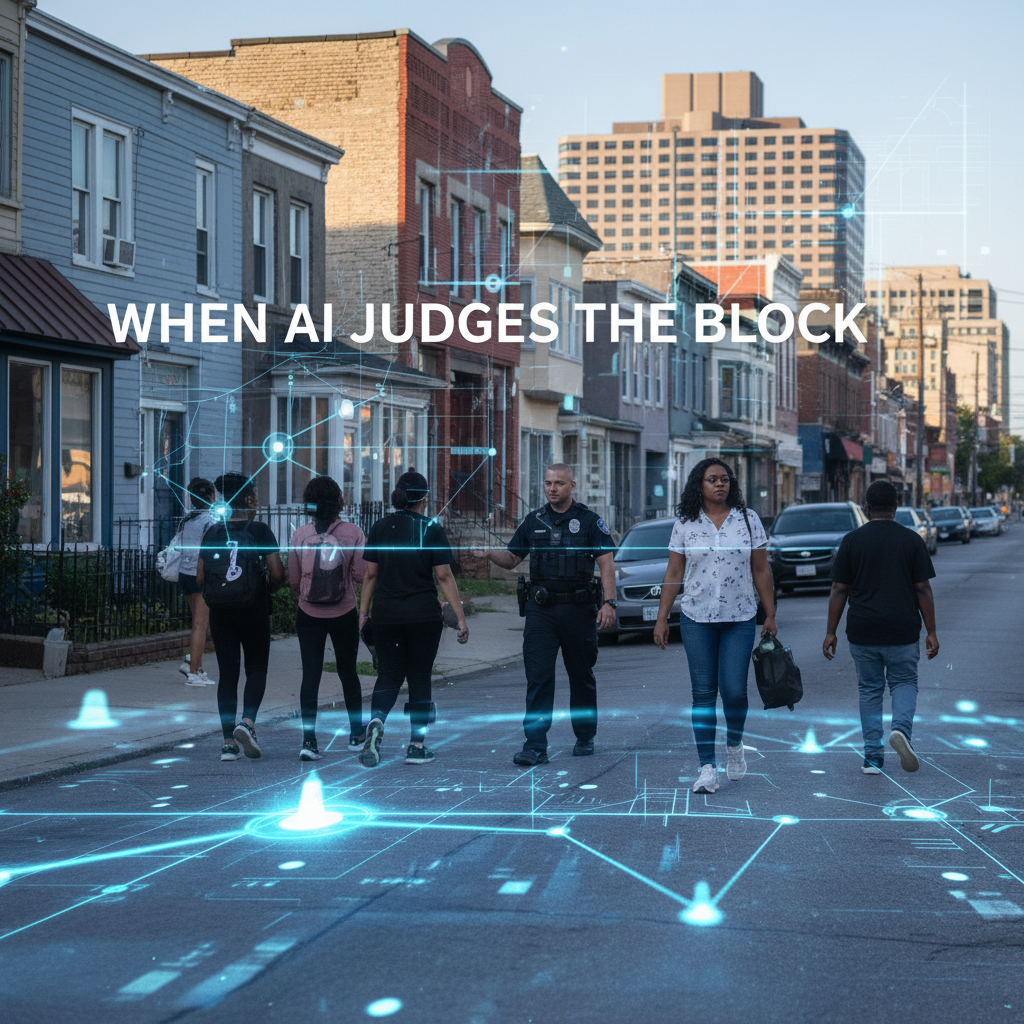
Let me tell you, the conversation around AI in criminal justice, it's not just some abstract debate happening in university halls or tech company boardrooms. Nah, this is real, boots-on-the-ground stuff that's already changing lives, particularly in communities that often feel like they're on the wrong side of the digital divide. We're talking about predictive policing, sentencing algorithms, and all these fancy terms that boil down to one thing: machines making decisions that impact human freedom and justice. And frankly, for a long time, the folks building these systems weren't really thinking about the folks living in places like my old neighborhood in South Atlanta, or the historic streets of Detroit, or the vibrant communities of Houston. But that's starting to change, and it needs to. This is the real AI revolution, folks.
For years, the narrative around AI in criminal justice has been dominated by fear and skepticism, and for good reason. Early predictive policing models, for example, often amplified existing biases in historical crime data. If police historically over-patrolled certain neighborhoods, guess what the AI learned to do? Over-patrol those same neighborhoods, creating a self-fulfilling prophecy of higher reported crime, more arrests, and a deeper cycle of distrust. It was a digital echo chamber of systemic issues. Algorithms like Compas, used in sentencing, faced massive scrutiny for allegedly showing racial bias, assigning higher recidivism risk scores to Black defendants than white defendants, even when controlling for similar factors. This isn't just an academic problem; it's a fundamental challenge to the very idea of justice.
But here's where my optimism kicks in. We're finally starting to see a shift. It's not about throwing the baby out with the bathwater, but about demanding better, more equitable, and more transparent AI. The conversation has moved beyond simply 'AI is biased' to 'how do we build AI that is just?' And that, my friends, is a game-changer. We're seeing a push for what some call 'community-centric AI,' where the people most affected by these systems actually have a seat at the table during their design and deployment.
Take for instance, the work being done by organizations like the Algorithmic Justice League, founded by Dr. Joy Buolamwini. She's been a vocal advocate for auditing these systems for bias and pushing for greater accountability. As she famously stated, "We need to move from 'move fast and break things' to 'move fast with eyes open and fix things.'" That sentiment is gaining traction, not just among activists, but within tech companies and government agencies too. The idea that these tools can be deployed without rigorous, independent oversight is quickly becoming a relic of the past.
Now, let's talk about some of the promising developments. Instead of just predicting where crime will happen based on past arrests, some newer models are focusing on predicting what services could prevent crime. Think about it: identifying areas with high rates of truancy, unemployment, or housing instability, and then deploying social workers, job training programs, or mental health services. This is a radical shift from a punitive model to a preventative one, using AI as a tool for social good rather than just enforcement. Companies like Palantir, often associated with government surveillance, are also facing increasing pressure to demonstrate the ethical implications and societal benefits of their tools, especially as they expand their reach into public safety initiatives. The public eye is sharper now, and the questions are getting tougher.
Another area seeing significant reform is in sentencing and parole recommendations. Instead of just relying on static, potentially biased risk assessments, researchers are exploring dynamic, explainable AI models. These models aim to provide judges with more comprehensive insights into a defendant's circumstances, rehabilitation potential, and the social determinants that might have contributed to their situation. The goal isn't to replace human judgment, but to augment it with data-driven insights that are transparent and auditable. Dr. Cynthia Rudin, a computer scientist at Duke University, has been a leading voice in this space, advocating for "interpretable machine learning" in high-stakes decisions. She argues, "If we can't understand why an algorithm makes a decision, we can't trust it, especially when someone's freedom is on the line." Her work pushes for models that are not black boxes, but rather systems whose logic can be fully understood and scrutinized by humans.
This push for transparency and accountability isn't just academic; it's becoming policy. Several states, including California and New York, are exploring or have implemented legislation requiring independent audits of AI systems used in criminal justice. The National Institute of Standards and Technology (nist) has also released its AI Risk Management Framework, providing guidelines for organizations to manage the risks of AI, including bias and privacy concerns. This is crucial because it sets a standard, a baseline for what responsible AI deployment looks like, moving us away from the Wild West days of unchecked algorithmic power.
And here's the kicker: the future of AI in criminal justice is being built in places you'd never expect. It's not just the big tech campuses in Mountain View. It's in innovation hubs in Atlanta, where historically Black colleges and universities are training the next generation of AI ethicists. It's in community tech centers in Chicago, where local activists are collaborating with data scientists to build tools that genuinely serve their neighborhoods. These are the places where the real-world impact of these technologies is felt most acutely, and where the most innovative solutions are often born. Forget the Valley, look at Atlanta, Detroit, Houston, and other cities where diverse perspectives are driving this change.
Of course, challenges remain. Data privacy is a huge one. How do we leverage vast datasets to improve justice outcomes without creating a surveillance state? The answer lies in robust anonymization techniques, strict data governance, and empowering individuals with more control over their data. Then there's the ongoing battle against algorithmic bias. It's not a one-time fix; it's a continuous process of auditing, retraining, and refining models as societal norms and data landscapes evolve. We need diverse teams building these systems, reflecting the very communities they aim to serve.
Ultimately, my take is this: AI in criminal justice is here to stay. The question isn't whether we use it, but how we use it. Do we let it perpetuate existing inequalities, or do we harness its power to build a more just, equitable, and preventative system? I'm betting on the latter. It's going to take a lot of hard work, uncomfortable conversations, and a genuine commitment from everyone involved, from the engineers writing the code to the policymakers drafting the laws, and especially the community members whose lives are on the line. But if we get it right, we could be looking at a future where technology isn't just a tool for enforcement, but a catalyst for true justice and community empowerment. For more insights on how AI is shaping our world, check out MIT Technology Review. The conversation is just getting started, and it's one we all need to be a part of. We can also look at how AI is affecting other areas of society, like the job market, as discussed in When OpenAI's GPT and Google's Gemini Come for the Kākāriki: Why Aotearoa Must Reclaim Its Narrative in the AI Job Shift [blocked].
This isn't just about algorithms; it's about our values. It's about building a future where technology serves humanity, not the other way around. And that, to me, is a future worth fighting for. For a broader perspective on AI's impact on society and policy, Reuters Technology often provides excellent coverage. We're at a crossroads, and the decisions we make now will echo for decades to come.