The hum of machinery in Russia's industrial heartlands has long been a constant, a rhythmic pulse of a nation built on labor and production. Now, a new, more subtle hum is emerging, one powered by algorithms and artificial intelligence, promising efficiency but whispering of obsolescence for millions. The official story, as often presented, is one of progress and modernization, a necessary step for Russia to maintain its competitive edge on the global stage. Yet, as a journalist who has spent years observing the intricate dance between technological ambition and societal reality, I find myself asking: does this official story truly add up?
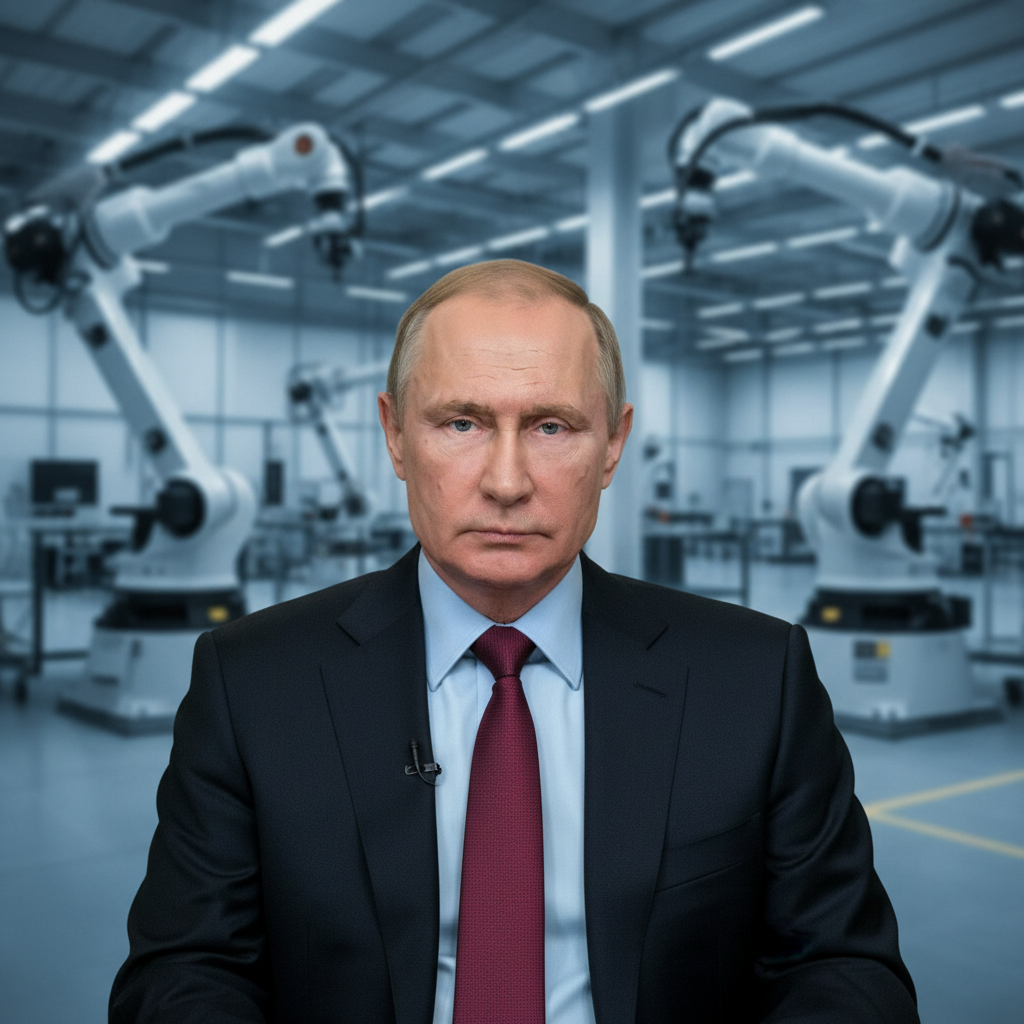
My recent investigation led me to delve into the complex relationship between state-backed AI initiatives and the potential impact on the Russian workforce. While direct, overt labor union pushback against AI automation in Russia might not manifest in the same public spectacles seen in Western Europe or the United States, the concerns are very real, albeit often expressed through less visible channels. The Kremlin, under President Vladimir Putin, has consistently emphasized the strategic importance of AI development, framing it as a matter of national security and economic sovereignty. In 2019, Putin signed a national strategy for AI development, a document that outlined ambitious goals for technological leadership, including the integration of AI into key sectors like manufacturing, energy, and defense. This vision, while grand, largely sidesteps the immediate human cost.
To understand the nuances of this silent struggle, one must look beyond the official pronouncements and towards the individuals and institutions grappling with these changes. One such figure, whose public statements offer a window into the state's perspective, is German Gref, the long-serving CEO of Sberbank, Russia's largest bank. Gref has been a vocal proponent of AI adoption, not just within Sberbank, which has invested heavily in its own AI capabilities and even developed its own large language models, but across the entire Russian economy. He frequently speaks at forums such as the St. Petersburg International Economic Forum, advocating for rapid digital transformation.
In a notable address, Gref once stated, "Artificial intelligence is not just a technology, it is a new way of thinking, a new philosophy of management. We must embrace it fully, or we risk falling behind." This sentiment, widely echoed within Russian state-affiliated corporations, underscores a top-down mandate for AI integration. Sberbank, under Gref's leadership, has been a pioneer in deploying AI for customer service, risk assessment, and internal operations, reportedly automating significant portions of its workflow. While specific figures on job displacement due to AI at Sberbank are not readily available, the bank's efficiency gains are often attributed to these technological advancements.
However, the narrative of inevitable progress often overlooks the human element. For the average worker in a factory or a regional office, the promise of increased efficiency translates into a palpable fear of redundancy. The Russian labor market, already facing demographic challenges and the lingering effects of economic sanctions, is particularly vulnerable to large-scale automation. The official unemployment rate, while seemingly low, often masks underemployment and the precarious nature of many jobs, especially in regions heavily reliant on traditional industries. Behind the sanctions curtain, the pressure to modernize and optimize operations through AI is immense, yet the social safety nets to cushion the impact on displaced workers remain underdeveloped compared to many European counterparts.
I recall a conversation with a former engineer from a regional manufacturing plant, now retraining for IT. He spoke of the quiet anxiety among his colleagues. "They tell us AI will create new jobs, more interesting jobs," he recounted, his voice tinged with skepticism. "But what about the jobs we have now? Who will teach a 50-year-old welder to code? The state speaks of grand strategies, but for us, it is about putting food on the table." This anecdotal evidence, though not a formal union statement, reflects a widespread sentiment that the state's grand vision for AI sometimes feels disconnected from the ground reality of the working class.
The challenge for Russia is not merely technological adoption, but also social adaptation. The Soviet legacy, with its emphasis on full employment, still subtly influences public expectations. While formal labor unions in Russia, often closely tied to the state, have generally adopted a cautious, rather than confrontational, stance on AI, their internal discussions likely reflect these anxieties. Their public statements tend to align with the government's narrative, focusing on training and reskilling initiatives rather than outright opposition to automation. This approach, while pragmatic, perhaps stifles a more robust public debate on the ethical and social implications of widespread AI deployment.
Consider the statements made by Mikhail Shmakov, the long-standing head of the Federation of Independent Trade Unions of Russia (fnpr). While acknowledging the transformative potential of AI, Shmakov has consistently emphasized the need for social dialogue and worker protection. He has been quoted saying, "Technological progress is inevitable, but it must not come at the expense of human dignity and social justice. We need mechanisms to ensure that workers are not left behind, that they receive proper retraining and support." This measured tone indicates an awareness of the issue, but also a recognition of the limits of direct confrontation with state-backed economic policy.
The tension between Russia's brilliant AI talent and its political constraints is particularly acute in this domain. Russian AI talent deserves better than to be caught between a top-down modernization drive and an underprepared workforce. Many highly skilled Russian AI researchers and developers, often educated at institutions like Moscow State University or HSE University, are contributing to cutting-edge advancements, both domestically and abroad. However, the application of these advancements within Russia often faces a different set of challenges, including a less flexible labor market and a more centralized decision-making process.
The question of who benefits from this AI-driven transformation remains critical. While corporations like Sberbank report increased profits and efficiencies, the broader societal distribution of these benefits is less clear. The state's focus on national champions and strategic industries means that investment in AI is often concentrated, potentially exacerbating regional inequalities. The promise of new, high-skill jobs in AI development and maintenance is often geographically concentrated in major urban centers like Moscow and St. Petersburg, leaving workers in more remote, industrial towns vulnerable.
Looking ahead, the path for Russia's workforce amidst the AI revolution is fraught with complexities. The government's recent initiatives, such as the 'Digital Economy' national program, allocate significant resources to digital transformation, including AI. However, the effectiveness of these programs in mitigating job losses and ensuring a just transition for workers is yet to be fully demonstrated. The official figures on AI adoption and its economic impact are often optimistic, but the human stories, the quiet anxieties in the factory canteens and regional employment centers, tell a more nuanced tale. The challenge is not simply to implement AI, but to do so in a way that truly serves the people, not just the algorithms or the state's strategic ambitions. As the world accelerates its embrace of AI, Russia must navigate this treacherous terrain with a clear understanding that true progress is measured not just in lines of code or economic growth, but in the well-being and security of its citizens.
For more insights on the global impact of AI on labor, consider the analyses published by MIT Technology Review. The broader economic implications of AI, particularly in emerging markets, are frequently discussed on platforms like Reuters Technology. The ongoing debate about AI's ethical dimensions and societal impact is a recurring theme on Wired. While the specific dynamics within Russia are unique, the underlying questions about automation, employment, and social equity resonate globally.