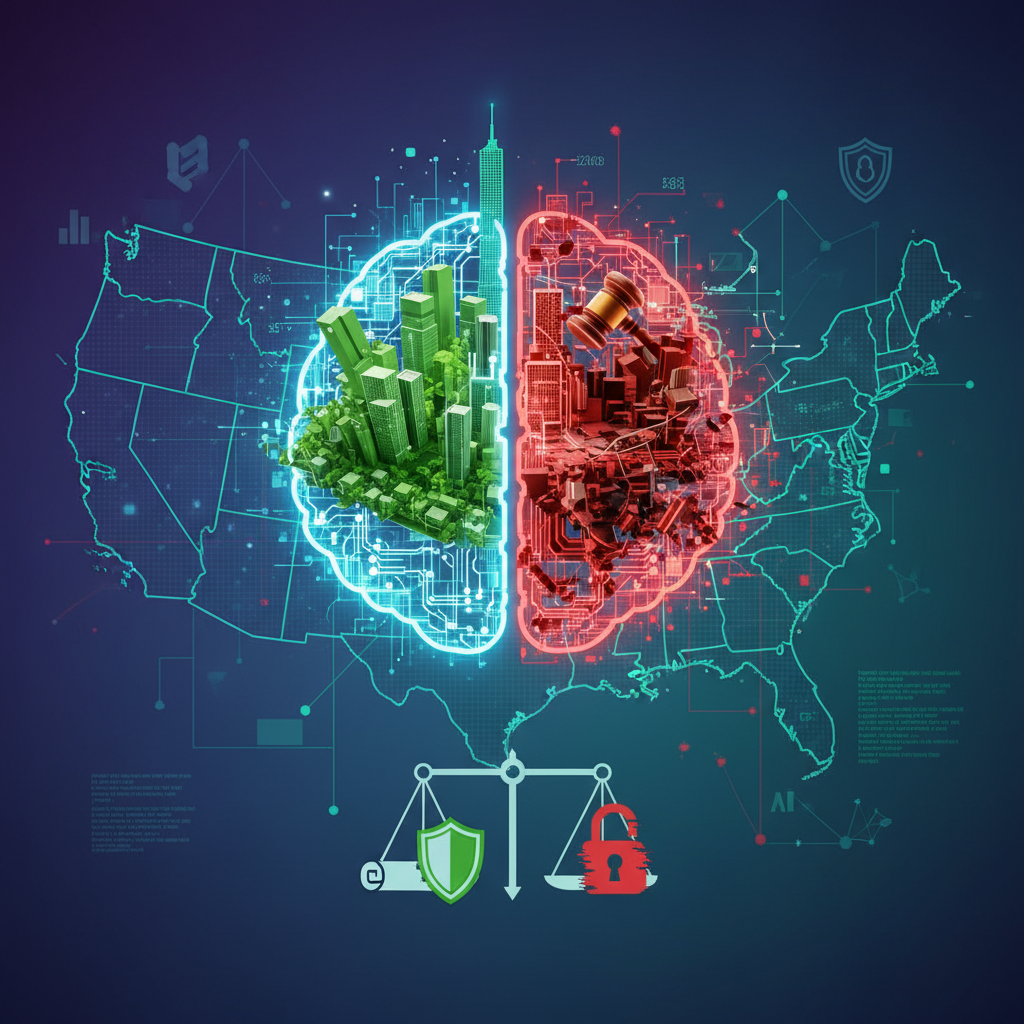

Walk through any major American city today, from the gleaming towers of Manhattan to the sprawling developments in Houston, and you’ll see the future being built. Or at least, that’s what the tech brochures tell you. The latest buzz isn't just about steel and concrete, it’s about algorithms, sensors, and machine learning. AI in construction, they say, is the next big thing, promising to optimize designs, monitor safety, and streamline project management. But here's what the tech bros don't want to talk about: when AI builds our cities, whose vision is it really constructing?
For decades, construction has been a notoriously slow adopter of new tech, a sector often seen as stuck in its ways. Think about it. We’ve gone from flip phones to pocket supercomputers, but the way we pour concrete hasn't fundamentally changed in a century. Now, suddenly, AI is everywhere. Companies like Autodesk are pushing generative design tools that can spit out thousands of architectural variations in minutes, optimizing for everything from material costs to energy efficiency. Boston Dynamics' Spot robots are trotting around job sites, mapping progress and identifying hazards. Project management platforms, powered by AI, claim to predict delays before they even happen, keeping those multi-million dollar projects on track.
It sounds great on paper, doesn't it? A more efficient, safer, and perhaps even greener way to build. The global construction AI market is projected to reach over $7 billion by 2030, according to some reports, a staggering leap from its current footprint. Major players like Trimble and Procore are integrating AI features into their software suites, promising a revolution. They tell us this isn't a fad, it's the new normal.
But let’s pump the brakes for a second. My Spidey-sense starts tingling whenever I hear about a “revolution” that doesn't explicitly address the people who stand to lose, or who are already marginalized. We’ve seen this movie before. New tech comes in, promises to fix everything, and somehow the same old problems of inequity and access persist, sometimes even worsen. Silicon Valley has a blind spot the size of Texas when it comes to understanding how their innovations impact communities beyond their immediate bubble.
Consider design optimization. AI can indeed create incredibly efficient building layouts. But what data is it trained on? Is it learning from decades of urban planning that prioritized highways over neighborhoods, or that funneled resources away from Black and brown communities? If the AI is fed historical data from systems riddled with redlining and discriminatory zoning practices, then what kind of “optimized” future is it going to design? Will it inadvertently perpetuate digital redlining, creating smart cities that are only smart for some, while others are left with the digital equivalent of crumbling infrastructure?
Safety monitoring is another area where AI is making inroads. Drones and AI-powered cameras can detect if workers aren't wearing hard hats or if equipment is too close to a hazard. This is undeniably valuable. Construction is one of the most dangerous professions, and anything that reduces injuries or fatalities is a win. However, who owns this data? How is it stored? And what happens when a worker's every move is tracked and analyzed by an algorithm? Will it lead to genuine safety improvements, or will it become another tool for surveillance and disciplinary action, particularly against workers who might already be vulnerable or undocumented? We need to be vigilant about the panopticon potential here.
Project management AI, too, raises questions. It promises to optimize schedules and allocate resources more effectively. But what if the algorithms are biased towards certain types of contractors or suppliers, perhaps those with established relationships or larger capital, inadvertently squeezing out smaller, minority-owned businesses? The construction industry, like many others, has historically struggled with diversity and inclusion. Will AI exacerbate these existing disparities, or will it be intentionally designed to level the playing field? I'm not holding my breath.
I spoke with Dr. Ruha Benjamin, a professor of African American Studies at Princeton University, who has extensively researched race, technology, and justice. She put it plainly, "We have to ask, 'Who is being built, and who is being unbuilt, by these technologies?' If we don't interrogate the values embedded in our algorithms, we risk automating inequality." Her point is critical: technology is not neutral, it reflects the values of its creators and the data it consumes. You can read more about her work on the societal impacts of AI in articles like this one from MIT Technology Review.
Then there's the labor question. While proponents argue that AI will create new, higher-skilled jobs, the reality is often more complex. What happens to the laborers whose tasks are automated? Will there be adequate retraining programs, especially for older workers or those without immediate access to tech education? Uncomfortable truth time: the tech industry's track record on equitable job creation and workforce transition is not exactly stellar. We've seen how automation has impacted manufacturing jobs across the Midwest, leaving communities scrambling.
Even the notion of 'smart cities' built with AI raises flags. While the idea of optimized traffic flow and efficient energy grids sounds appealing, the implementation often overlooks the very human element of urban life. Who decides what constitutes 'optimization'? Is it the most efficient route for Amazon delivery trucks, or the most walkable path for a single mother pushing a stroller? Is it about maximizing property values, or ensuring affordable housing? These are not purely technical questions, they are deeply political and social ones.
I’m not saying AI has no place in construction. There are undeniable benefits. For example, AI can analyze vast amounts of geological data to identify the safest and most stable sites for new buildings, potentially preventing disasters. It can help identify structural weaknesses in existing infrastructure, like aging bridges or dams, before they fail. In disaster relief, AI could rapidly assess damage and prioritize reconstruction efforts. The potential for positive impact is real, but it requires intentional, ethical design and deployment.
Dr. Fei-Fei Li, co-director of Stanford's Institute for Human-Centered AI, has often emphasized the need for human values to guide AI development. She's been quoted saying, "We need to make sure that AI is developed with human flourishing as its North Star." This isn't just about making AI work; it's about making AI work for everyone, not just the privileged few. Her perspective is crucial for understanding the broader implications of AI, as discussed in various tech publications, including TechCrunch.
So, is AI in construction a fad or the new normal? It's definitely the new normal, but it's a normal that's still being defined. The algorithms are here to stay, and they will undoubtedly reshape how we build. The real question isn't whether AI will be used, but how it will be used. Will it be a tool for progress that addresses historical injustices and creates genuinely equitable urban spaces, or will it simply amplify existing power structures and deepen the divides we already see in our cities?
My verdict? The promise of AI in construction is immense, but so is the potential for harm if we don't actively push back against the uncritical adoption of these technologies. We need more diverse voices at the design table, more robust ethical frameworks, and a constant, unwavering focus on who benefits and who bears the cost. Otherwise, we risk building a future that looks suspiciously like the past, just with more efficient cranes and smarter sensors. The fight for algorithmic justice in our built environment is just beginning. For more insights into the societal impact of AI, you can explore resources like Wired's AI section.