The digital revolution, powered by artificial intelligence, casts a long shadow over the global workforce. From Seattle to Shenzhen, the specter of automation displacing human labor has ignited debates, protests, and calls for new social contracts. But what of Russia, a nation often viewed through a distinct geopolitical lens, yet intrinsically linked to global technological currents? Here, the narrative surrounding AI and labor is complex, layered with historical context, economic realities, and a unique approach to worker representation.
The official story, often presented through state media and industry reports, suggests a measured, controlled integration of AI, emphasizing efficiency gains and new opportunities. However, when one speaks to those on the factory floor, in logistics hubs, or even in administrative offices, a different picture emerges. The anxieties are palpable, the questions about job security are pressing, and the traditional mechanisms of worker protection, namely trade unions, find themselves in uncharted territory.
Historically, Russian trade unions, while structurally robust, have often operated within a framework of cooperation with employers and the state, rather than overt confrontation. This legacy, inherited from the Soviet era, means their approach to technological disruption is less about outright resistance and more about negotiation, retraining, and adaptation. But can this model withstand the pace and scale of AI-driven change? This is the central question that demands an answer.
Consider the manufacturing sector, a cornerstone of the Russian economy. Companies like Rostec, a state corporation consolidating numerous high-tech industrial assets, are actively exploring AI for process optimization, predictive maintenance, and quality control. While these initiatives promise increased productivity, they inevitably reduce the need for manual labor. "We are not replacing people, we are re-skilling them," stated Sergey Chemezov, CEO of Rostec, in a recent interview with a state news agency. "Our focus is on creating a more efficient, high-tech workforce, not on mass layoffs." This is the official line, a carefully crafted message of progress and opportunity.
However, the reality on the ground can be more nuanced. In regions heavily reliant on traditional industries, such as the Urals or parts of Siberia, the prospect of automation can feel like an existential threat. A steelworker in Magnitogorsk, for instance, whose skills are honed over decades, may find the offer of retraining for a data entry position less than appealing, particularly if the new role offers reduced pay or uncertain long-term prospects. Reuters has reported on similar anxieties in other industrial economies, highlighting a global pattern of worker displacement fears.
Indeed, the official story doesn't add up entirely. While retraining programs exist, their scale and effectiveness are often questioned by workers themselves. The Federation of Independent Trade Unions of Russia (fnpr), the largest trade union confederation in the country, acknowledges the challenge. Mikhail Shmakov, its chairman, has repeatedly called for a national dialogue on AI's impact on labor. "We must ensure that technological progress serves the people, not the other way around," Shmakov declared at a recent Fnpr congress in Moscow. "This means robust social safety nets, comprehensive retraining initiatives, and a commitment from employers to prioritize human capital." These are noble sentiments, but the practical implementation remains a formidable hurdle.
The challenge is not merely about job displacement, but also about the changing nature of work itself. AI is increasingly capable of performing cognitive tasks, from basic data analysis to complex decision-making support. This impacts not just blue-collar workers, but also white-collar professions. Consider the legal sector, where AI tools can now draft contracts or analyze case law with astonishing speed. While this might free up lawyers for more complex, strategic work, it also raises questions about the future demand for entry-level legal professionals.
In Russia, the development of AI is a national priority, with significant state investment channeled into research and development, particularly through institutions like Sberbank and Yandex. Sberbank, for instance, has been aggressive in deploying AI across its vast operations, from customer service chatbots to credit scoring algorithms. Herman Gref, CEO of Sberbank, has been a vocal proponent of AI, stating in a recent forum that "AI is not a luxury, it is a necessity for competitiveness." He maintains that Sberbank's AI strategy aims to augment human capabilities, not replace them wholesale, leading to higher-value jobs.
Yet, the pace of change can be disorienting. A 2023 report by the Russian Presidential Academy of National Economy and Public Administration (ranepa) estimated that up to 20% of current jobs in Russia could be significantly altered or displaced by automation within the next decade. While this figure is not unique to Russia, it underscores the urgency of proactive measures. The report highlighted sectors like transportation, retail, and manufacturing as particularly vulnerable.
One of the critical distinctions in the Russian context is the limited independent bargaining power of many unions compared to their Western counterparts. While unions exist and represent millions of workers, their ability to directly challenge corporate or state policy on automation is often constrained. Strikes, for example, are less common and more difficult to organize than in many European nations. This means that the primary avenue for addressing AI's impact often falls to government-led initiatives and corporate social responsibility programs, rather than aggressive union-employer negotiations.
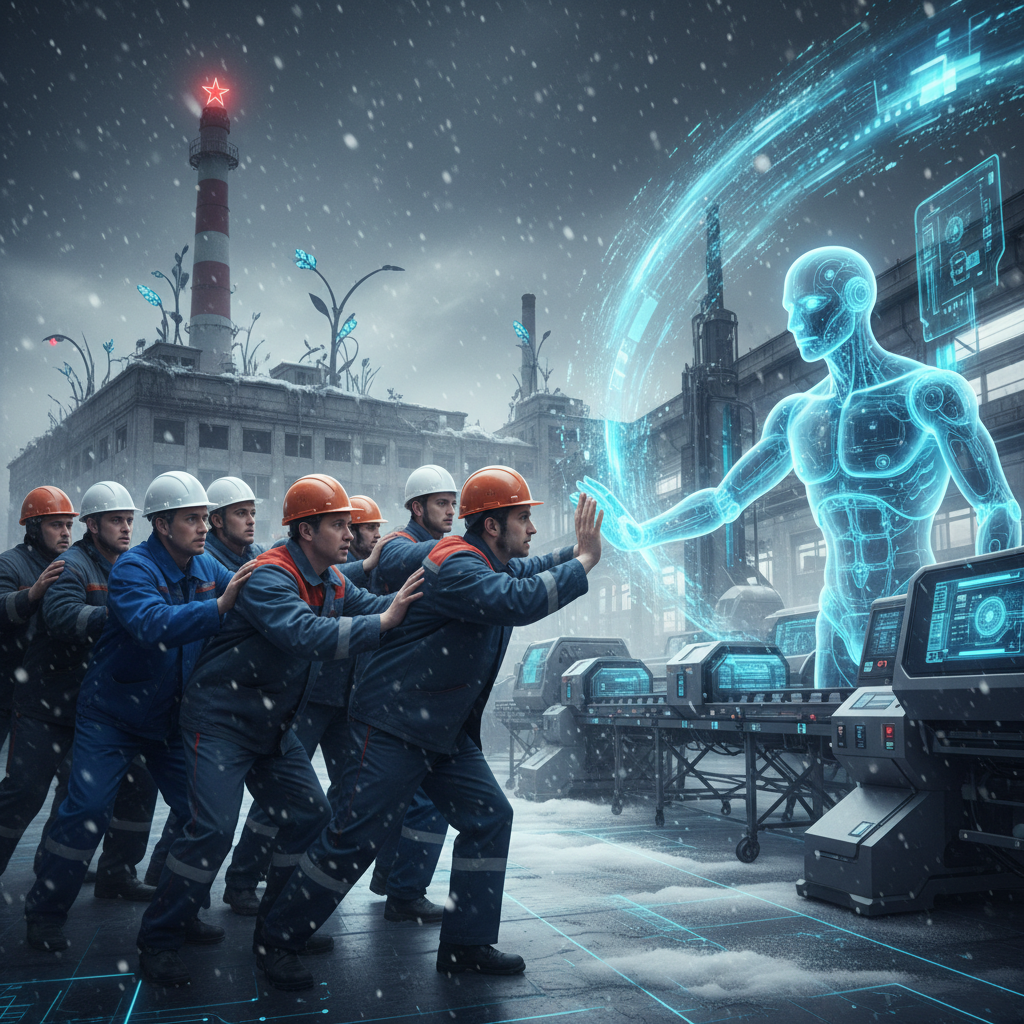
However, there are nascent signs of change. In specific industries, particularly those with a strong tradition of worker solidarity, such as mining or heavy industry, local union chapters are beginning to push back. They are demanding clearer roadmaps for automation, guarantees of retraining, and commitments to avoid compulsory redundancies. These localized efforts, though not yet widespread, represent a crucial bottom-up pressure point.
Furthermore, Russian AI talent deserves better than to be seen merely as a tool for corporate efficiency without considering the broader societal impact. Many brilliant engineers and researchers, educated at institutions like Moscow State University or Itmo University in St. Petersburg, are acutely aware of the ethical and social dimensions of their work. They often express a desire for AI development to be guided by principles that prioritize human well-being and equitable societal progress, not just profit margins. This sentiment is not always reflected in the broader industrial deployment strategies.
The global discourse on AI and labor is also influencing Russian thinking. Discussions around universal basic income, reduced working hours, and lifelong learning initiatives, while still largely theoretical in Russia, are gaining traction among academics and some policy circles. The International Labor Organization (ILO) has been vocal globally about the need for a human-centered approach to AI, and Russia, as a member state, is exposed to these discussions. MIT Technology Review has extensively covered these global debates, providing a broader context for the challenges faced by nations like Russia.
Ultimately, the question of whether Russian trade unions can effectively hold back the digital tide, or if their stand is futile, remains open. It is likely neither extreme is true. Instead, a complex dance of adaptation, negotiation, and occasional friction will define the coming years. The unique structure of Russian labor relations, combined with the rapid advancements in AI, will forge a path distinct from other nations. What is clear, however, is that ignoring the concerns of the workforce, or simply presenting a sanitized version of technological progress, will only deepen the fissures. A genuine, transparent dialogue, acknowledging both the immense potential and the profound challenges of AI, is not merely desirable, it is essential for the stability and prosperity of the Russian society in this new digital age. The future of work in Russia, like its past, will be shaped by a unique interplay of global trends and local realities, all unfolding behind the sanctions curtain.
For a deeper dive into the challenges faced by Russian developers, one might consider the article Beyond the Code: How Cursor's AI Editor Navigated Sanctions to Captivate Developers, a Russian Perspective [blocked], which touches upon the ingenuity and constraints within the Russian tech sphere.