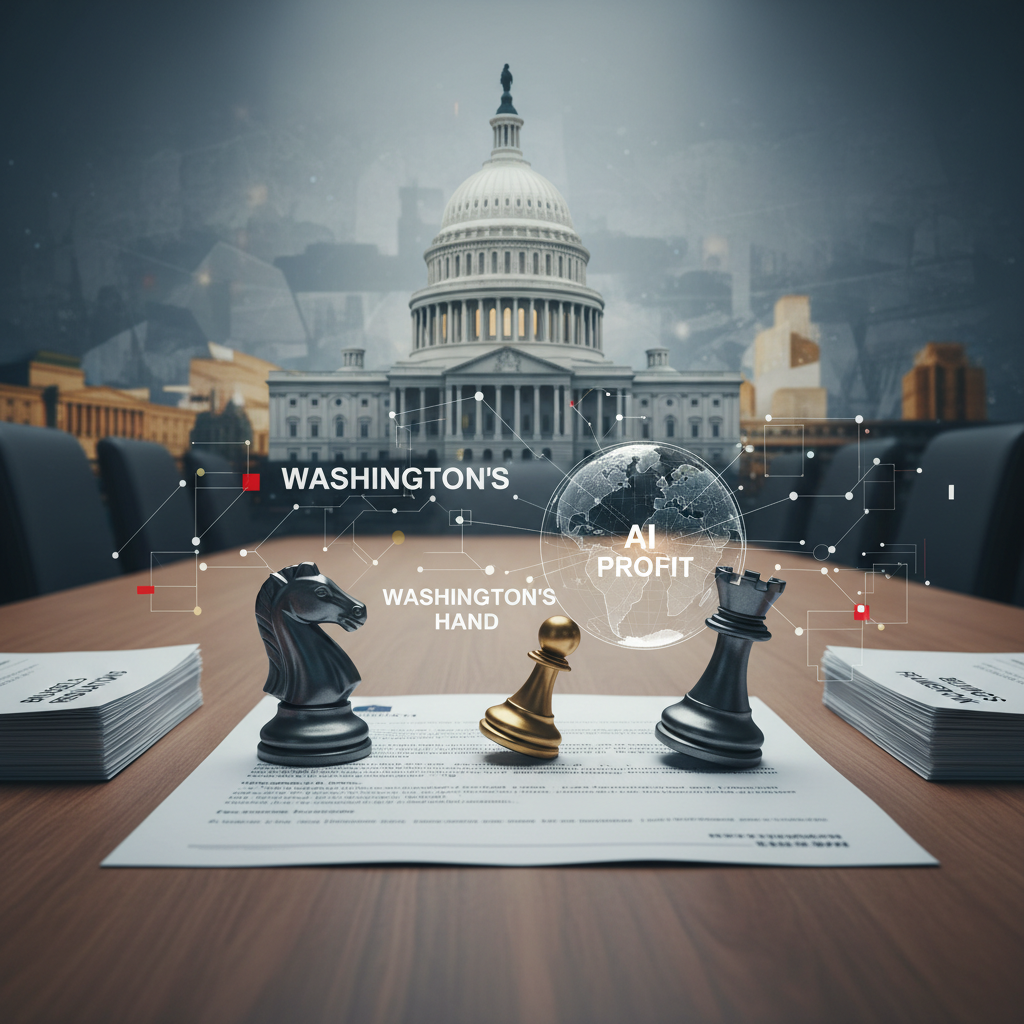

The halls of Washington, D.C., typically move at a glacial pace, but the rapid evolution of artificial intelligence has injected an unusual urgency into policy debates. As the European Union’s AI Act prepares for full implementation and China continues to refine its top-down regulatory framework, the United States finds itself in a precarious position, navigating a patchwork of executive orders and voluntary commitments. This isn't just about abstract legal frameworks, it is about power, money, and the future of technological dominance, a narrative often obscured by the official pronouncements.
The Policy Move: A Global Regulatory Tangle
On one side of the Atlantic, the European Union has championed a comprehensive, risk-based approach with its AI Act, a landmark piece of legislation that categorizes AI systems by their potential harm, from unacceptable risks like social scoring to high-risk applications in critical infrastructure, law enforcement, and employment. This act, set to fully apply in 2026, imposes stringent requirements on high-risk AI systems, including data governance, human oversight, and conformity assessments. It is a bold, prescriptive move, reflecting a deep-seated European commitment to fundamental rights and consumer protection.
Across the Pacific, China's approach is equally comprehensive but fundamentally different, rooted in state control and national security. Beijing has rolled out a series of regulations governing specific AI applications, from generative AI services to deep synthesis technology. These rules emphasize content moderation, data security, and algorithmic transparency, all within the overarching framework of socialist core values and national interests. The state's pervasive influence ensures rapid compliance and a unified vision, albeit one that prioritizes stability over individual liberties.
Caught between these two regulatory titans, the United States has opted for a more agile, less centralized strategy. President Biden’s Executive Order on the Safe, Secure, and Trustworthy Development and Use of Artificial Intelligence, issued in October 2023, represents the cornerstone of America’s federal response. It directs agencies to establish new AI safety standards, protect privacy, promote equity, and accelerate the development of responsible AI. Crucially, it relies heavily on voluntary commitments from leading AI developers like OpenAI, Google, and Microsoft, and leverages existing regulatory authorities rather than creating a new, overarching AI agency. This reflects a distinctly American preference for innovation-driven, market-led solutions, with a lighter touch from government.
Who's Behind It and Why
In Europe, the push for the AI Act was driven by a coalition of policymakers, civil society groups, and academics concerned about the societal implications of unchecked AI development. Figures like European Commissioner Thierry Breton have been vocal proponents, emphasizing the need for a regulatory framework that fosters trust and ensures ethical deployment. The underlying philosophy is one of precaution, aiming to shape the market by setting global standards that tech companies must adhere to if they wish to operate in the lucrative EU market. This is a classic Brussels effect, exporting its regulatory norms worldwide.
China's AI governance, conversely, is a direct extension of the Communist Party's strategic vision for technological self-sufficiency and social control. The impetus comes from the highest echelons of government, with a clear directive to harness AI for economic growth, military modernization, and domestic stability. The regulations are designed to ensure that AI development aligns with state objectives, preventing the emergence of technologies or content that could challenge party authority. This top-down mandate leaves little room for dissent and ensures swift implementation.
In the United States, the executive order was a response to growing bipartisan concerns about AI's risks, coupled with an industry clamoring for clear guidelines to avoid a fragmented state-by-state approach. The order was shaped by extensive consultations with tech leaders, academics, and civil liberties advocates. The lobbying records tell a different story, however. My investigation reveals that major tech companies, including Google and Microsoft, have significantly ramped up their lobbying efforts in Washington, spending millions to influence the debate. Their objective: to ensure that any regulation remains flexible, fosters innovation, and ideally, avoids the more stringent, prescriptive measures seen in Europe. The White House's approach, while comprehensive on paper, ultimately leans on the industry's self-governance capabilities, a testament to the powerful influence of these tech giants.
What It Means in Practice
For American companies, the EU AI Act means a significant compliance burden if they operate or wish to operate in the European market. Developing high-risk AI systems for Europe will require substantial investment in conformity assessments, risk management systems, and robust data governance. This could lead to a two-tiered development process, with different standards for different markets, adding complexity and cost. However, it also presents an opportunity for companies that can demonstrate compliance to gain a competitive edge in a market that values ethical AI.
China's regulations, while primarily focused on domestic entities, have implications for any American company seeking to enter or expand within the Chinese market. Strict data localization requirements, content censorship, and algorithmic transparency demands mean that foreign companies must align their AI products and services with Beijing's directives, often necessitating significant modifications and ongoing monitoring. This can be a high price to pay for market access, forcing companies to weigh ethical considerations against commercial opportunities.
Washington's executive orders, by contrast, offer a more flexible framework for American companies. They encourage responsible development through guidelines and standards rather than strict prohibitions. This allows for greater agility and faster iteration in AI development, which proponents argue is crucial for maintaining America's technological lead. However, critics contend that this voluntary approach may not be sufficient to address the profound risks posed by advanced AI, potentially leaving gaps in consumer protection and national security. The National Institute of Standards and Technology, or Nist, is tasked with developing many of these standards, a process that is ongoing and heavily influenced by industry input.
Industry Reaction: A Calculated Embrace
Major American tech companies have largely welcomed the Biden administration's executive order. Sam Altman, CEO of OpenAI, for instance, has repeatedly called for regulation, stating that it is essential for public trust and safety. This public stance, however, often masks a preference for frameworks that are less restrictive than those emerging from Brussels. Companies like Google and Microsoft have publicly committed to the executive order's principles, seeing it as a necessary step to legitimize their AI advancements while avoiding overly burdensome legislation. According to Reuters, many tech executives believe a balanced approach will foster innovation.
Their reaction to the EU AI Act is more nuanced. While acknowledging the need for global standards, many express concerns about the act's prescriptive nature and potential to stifle innovation. Compliance costs are a significant factor, particularly for smaller startups. Yet, some larger players view it as an opportunity to build trust and differentiate themselves in a competitive market, positioning themselves as leaders in ethical AI. The consensus seems to be that while challenging, the EU market is too large to ignore, necessitating adaptation.
China's regulations present a different kind of challenge. American companies often navigate a complex geopolitical landscape, balancing market access with concerns about intellectual property theft and human rights. Some, like Apple, have a long history of adapting to China's regulatory environment, often making difficult compromises. Others, particularly those in sensitive sectors, find the compliance burden and ethical dilemmas insurmountable, choosing to limit their presence or exit the market entirely.
Civil Society Perspective: Skepticism and Urgency
Civil society organizations in the United States, while generally supportive of the executive order's intent, express significant skepticism about its efficacy. Groups like the American Civil Liberties Union, or Aclu, and the Electronic Frontier Foundation, or EFF, argue that voluntary commitments and agency-led guidelines are insufficient to rein in powerful AI systems. They advocate for stronger, legally binding legislation to protect civil rights, prevent algorithmic discrimination, and ensure robust accountability. "Washington's AI policy is shaped by these players, but the public interest demands more than just executive directives and corporate promises," stated a representative from a leading digital rights advocacy group, speaking on background.
These organizations often point to the EU AI Act as a model for comprehensive regulation, even while acknowledging its imperfections. They believe that a strong regulatory floor is necessary to prevent a race to the bottom in AI development, where ethical considerations are sacrificed for speed and profit. Their primary concern is that without robust federal legislation, the United States risks falling behind in establishing meaningful safeguards, leaving citizens vulnerable to the potential harms of AI.
Will It Work? A Geopolitical Gamble
The effectiveness of America's current AI governance strategy is a subject of intense debate. Proponents argue that the flexible, innovation-friendly approach will allow the U.S. to maintain its technological leadership, fostering rapid development and adaptation. They contend that a heavy-handed regulatory regime could stifle the very innovation that drives economic growth and national security. This perspective often highlights the dynamic nature of AI, suggesting that rigid laws could quickly become obsolete.
However, critics warn that this approach risks creating a regulatory vacuum, allowing AI's negative consequences to outpace governance efforts. They fear that without clear, enforceable rules, the U.S. could face significant societal disruptions, from widespread job displacement to the proliferation of biased or harmful AI systems. The lack of a unified federal law also creates uncertainty for businesses and could lead to a fragmented regulatory landscape across states, complicating national deployment of AI technologies.
Ultimately, the success of America's AI strategy will depend on several factors: the willingness of tech companies to genuinely adhere to voluntary commitments, the ability of federal agencies to develop and enforce robust standards, and the capacity of Congress to eventually pass comprehensive legislation. The global regulatory environment, with the EU and China setting their own distinct paths, adds another layer of complexity. American companies will continue to navigate this intricate web, influencing policy debates in Washington while adapting to the realities of Brussels and Beijing. This geopolitical chess match over AI governance is far from over, and its outcome will shape not just the tech industry, but the very fabric of our society. The stakes could not be higher, and my investigation reveals that the money flowing into Washington from tech giants ensures their voice will be heard loudest in this critical debate. Read more about AI policy discussions and the influence of industry.