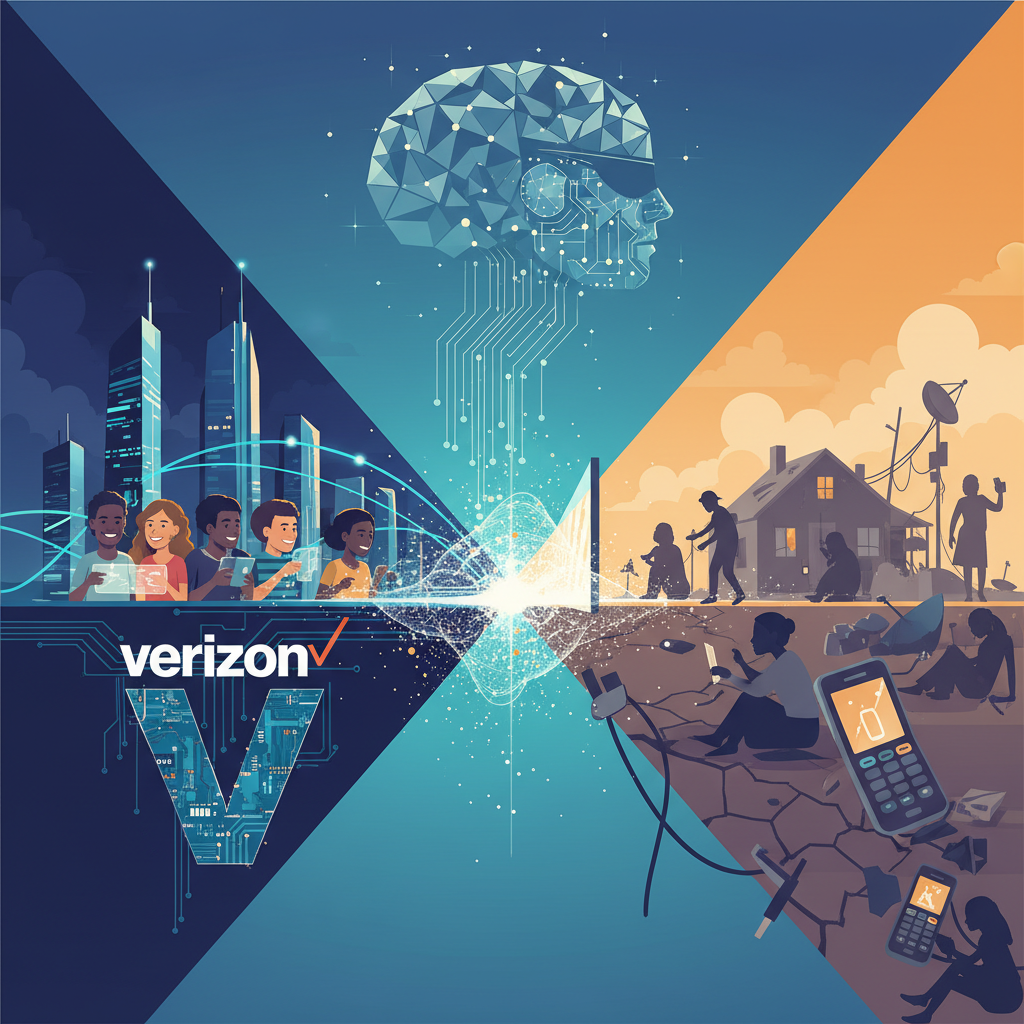

Let's be real. Every tech company, from the behemoths like Google and Microsoft to the plucky startups, is tripping over themselves to tell us how AI is going to change everything. And the telecom sector, bless its heart, is no different. We're hearing all this jazz about AI optimizing 5G networks, paving the way for 6G, and making customer service so slick you'll wonder if you're talking to a human or a highly sophisticated chatbot. But here's what the tech bros don't want to talk about: in America, where the digital divide is as wide as the Grand Canyon, this AI-driven future looks an awful lot like a shiny new fence, keeping some folks out while others zoom ahead.
I'm talking about companies like Verizon and AT&T, who are pouring billions into AI to predict network congestion, fine-tune signal strength, and automate customer support. They say it's about efficiency, about giving us better service. And sure, on the surface, that sounds great. Who doesn't want fewer dropped calls or faster downloads? But when you scratch just a little deeper, you see the same old patterns emerging, patterns that disproportionately affect Black and brown communities, rural areas, and low-income households. This isn't just about faster internet; it's about access, opportunity, and fundamental equity in a world increasingly run by algorithms.
Think about network optimization. AI models are trained on massive datasets of network traffic, usage patterns, and geographic data. If historical data shows lower usage in certain neighborhoods, often those with lower socioeconomic status, what happens when the AI decides where to prioritize infrastructure upgrades or allocate bandwidth? It's not a stretch to imagine these algorithms, designed for 'efficiency,' inadvertently reinforcing existing inequalities. If a neighborhood consistently has less data traffic because residents can't afford high-speed plans or devices, the AI might deprioritize that area for future 6G rollout, creating a self-fulfilling prophecy of digital neglect. We've seen this movie before, folks. It's called redlining, just with a new, algorithmic twist.
And customer service? Oh, that's a whole other can of worms. The promise is AI-powered chatbots that resolve issues faster, 24/7. But anyone who's tried to get a straight answer from a complex AI system knows the frustration. Now imagine you're dealing with a complicated billing issue, or you're trying to set up internet in a new home, and English isn't your first language, or you're navigating a system designed by people who don't understand your lived experience. These AI systems are often trained on datasets that reflect the biases of their creators and the dominant culture. When they fail, who bears the brunt of that failure? It's usually the most vulnerable customers, the ones who can least afford to spend hours on the phone or navigate confusing digital interfaces. As The Verge has highlighted repeatedly, the human element in customer service is often the first to go when AI comes knocking, and that's a problem for everyone, especially those already struggling.
Now, I can hear the counterarguments already. The telecom executives will tell me,