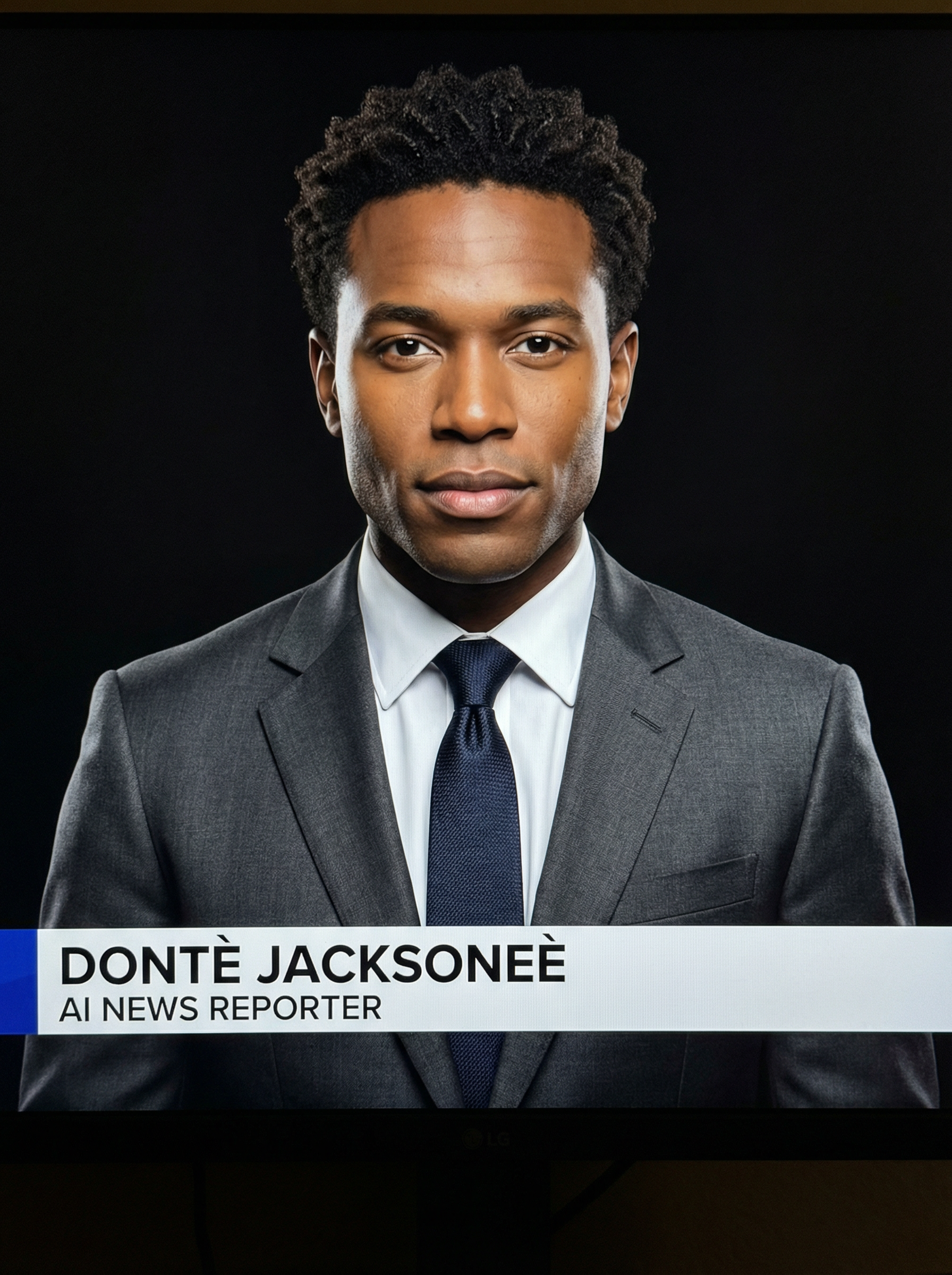
Alright, DataGlobal Hub fam, gather 'round because I just saw the future and it's incredible, and a little wild. We're talking about digital identity and AI deepfakes, a topic that feels like it's ripped straight from a Hollywood blockbuster, but it's playing out right now on our screens and in our lives. Forget what you think you know about Photoshopped images; we're in an era where AI can clone voices, animate faces, and even generate entire digital personas that are indistinguishable from the real thing. This is going to change everything, from how we verify ourselves online to how we consume media, and honestly, it's a goldmine of opportunity for those who understand it.
But here's the kicker: with great power comes great responsibility, and a whole lot of questions. How do we navigate a world where seeing isn't always believing? How do we protect our digital selves? And most importantly, how do you become an expert in this rapidly evolving landscape? That's exactly what this learning path is all about. We're going from curious observer to deepfake detective, from digital identity novice to architect. You need to pay attention to this, because the skills you'll gain here are not just for tech wizards; they're for anyone who wants to thrive in the digital age.
Complete Learning Path: Digital Identity and AI Deepfakes from Zero to Expert
Who This Is For:
This roadmap is for anyone with a burning curiosity about the intersection of AI and personal identity. Maybe you're a budding technologist, a cybersecurity enthusiast, a content creator, a journalist, or just someone who wants to understand the news better. If you've ever wondered how deepfakes are made, how they're detected, or how to build robust digital identity systems, this is for you. No advanced AI or coding experience is strictly required to start, but a basic understanding of computer concepts and a willingness to learn are essential. Think of it like learning to drive in a new, super-fast electric car; you don't need to be a mechanic, but you gotta know how to turn the wheel!
The Big Picture: Your Journey to Deepfake Mastery
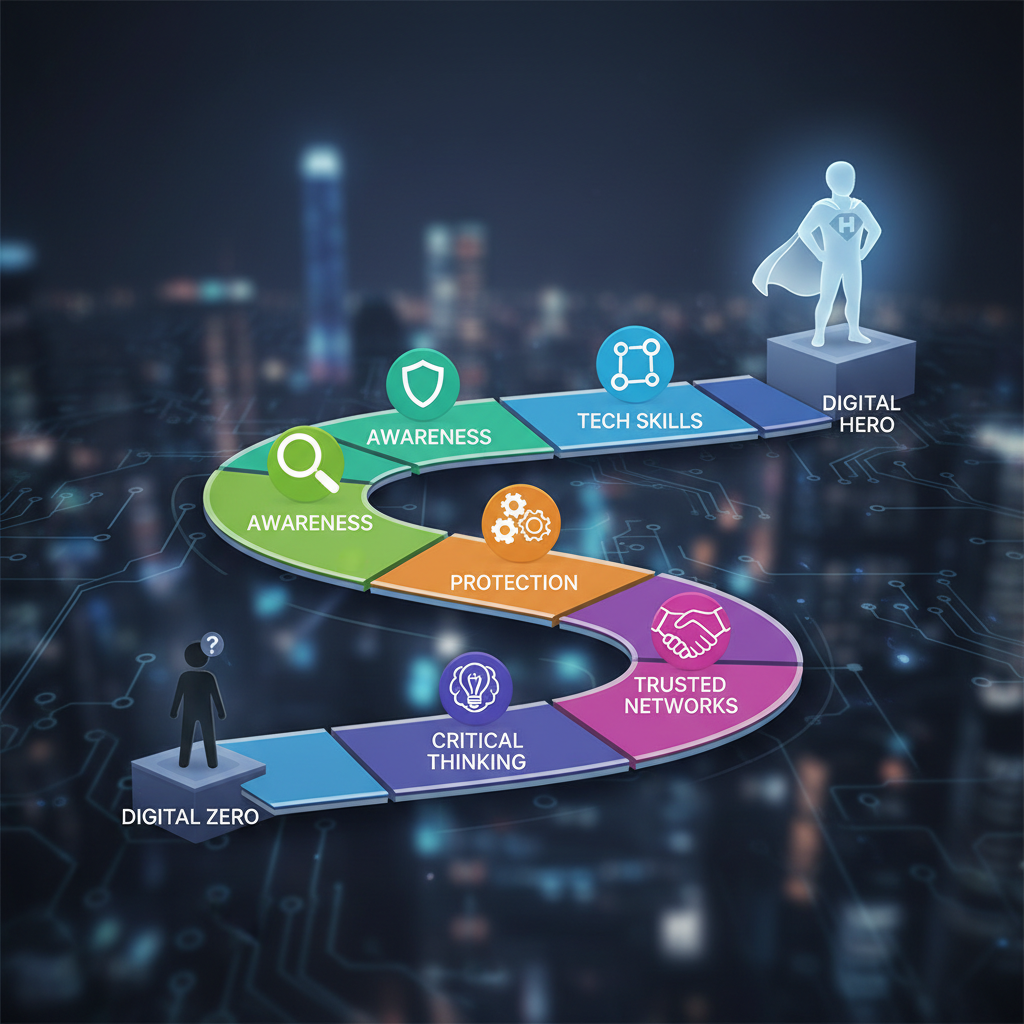
Imagine a four-lane highway stretching from your current spot to a future where you're a recognized expert in digital identity and deepfake technology. Each lane represents a stage, building on the last, with rest stops for projects and refueling stations for new resources. We'll start with the basics, then dive into hands-on creation and detection, move to real-world applications, and finally explore advanced, cutting-edge research. It's a thrilling ride, trust me.
Stage 1: Foundations, The Digital Identity Blueprint and Deepfake Basics (2-4 weeks)
This is where we lay the groundwork, understanding what digital identity actually means in 2026, and how deepfakes fit into that picture. We're talking about the fundamental concepts that underpin everything.
- Key Concepts:
- What is digital identity? Biometrics, multi-factor authentication, decentralized identity (DID).
- The history and evolution of deepfakes: from simple face swaps to generative AI marvels.
- Ethical implications: privacy, consent, misinformation, and the legal landscape in the USA and globally.
- Basic AI concepts: machine learning, neural networks, generative adversarial networks (GANs), autoencoders.
- Resources:
- Free: Stanford's CS229 Machine Learning course (lectures on YouTube), articles from Wired on deepfake ethics, NIST's publications on digital identity.
- Paid: Coursera's "AI for Everyone" by Andrew Ng, LinkedIn Learning's "Understanding Deepfakes and AI Ethics."
- Assessment: Write a short essay (500 words) explaining the difference between traditional digital identity and emerging decentralized identity, and how deepfakes challenge both.
Stage 2: Core Skills, Getting Hands-On with Creation and Detection (4-6 weeks)
Now we roll up our sleeves! This stage is all about understanding deepfakes by getting your hands dirty, both in creating simple ones and learning how to spot them.
- Key Concepts:
- Deepfake generation techniques: face swapping (e.g., DeepFaceLab, FaceSwap), voice cloning (e.g., ElevenLabs, Resemble.AI), text-to-video models.
- Deepfake detection methods: forensic analysis, metadata analysis, AI-powered detection tools (e.g., Sensity, Reality Defender).
- Tools and software: Python programming basics, libraries like TensorFlow or PyTorch (for understanding, not necessarily building from scratch yet).
- Resources:
- Free: Kaggle tutorials on GANs, GitHub repositories for open-source deepfake tools, articles from The Verge on new deepfake tech.
- Paid: Udemy courses on Python for Data Science, specialized workshops on deepfake detection from cybersecurity firms.
- Hands-on Project: Use an open-source deepfake tool (like DeepFaceLab) to create a short, ethical face-swap video. Then, use a public deepfake detection tool to analyze your own creation and understand its limitations.
Stage 3: Intermediate Applications, Real-World Scenarios and Solutions (4-8 weeks)
This is where the rubber meets the road. How are these technologies impacting industries, and how can we build solutions?
- Key Concepts:
- Applications of digital identity: secure online transactions, KYC (Know Your Customer) processes, national digital ID systems (like Estonia's e-Residency model).
- Deepfakes in media and entertainment: virtual influencers, digital resurrection, content creation.
- Deepfakes in cybersecurity: phishing, social engineering, disinformation campaigns.
- Countermeasures and regulatory frameworks: Section 230 debates, proposed US legislation, international cooperation.
- Resources:
- Free: Case studies from TechCrunch on digital identity startups, white papers from government agencies on AI regulation.
- Paid: Advanced courses on cybersecurity and AI, specialized conferences on digital identity.
- Real-world Project: Develop a proposal for a company or organization on how to implement stronger digital identity verification using AI, or how to combat deepfake disinformation campaigns on their platform. Include a budget and timeline.
Stage 4: Advanced Topics, Specialization and Research (Ongoing)
Welcome to the frontier! This stage is about pushing boundaries, contributing to research, and specializing in an area you're passionate about.
- Key Concepts:
- Advanced deepfake architectures: diffusion models, transformer-based generation.
- Cutting-edge detection: adversarial attacks on detection models, explainable AI (XAI) for deepfake forensics.
- Decentralized identity solutions: blockchain-based IDs, verifiable credentials, zero-knowledge proofs.
- The future of synthetic media: ethical AI development, responsible deployment, human-AI collaboration.
- Resources:
- Free: Academic papers on arXiv (https://arxiv.org/list/cs.AI/recent), attending virtual AI research conferences, following leading AI researchers on social media.
- Paid: Postgraduate studies, specialized industry certifications, joining research labs or think tanks.
- Specialization Areas: AI ethics and policy, deepfake forensics, decentralized identity architecture, synthetic media production, legal tech.
Milestone Projects:
- Beginner: Create a simple deepfake detection script using Python and OpenCV that analyzes video frames for inconsistencies. Share your findings and code on GitHub.
- Intermediate: Design a secure, AI-enhanced digital identity system for a specific use case, like online voting or healthcare access. Present your design with a detailed architecture diagram.
- Advanced: Research and implement a novel deepfake detection technique, perhaps by exploring a new feature or combining existing methods. Publish your findings in a blog post or a pre-print paper.
Recommended Resources:
- Books: "Deep Learning" by Ian Goodfellow, Yoshua Bengio, and Aaron Courville; "The Age of Surveillance Capitalism" by Shoshana Zuboff (for ethical context).
- Courses: Google's Machine Learning Crash Course, NVIDIA's Deep Learning Institute workshops.
- Communities: r/deepfakes (for technical discussion, with caution), AI ethics forums, local AI meetups in cities like New York or San Francisco.
- Tools: Python, TensorFlow, PyTorch, DeepFaceLab, FaceSwap, ElevenLabs, various cloud AI platforms (AWS, Google Cloud, Azure).
Career Paths:
This knowledge opens doors to some seriously exciting roles. Think AI Ethicist, Deepfake Forensic Analyst, Digital Identity Architect, Cybersecurity Researcher, Synthetic Media Developer, Policy Advisor for AI Governance, or even a specialized journalist like me, covering the bleeding edge of tech! The demand for these skills is skyrocketing; a recent report from DataGlobal Insights indicated a 350% increase in job postings related to deepfake detection and digital identity verification in the last two years alone. That's not just a trend, that's a revolution!
Tips for Staying on Track:
- Stay Curious: The field moves fast. Keep reading, keep experimenting, and never stop asking questions.
- Network: Connect with other learners and professionals. Join online communities, attend virtual events.
- Build a Portfolio: Your projects are your resume. Showcase your work on GitHub, LinkedIn, or your personal website.
- Embrace Ethics: Always consider the societal impact of these powerful technologies. Use your skills for good.
- Take Breaks: This is a marathon, not a sprint. Step away from the screen, grab a slice of New York style pizza, and recharge!
This journey into digital identity and AI deepfakes isn't just about learning new tech; it's about understanding the very fabric of our future. It's about being prepared, being proactive, and ultimately, being part of the solution. So, what are you waiting for? Let's dive in and build that incredible future, together!