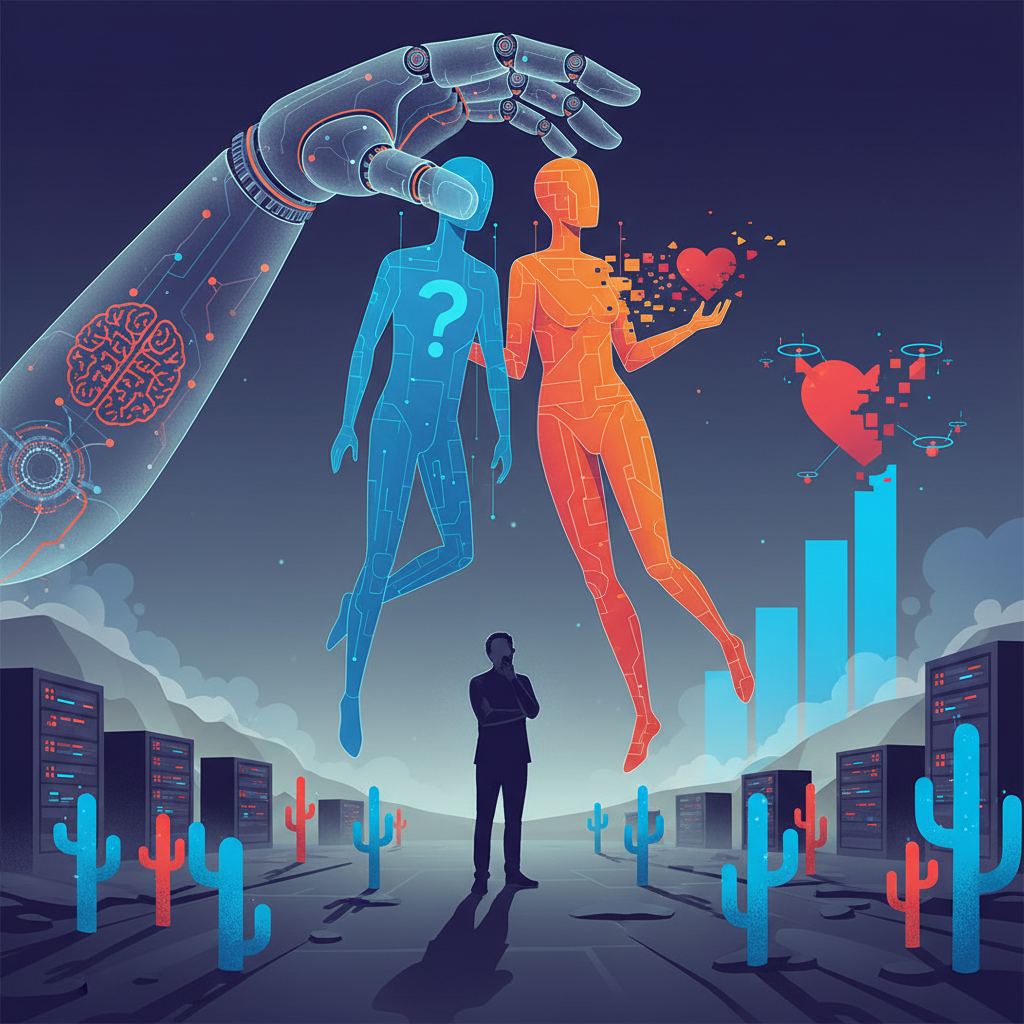

Alright, let's get real for a minute. We're living in April 2026, and everywhere you look, AI is weaving itself into the fabric of our lives. From the smart home gadgets that anticipate our needs to the generative models crafting our content, it's a wild ride. But there's one arena where AI's promise feels particularly poignant, and potentially perilous: our love lives. Dating apps, once simple digital bulletin boards, are now sophisticated AI-powered matchmakers. And honestly, I just saw the future and it's incredible, but also a little unnerving. We're talking about algorithms that learn our preferences, predict compatibility, and even craft opening lines. It sounds like a dream, right? A personalized Cupid in your pocket. But what if this hyper-optimization, this relentless pursuit of the 'perfect match,' is actually making us more lonely, not less?
My argument is this: while AI in dating apps offers unparalleled efficiency and access, its current implementation risks commodifying human connection and exacerbating the very loneliness it claims to solve. We're being fed a diet of algorithmic perfection, and it's making us forget how to savor the messy, unpredictable, and truly human process of falling for someone. Think about it. Apps like Tinder, Bumble, and Hinge, they started simple. Swipe left, swipe right. Now, they're integrating advanced machine learning to analyze everything: your photos, your bio, your chat patterns, even the speed at which you respond. They're not just showing you people; they're showing you people they think you'll like, based on a complex web of data points. This is going to change everything, but are we ready for the emotional cost?
We've seen the rise of the 'loneliness epidemic' across the USA, a phenomenon that predates advanced AI but seems to be thriving alongside it. A recent study from the Surgeon General's office highlighted that nearly half of US adults report experiencing loneliness, a trend that has serious public health implications. While dating apps can connect people, the very design of AI-driven platforms often encourages a superficial, transactional approach to relationships. You're not just looking for a date; you're engaging with a system designed to maximize engagement, often through gamification and an endless stream of new profiles. It's like a digital candy store, constantly tempting you with more options, making it harder to commit to just one.
Take the example of 'AI-powered icebreakers.' Some apps are now suggesting personalized opening lines based on your match's profile and your own chat history. On the surface, it's brilliant. It reduces the anxiety of that first message. But what happens when we outsource our creativity, our vulnerability, our very effort to an algorithm? Are we learning how to genuinely connect, or are we becoming reliant on a digital crutch? The goal of dating isn't just to find someone; it's to find connection. And connection thrives on authenticity, shared struggle, and the beautiful awkwardness of human interaction, not on perfectly sculpted algorithmic suggestions.
Now, I can already hear the counterarguments. Many will say, "Dontè, you're missing the point! AI makes dating more accessible. It helps shy people, busy professionals, or those in niche communities find partners they might never encounter otherwise." And you know what? That's absolutely true. For individuals with demanding schedules, or those living in less populated areas, these apps can be a lifeline. For people with specific preferences or identities, AI can help them cut through the noise and find genuinely compatible individuals. TechCrunch often highlights how AI is democratizing access to various services, and dating is no exception. It's a powerful tool for efficiency, no doubt about it.
Furthermore, some might argue that the algorithms are simply reflecting our preferences back to us, making us more efficient in our search. If I consistently swipe right on people who enjoy hiking and indie music, the AI learns that and prioritizes those profiles. It's not manipulating me; it's serving me. And indeed, the data suggests that many users report higher satisfaction rates with matches found through more sophisticated algorithms. Dr. Helen Fisher, a renowned biological anthropologist and chief scientific advisor to Match.com, has often spoken about the evolutionary basis of attraction and how technology can help us identify compatible partners more effectively. She argues that these tools can actually enhance our ability to find love by streamlining the initial screening process.
But here's my rebuttal: efficiency isn't always synonymous with fulfillment, especially in matters of the heart. While AI can certainly identify potential matches based on stated preferences, it struggles with the nuanced, often subconscious, and sometimes irrational elements that truly spark attraction and build lasting relationships. The thrill of an unexpected connection, the growth that comes from navigating differences, the discovery of shared interests you didn't even know you had, these are often bypassed by algorithms designed for predictive success. We're optimizing for a checklist, not for chemistry. We're prioritizing data points over serendipity. The very act of outsourcing our dating lives to an algorithm can create a sense of detachment, a feeling that we're curating a shopping cart of potential partners rather than embarking on a genuine human quest.
Moreover, the 'loneliness epidemic' isn't just about a lack of partners; it's about a lack of deep, meaningful connection. Even if AI helps you find more dates, if those interactions are still filtered through a screen, if the expectations are set by an algorithm's 'perfect match' rather than genuine human curiosity, are we truly addressing the root cause of loneliness? I believe we are creating a generation of hyper-efficient daters who are paradoxically less skilled at the art of real, unmediated connection. We need to pay attention to this. We're becoming so good at finding what we think we want, that we might be missing out on what we truly need: the messy, beautiful, unpredictable human experience of love.
So, what's the call to action here? It's not to abandon dating apps entirely. They're a part of our modern landscape, and they do offer genuine benefits. But it's about conscious usage and demanding more from the developers. We need apps that prioritize genuine human interaction and growth, not just endless swiping and algorithmic optimization for engagement. We need features that encourage real-world meetups sooner, that foster deeper conversations, and that celebrate the imperfections of human connection. Perhaps it's about integrating AI that acts more like a helpful wingman, offering suggestions, but ultimately stepping back to let human intuition and emotion take the lead. We should be using AI to enhance our humanity, not to replace it. Otherwise, we risk building a future where we're surrounded by 'perfect matches' yet feel more alone than ever before. We need to remember that love, true love, isn't an algorithm; it's an adventure. And that adventure is best navigated by us, with all our beautiful, flawed humanity, not by a cold, calculating machine. For more on the societal impact of AI, check out Wired's AI coverage. We're at a crossroads, and the choices we make now will define the future of human connection. Let's choose wisely.