
Alright, settle down, because Keishà Brownè has something to say, and it’s not about the latest dancehall riddim, not directly anyway. We’re talking about Apple, those folks who convinced half the world they needed a phone that costs more than some people’s rent. Specifically, we’re diving into their M-series chips, those little powerhouses that make their MacBooks purr like a well-fed cat. Now, everyone’s raving about on-device AI, how it’s going to keep our data private and make our gadgets smarter, but I’m looking at it from a Jamaican perspective. What does Tim Cook’s silicon dream mean for us, the people who know how to make something out of nothing, often with less than ideal resources?
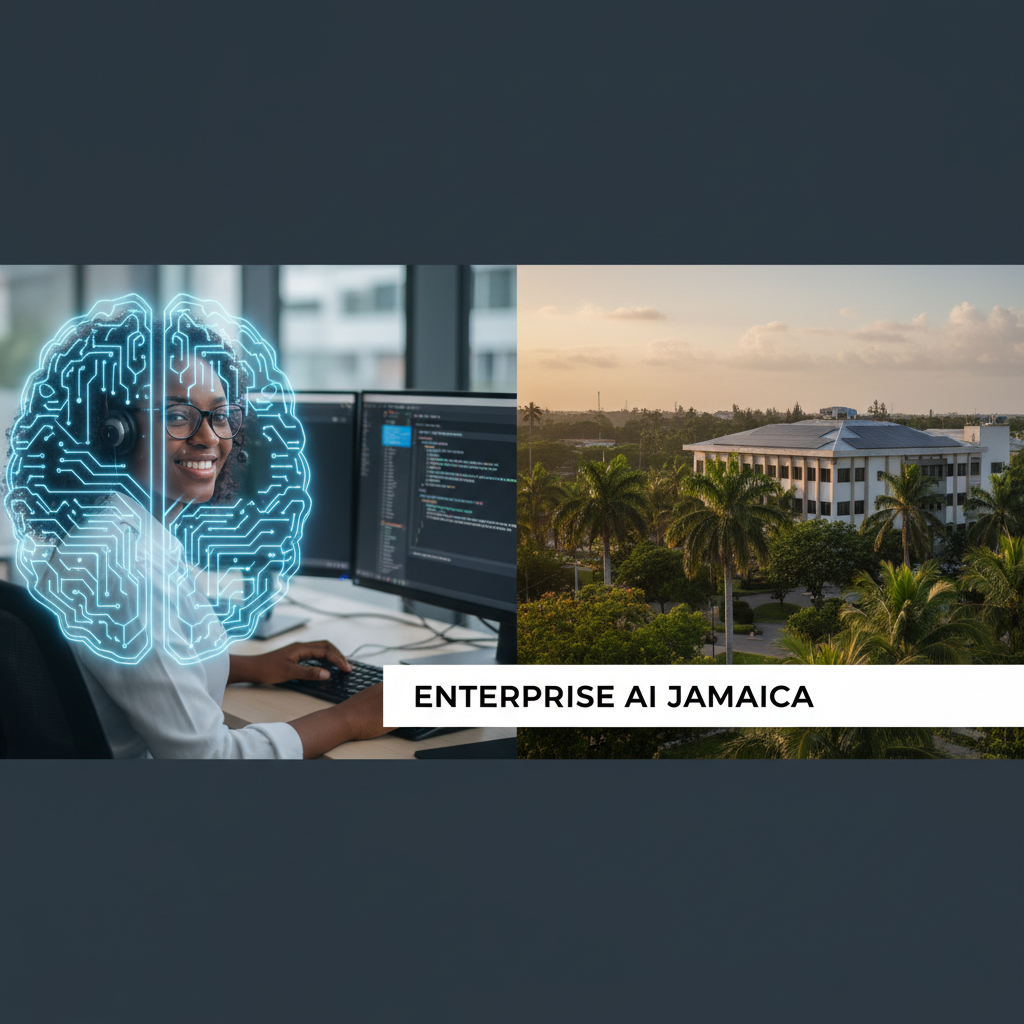
Picture this: it’s 2031. The sun is blazing over Kingston, but inside the newly established 'Innovation Hub at Mona Tech Park,' the air conditioning is humming, and so are hundreds of Apple Mac Studios. These aren't just for graphic design anymore, oh no. These machines, powered by the latest M10 or M11 Ultra chips, are running complex AI models locally, right here on the island. We’re talking about AI that can analyze agricultural data from drone footage to predict crop yields with 98% accuracy, or language models fine-tuned to understand every nuance of Jamaican patois, not just some watered-down version Google Gemini might offer. The Verge has been reporting on the shift to on-device AI for years, but for us, it's not just a convenience, it's a game-changer.
How do we get there from today, April 2026? Well, it won't be a smooth ride, like a freshly paved road in Kingston, because those don't exist. It's going to be more like navigating the potholes after a heavy rain. Right now, the big AI players like OpenAI and Anthropic are all about the cloud, massive data centers, and NVIDIA GPUs. But Apple, with its tight ecosystem, has been quietly building a different path. Their M-series chips, from the M1 to the M4, have already shown incredible performance per watt, making local AI processing not just feasible, but desirable for privacy and speed. The next five years will see this accelerate. We'll see M-chips with dedicated neural engines that are orders of magnitude more powerful, allowing for sophisticated AI tasks to run entirely on a MacBook Pro or even an iPhone.
One key milestone will be Apple releasing more developer tools specifically for on-device AI model training and fine-tuning, not just inference. Imagine a local startup, 'Yardie AI,' developing a personalized education platform for rural schools. Instead of needing constant, expensive cloud access, their AI tutors could run on refurbished Mac Minis in community centers, adapting to each child's learning style, speaking their language, and using examples relevant to their lives. "This isn't just about faster apps, it's about democratizing access to cutting-edge AI," explains Dr. Aliyah Campbell, Head of Computer Science at the University of the West Indies, Mona. "When the compute power is in your hand, or on your desk, the barriers to innovation drop significantly. Jamaica's tech scene is like reggae, it'll surprise you [blocked], and this is our chance to show the world."
Another milestone will be the proliferation of affordable, high-speed internet across the island. Because even if the AI runs locally, getting the initial models, updates, and specialized datasets still requires connectivity. The government, in partnership with private entities like Flow and Digicel, must prioritize this infrastructure. Without it, these powerful M-chips will just be fancy paperweights for most of the population. We're talking about a 70% increase in broadband penetration in rural areas by 2029, a bold target, but necessary.
So, who wins and who loses in this M-chip future? The winners, potentially, are our local entrepreneurs and creative minds. Think about the music industry, for example. An artist could use an M-powered Mac to generate unique instrumental tracks, analyze fan engagement across platforms, and even create personalized marketing campaigns, all without paying exorbitant cloud fees or relying on overseas agencies. "The creative economy here is already vibrant, but imagine giving every artist, every filmmaker, every musician, the power of a small data center in their studio," says Marcus 'Dub Poet' Johnson, a renowned cultural commentator. "That's true independence, that's true innovation."
Small businesses could also thrive. An AI running on a local Apple device could manage inventory, predict customer demand, and even handle basic customer service, freeing up human staff for more complex tasks. This could boost productivity by an estimated 30% for SMEs, according to a recent report from the Caribbean Development Bank.
But there will be losers, too. The massive cloud providers, like Amazon Web Services and Microsoft Azure, might see a dip in demand for certain types of AI workloads, especially from smaller developers and privacy-conscious enterprises. And let's not forget the digital divide. While the M-chips might make AI more accessible, the initial cost of Apple hardware is still a hurdle for many. If we don't have robust programs for subsidized devices or community tech centers, this powerful technology could just widen the gap between the haves and have-nots. "We must ensure that this technological leap doesn't leave anyone behind, especially our most vulnerable," warns Dr. Campbell. "Equity must be at the forefront of our AI strategy."
What should readers do now? If you're a developer, start experimenting with on-device AI frameworks. Apple's Core ML is getting more robust with every OS update. If you're an entrepreneur, start thinking about problems that can be solved with local AI, especially those that benefit from privacy or low latency. Think about how you can leverage these powerful chips without relying on constant internet access, which is still a luxury in many parts of the world, including some corners of Jamaica. The Caribbean has entered the chat and we are not just here for the sunshine and beaches anymore.
This isn't just about Apple selling more expensive gadgets, though I'm sure Tim Cook wouldn't mind. This is about a fundamental shift in how AI is deployed and accessed. For a small island nation like Jamaica, which often feels like it's playing catch-up in the global tech race, the ability to run powerful AI locally, securely, and efficiently, offers a unique opportunity. It means we can build solutions tailored to our specific needs, without being entirely dependent on the whims and server farms of Silicon Valley giants. It means we can protect our data, foster local talent, and build a truly indigenous tech ecosystem. The future is coming, and with a little strategic thinking and a lot of Jamaican ingenuity, we might just be able to shape it to our advantage. Small island, big ideas, indeed.