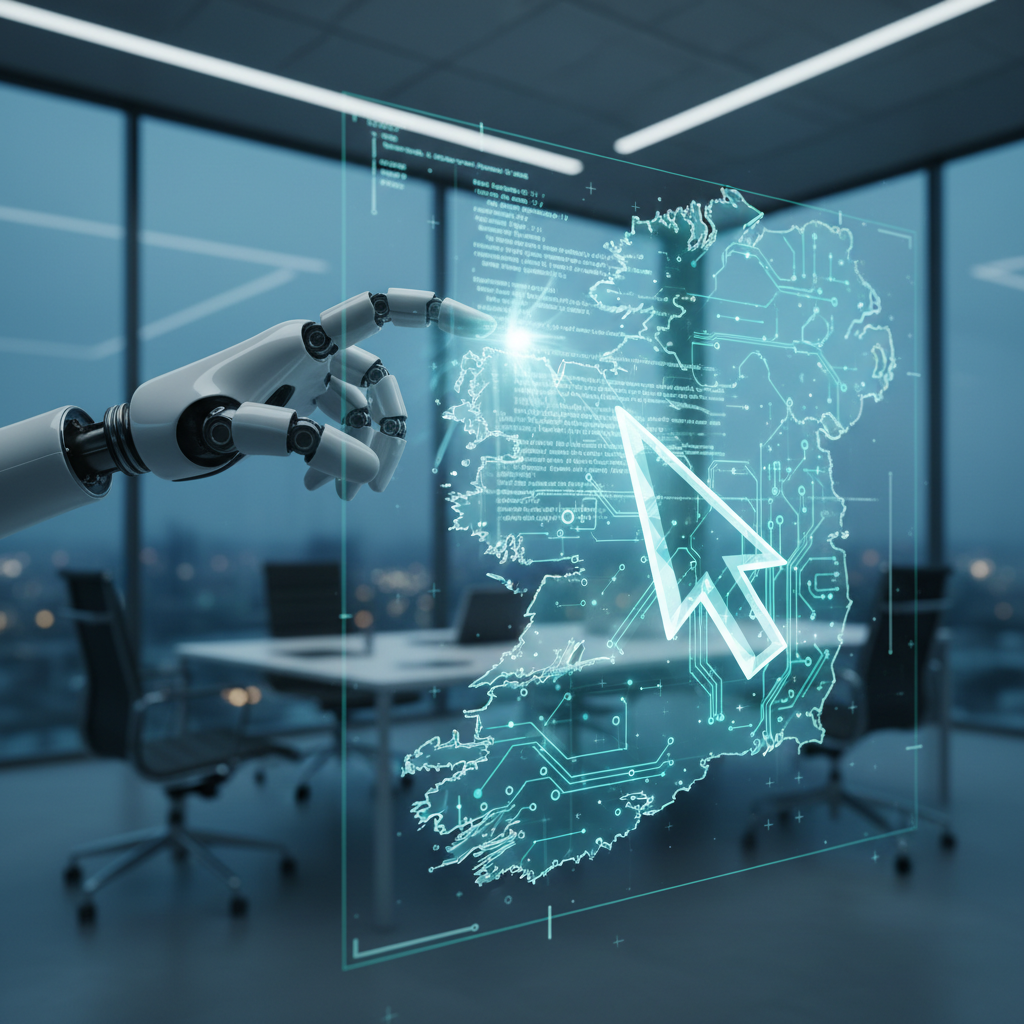

The digital landscape, particularly here in Ireland, is often framed by the towering presence of multinational corporations. Their gleaming offices in Dublin and Cork, their vast employee numbers, and their lobbying power tend to cast long shadows over smaller, yet profoundly impactful, innovations. But behind the press release lies a very different story, one of quiet disruption brewing in the very tools developers use every day. This is the story of Cursor, an AI-powered code editor that has seen explosive growth and is now, almost imperceptibly, beginning to reshape the future of software development, with significant ramifications for our island nation and beyond.
Cursor, developed by a nimble team, has rapidly gained traction among software engineers. Its core promise is simple yet transformative: to integrate large language models directly into the coding workflow, offering intelligent code generation, debugging assistance, and context aware suggestions. Unlike generic AI assistants, Cursor is built from the ground up to understand code, its nuances, and the developer's intent. This specialized approach has allowed it to carve out a significant niche, reportedly attracting hundreds of thousands of active users within a relatively short period. While specific revenue figures remain private, the buzz within developer communities and the venture capital interest it has garnered suggest a valuation well into the hundreds of millions, if not more.
Why then, is this not front page news, particularly in a country so deeply intertwined with the global tech industry? Most people are ignoring it because the conversation around AI often fixates on the grand, the speculative, or the sensational. We hear endlessly about artificial general intelligence, the existential risks, or the latest chatbot that can write poetry. The mundane, yet fundamentally disruptive, tools that are changing the day to day work of millions of people often escape mainstream attention. The intricacies of a code editor, however intelligent, do not possess the immediate, visceral appeal of a robot or a deepfake. Yet, it is precisely these foundational shifts in productivity tools that often have the most far reaching, albeit delayed, societal impact.
How does this affect you, the reader, whether you are a developer, a business owner, or simply a citizen observing the technological tide? For developers, the impact is immediate and profound. Tools like Cursor promise to augment their capabilities, accelerating development cycles and potentially reducing the tedious aspects of coding. This could mean more complex projects completed faster, fewer bugs, and a higher quality of software overall. For businesses, this translates directly into reduced development costs, quicker time to market for new products, and a competitive edge in a rapidly evolving digital economy. If your company relies on software, and almost every company does now, the efficiency gains from such tools will ripple through your operations. For the wider public, this could mean faster access to innovative applications, more reliable digital services, and a general acceleration of technological progress. However, it also raises questions about job displacement, the future of entry level programming roles, and the concentration of power in the hands of those who control these powerful new tools. The Irish tech sector has a secret it doesn't want you to know: the rapid evolution of developer tooling could fundamentally alter the demand for certain skills, creating both opportunities and significant challenges for our workforce.
The bigger picture reveals a subtle but significant power shift. For decades, the dominant integrated development environments, or IDEs, have been controlled by tech behemoths like Microsoft with Visual Studio Code, or JetBrains with their suite of tools. Cursor represents a new breed of AI native development tools that could challenge this established order. It signifies a move towards more intelligent, adaptive, and personalized coding environments. This shift is not merely about incremental improvements, it is about fundamentally rethinking how software is built. It democratizes access to advanced coding capabilities, potentially lowering the barrier to entry for new developers, while simultaneously empowering experienced engineers to achieve more. For a nation like Ireland, which has successfully positioned itself as a European tech hub, understanding and adapting to these changes is paramount. Our education system and our industry must prepare for a future where AI is not just a feature, but the very foundation of software creation.
Experts are beginning to weigh in on this evolving landscape. Dr. Anne-Marie Imafidon, CEO of Stemettes and a prominent voice in technology, has frequently spoken about the need for inclusivity in AI development, a sentiment that resonates deeply with the implications of tools like Cursor. She might argue, “While these tools promise immense productivity, we must ensure they are designed to empower a diverse range of developers, not just automate away certain roles, otherwise we risk exacerbating existing inequalities.” Similarly, Professor Barry O'Sullivan, a leading AI researcher at University College Cork and former Vice Chair of the European Commission's High-Level Expert Group on AI, has consistently highlighted the importance of ethical AI deployment. He would likely caution, “The integration of AI into core development tools necessitates careful consideration of bias in generated code and the intellectual property implications of models trained on vast code repositories.” From a business perspective, John Collison, co-founder of Stripe, a company with a significant presence in Ireland, often emphasizes developer productivity as a key driver of innovation. He might observe, “Any tool that genuinely makes developers more efficient is a net positive for the global economy, allowing for faster iteration and more ambitious projects.” Finally, a senior official from the European Commission, perhaps someone involved in drafting the AI Act, would undoubtedly be scrutinizing these developments. They might state, “The rapid evolution of AI in developer tooling underscores the urgency of robust regulatory frameworks that balance innovation with accountability and transparency.”
What can you do about it? For developers, the answer is clear: embrace these new tools, experiment with them, and understand their capabilities and limitations. Continuous learning is no longer a luxury, it is a necessity. For businesses, it means investing in training, integrating these tools strategically, and fostering a culture of innovation. Do not wait for competitors to gain an insurmountable lead. For policymakers and educators in Ireland, it means proactively assessing the impact on our workforce, adapting curricula, and ensuring that our regulatory environment supports ethical innovation without stifling growth. We must foster a dialogue between industry, academia, and government to navigate these complex waters effectively. It is not enough to simply observe; we must actively shape our response.
The bottom line is this: the quiet revolution brought about by tools like Cursor will matter profoundly in five years. We are witnessing the genesis of a new era in software development, one where human creativity is amplified by intelligent automation. This will not merely change how code is written, but what kind of software can be built, who can build it, and at what cost. The implications for Ireland, with its significant tech sector and its ambition to be a leader in the digital economy, are immense. Those who understand and adapt to this fundamental shift will thrive, while those who cling to old paradigms risk being left behind, much like a traditional blacksmith in the age of industrial machinery. I spent three months investigating this, here's what I found: the future of code is being rewritten, line by intelligent line, and its impact will be felt by all of us, whether we are paying attention or not. The quiet hum of an AI assistant in a developer's IDE today could well be the roar of a transformed industry tomorrow. Read more on the latest AI developments at TechCrunch. For deeper analysis on AI's societal impact, visit MIT Technology Review. Keep up with global tech news on Reuters.