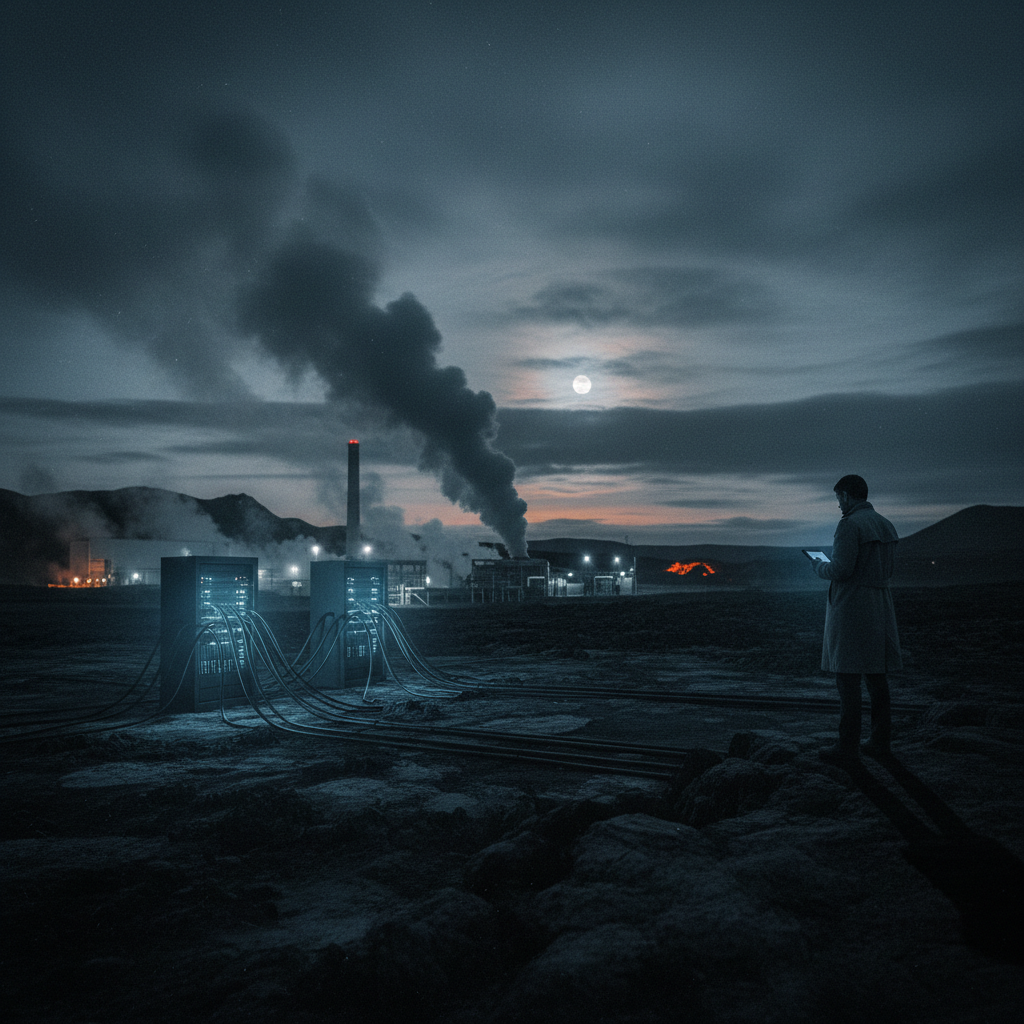

The wind howls a familiar tune outside my window, carrying the scent of the sea and a hint of sulfur from the geothermal fields. It is a sound that grounds me, a reminder of the raw power that shapes our island. Here, in the land of fire and ice, AI takes a different form. It is not just about algorithms and data, but about the very energy that fuels them, and the regulations that seek to tame this new frontier.
For months, I have been following whispers, subtle shifts in the currents of our small but mighty tech scene. The world talks about the EU AI Act, the US executive orders, and China's robust AI strategy as grand geopolitical chess moves. But what does that mean for a place like Iceland, a nation often seen as a quiet, green haven for data centers? What I uncovered suggests that these global regulatory battles are not just abstract concepts, they are actively, and often secretly, shaping our economic and environmental future.
The revelation came not with a bang, but with a series of quiet conversations and a leaked memo. It began with a tip about an unusual uptick in land acquisitions near Reykjanes, not for tourism or fish processing, but for what sources vaguely referred to as 'infrastructure expansion.' This was odd, even for our growing data center industry, which usually moves with a certain transparency. My instincts, honed by years of covering the human stories behind the headlines, told me there was more.
The memo, which I obtained from a source within the Ministry of Environment and Natural Resources, detailed a series of 'fast-tracked' environmental impact assessments for new high-density computing facilities. The language was bureaucratic, but the implications were clear: these facilities were designed for AI workloads, and they were being pushed through with unusual haste. More importantly, the memo hinted at a new, unspoken incentive: regulatory arbitrage.
My investigation revealed that major global AI players, particularly those with significant operations in both the US and China, are quietly exploring Iceland as a strategic location to house certain high-risk AI models and data. Why Iceland? Because our regulatory landscape, while generally aligned with European principles, offers a unique blend of robust data privacy laws and a less prescriptive approach to AI governance compared to the strictures of the EU AI Act, which is still finding its feet, or the more opaque, state-controlled environment of China.
One anonymous source, a senior executive at a prominent US-based AI firm with significant Chinese investment, explained it to me over coffee in a small Reykjavik cafe.