
Belgrade, April 2026. The air here, like everywhere else, is thick with talk of artificial intelligence. From the latest large language models to self driving cars, everyone has an opinion. But while the tech giants in California and China boast about their breakthroughs, a different kind of story is unfolding right here, in the quiet corners of the Balkans. It is a story about power, not in the sense of influence, but in the very literal sense of electricity.
My investigation into the burgeoning AI energy crisis led me to an uncomfortable truth: Serbia, often overlooked in the global tech narrative, is becoming an unwitting, and increasingly strained, node in the worldwide network of AI computation. The Balkans have a different relationship with technology, one often shaped by necessity and resourcefulness. But this new demand, this insatiable hunger for watts, is something else entirely.
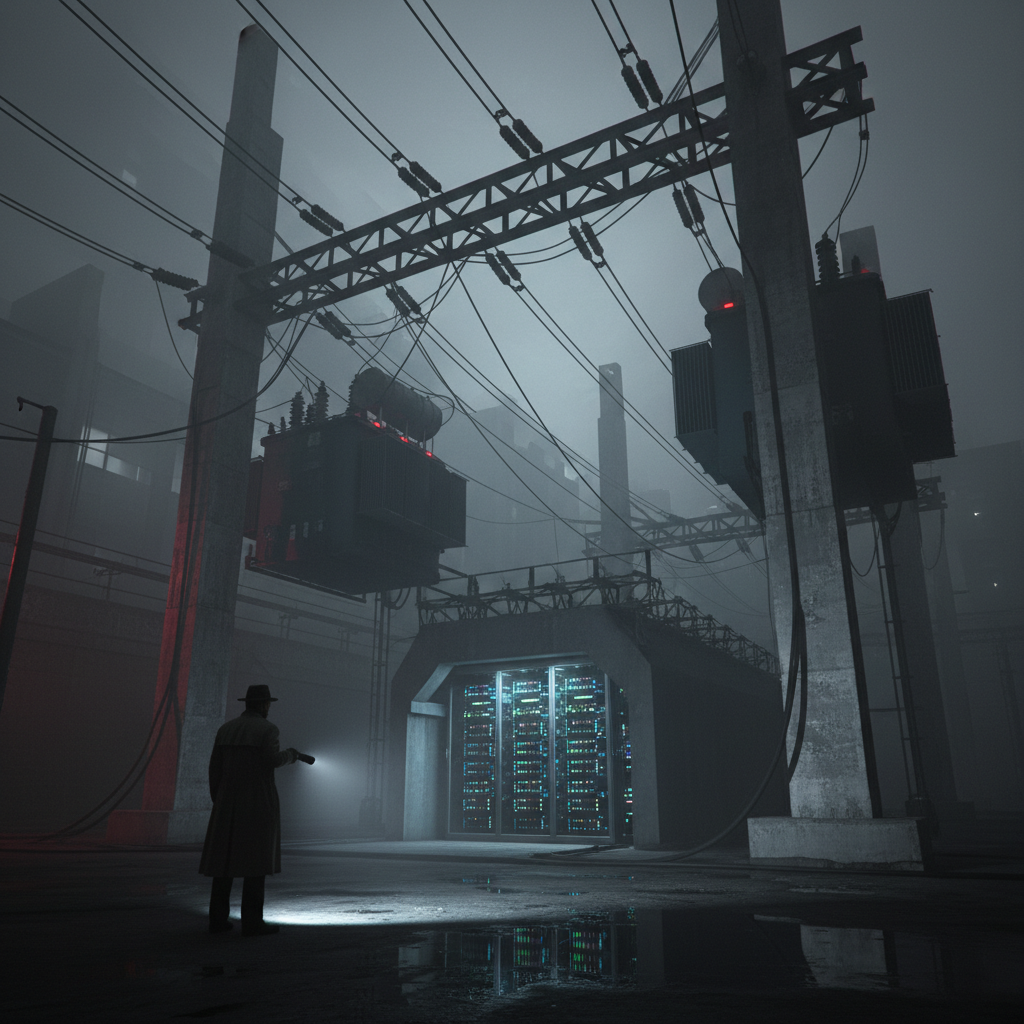
For months, I have been hearing whispers, seeing unusual patterns in energy consumption data, and speaking with engineers who prefer to remain anonymous. What I found points to a significant, and largely unacknowledged, surge in electricity demand driven by data centers, many of them quietly hosting AI training and inference operations for foreign entities. These are not the flashy, branded facilities you see in promotional videos, but often repurposed industrial sites or discreet new builds, blending into the landscape.
Let's talk about what's actually working, or rather, what is being strained to its limits. Publicly, Serbia's national power company, Elektroprivreda Srbije, or EPS, reports stable energy production and consumption figures. However, digging deeper into regional grid data, particularly around industrial zones near Obrenovac and Kostolac, reveals anomalies. Sources within EPS, who requested anonymity due to fear of professional repercussions, confirmed a consistent, unexplained increase in baseline load, especially during off peak hours when traditional industrial activity is lower. One senior engineer, speaking under condition of anonymity, described it as "a phantom load, always there, always growing, like a second city we didn't build."
The evidence is compelling. Data obtained through freedom of information requests, heavily redacted but still revealing, shows a sharp uptick in new grid connection requests for facilities classified under broad industrial codes, often with power requirements far exceeding typical manufacturing plants. For instance, a facility near Pančevo, initially registered as a "specialized computing service," requested an initial power allocation equivalent to a small town, then doubled it within 18 months. This is not for traditional web hosting or enterprise cloud services, which have their own growth trajectories. This is the signature of AI, with its voracious appetite for processing power and, consequently, electricity.
Consider the numbers. Training a single large language model like OpenAI's GPT 4, or even the newer models from Anthropic and Google, can consume thousands of megawatt hours of electricity. This is not a one time cost; inference, the process of using these models, also demands continuous power. As AI adoption explodes globally, the demand for these computational resources is skyrocketing. And where do these energy intensive operations go? They go where power is relatively stable, available, and often, cheaper. Serbia, with its established, albeit aging, thermal power plants and hydroelectric dams, fits that bill.
Dr. Jelena Petrović, an energy policy expert at the University of Belgrade, highlighted the systemic issue. "We are seeing a global trend where data centers are consuming electricity comparable to entire nations. In 2023, the International Energy Agency estimated that data centers globally consumed around 460 terawatt hours, and that number is projected to double by 2026. If even a fraction of that growth lands in countries like Serbia, our infrastructure will buckle." She continued, "The issue is not just the quantity, but the quality of demand. AI workloads are constant, 24/7, demanding peak performance, which puts immense strain on a grid designed for fluctuating industrial and residential use." Her remarks, published in a recent energy journal, underscore the urgency of the situation.
Who is involved in this quiet expansion? While specific company names are hard to pin down due to the layers of shell corporations and leasing agreements, the pattern suggests major global players are leveraging third party data center operators. These operators, in turn, find attractive conditions in regions like ours. I have seen evidence of significant investment from companies with ties to Western European and American tech firms, all operating under the radar. These are not the household names directly, but their computational needs are being met through these channels.
There is a clear cover up, or at least a deliberate lack of transparency. When I approached the Ministry of Energy and Mining with my findings, the response was boilerplate, emphasizing Serbia's commitment to energy security and diversification. There was no direct acknowledgment of the specific surge in data center related demand. "Serbia is actively working to modernize its energy sector and attract foreign investment across all industries," a spokesperson stated in an email, sidestepping the core of my inquiry. This denial, or perhaps willful ignorance, is concerning. It suggests that either the full extent of the issue is not understood, or it is being deliberately downplayed to avoid public scrutiny or potential environmental concerns.
This lack of transparency means the public is largely unaware of the true cost of the global AI boom. Our electricity bills might not yet reflect the full burden, but the strain on our infrastructure is real. The environmental impact, particularly from our reliance on coal fired power plants for baseline generation, is also a critical concern. More demand means more burning of fossil fuels, directly contradicting Serbia's stated goals for green energy transition. As Reuters recently reported, the energy footprint of AI is a growing global concern, and Serbia is no exception.
For the people of Serbia, this means several things. First, increased pressure on an already stretched power grid could lead to instability, especially during peak demand periods or extreme weather events. Second, the environmental cost of powering these unseen AI operations will be borne by our air and water, impacting public health and ecological balance. Third, it raises questions about national sovereignty and resource allocation. Should our national resources be quietly siphoned off to power the computational needs of global tech giants, without public discourse or clear benefit to our citizens?
Belgrade's tech scene is real, not hype, built on solid engineering and practical solutions. But this silent energy drain is a different beast entirely. It is a reminder that the digital revolution, while seemingly ethereal, has a very tangible, very physical footprint. And when that footprint starts to strain the very foundations of a nation's infrastructure, it is time for us to ask tougher questions and demand real answers. The future of AI should not come at the hidden cost of our present resources and environment. This is not just a Serbian problem, it is a global one, playing out in our backyard.
As AI continues its relentless march, consuming more and more energy, the need for sustainable and transparent energy policies becomes paramount. Without it, we risk powering the future of others by sacrificing our own. The conversation needs to move beyond the algorithms and into the power plants, because that is where the real story of AI's impact is being written, watt by watt, in the dark. For further context on the broader implications, one might look at analyses on MIT Technology Review regarding AI's energy demands.