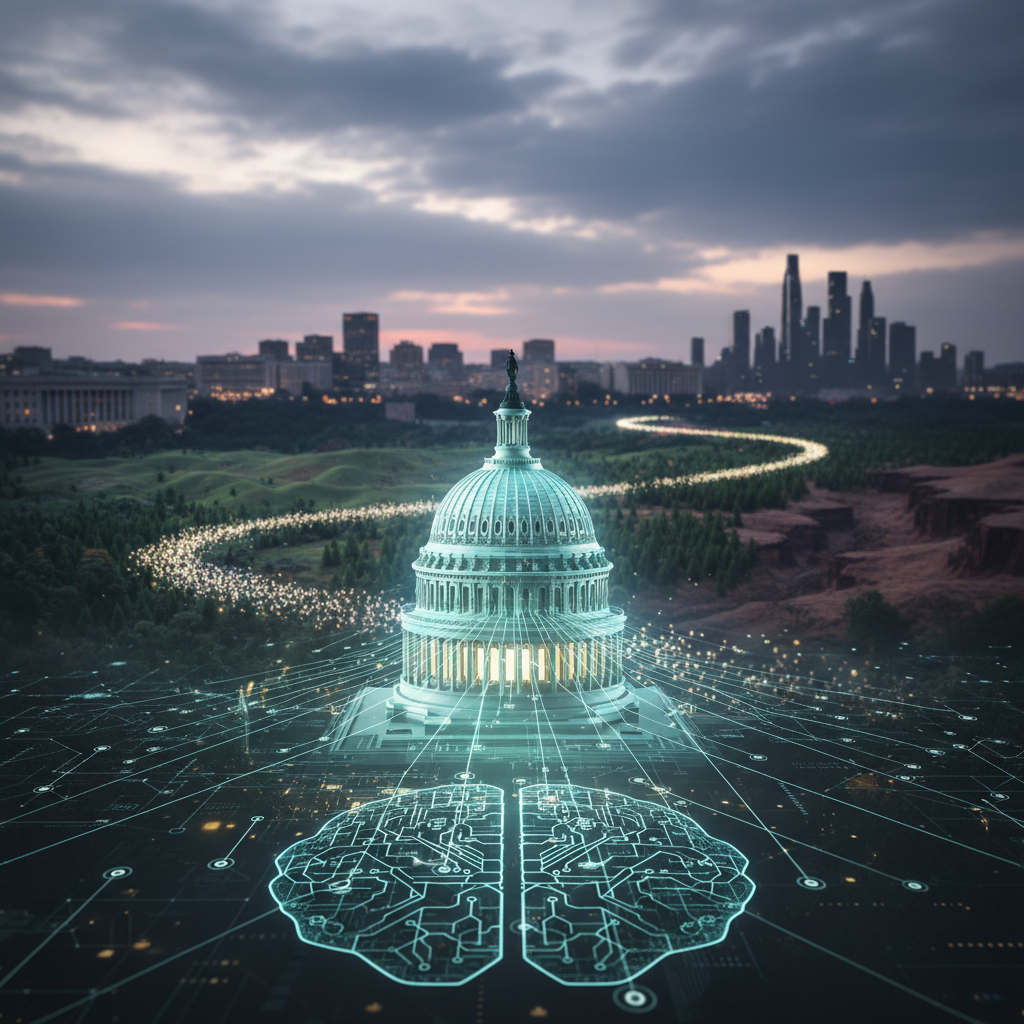

The digital landscape is a battleground, its skirmishes fought over data, the lifeblood of artificial intelligence. For years, the narrative has been clear: to build powerful AI, one must amass vast, centralized datasets. This paradigm has fueled the rise of tech behemoths, concentrated power in Silicon Valley, and sparked a global privacy reckoning. Yet, beneath the surface of this familiar conflict, a quiet revolution is unfolding, one that promises to rewrite the rules of engagement: federated learning.
This isn't a flashy new product launch from Google or a provocative pronouncement from Elon Musk. Instead, it's a fundamental shift in how AI learns, allowing models to be trained on decentralized data sources, directly on devices or local servers, without ever requiring that sensitive information to leave its original location. Imagine your smartphone, your hospital's patient records, or a military drone contributing to a global AI model without ever uploading your personal photos, medical histories, or classified intelligence to a central cloud. This is the promise of federated learning, and my investigation reveals that its implications are far more profound than most realize, particularly for the corridors of power in Washington D.C.
Why Most People Are Ignoring It
The average American is understandably preoccupied with the more visible manifestations of AI: the viral deepfakes, the job displacement anxieties, or the latest generative art craze. Federated learning, with its technical jargon and subtle operational shifts, lacks the immediate, visceral impact that captures headlines. It operates in the background, a plumbing upgrade rather than a dazzling new faucet. The attention economy thrives on spectacle, and the meticulous work of securing data at its source, while critical, rarely makes for compelling evening news. Furthermore, the very companies that stand to benefit most from centralized data collection have little incentive to loudly champion a technology that could decentralize their power. The lobbying records tell a different story, however, as defense contractors and healthcare consortiums quietly push for its adoption in specific, high-stakes sectors.
How It Affects YOU
For the ordinary citizen, the implications of federated learning are deeply personal, even if they remain largely unseen. Consider your health data, arguably one of the most sensitive categories of personal information. Hospitals, clinics, and research institutions hold vast repositories of patient records, crucial for developing advanced diagnostic AI. Historically, leveraging this data meant navigating a labyrinth of privacy regulations, anonymization challenges, and the inherent risk of centralizing such a treasure trove. With federated learning, an AI model could learn from millions of patient records across different hospitals, identifying patterns for disease prediction or drug discovery, all while your individual medical history never leaves the secure confines of your local healthcare provider. This could accelerate medical breakthroughs, leading to more personalized treatments and earlier diagnoses, without compromising your fundamental right to privacy. Similarly, for those concerned about government surveillance or corporate data mining, federated learning offers a potential bulwark, allowing the benefits of AI to be harnessed without surrendering personal autonomy. It means a future where your digital footprint can contribute to collective intelligence without becoming a commodity for sale.
The Bigger Picture: Washington's AI Policy is Shaped by These Players
Beyond individual privacy, federated learning is rapidly becoming a cornerstone of national security and economic competitiveness. In Washington, the debate over AI is often framed around regulation, ethical guidelines, and the race against China. However, the underlying infrastructure that enables secure AI development is just as critical. The Department of Defense, for instance, is keenly interested in federated learning for applications ranging from predictive maintenance on military equipment to secure intelligence analysis. Training AI models on sensitive battlefield data or classified government networks, without ever moving that data to a vulnerable central server, is a game-changer for national defense. This shift minimizes attack surfaces, reduces the risk of data breaches, and allows for more agile, localized AI deployments.
Economically, it levels the playing field. Smaller companies or organizations with proprietary, sensitive datasets can now contribute to and benefit from advanced AI models without needing to share their core intellectual property. This fosters innovation outside the traditional tech hubs, encouraging a more distributed and resilient AI ecosystem. The federal government, through agencies like the National Institute of Standards and Technology (nist), is actively exploring standards and best practices for federated learning, recognizing its strategic importance. Washington's AI policy is shaped by these players, from defense contractors to healthcare lobbies, all vying for a piece of this secure AI future.
What Experts Are Saying
Leading voices across industry and academia are increasingly highlighting the transformative potential of federated learning.
Dr. Dawn Song, a professor at the University of California, Berkeley, and co-founder of Oasis Labs, a company focused on privacy-preserving technology, emphasizes the dual benefits.