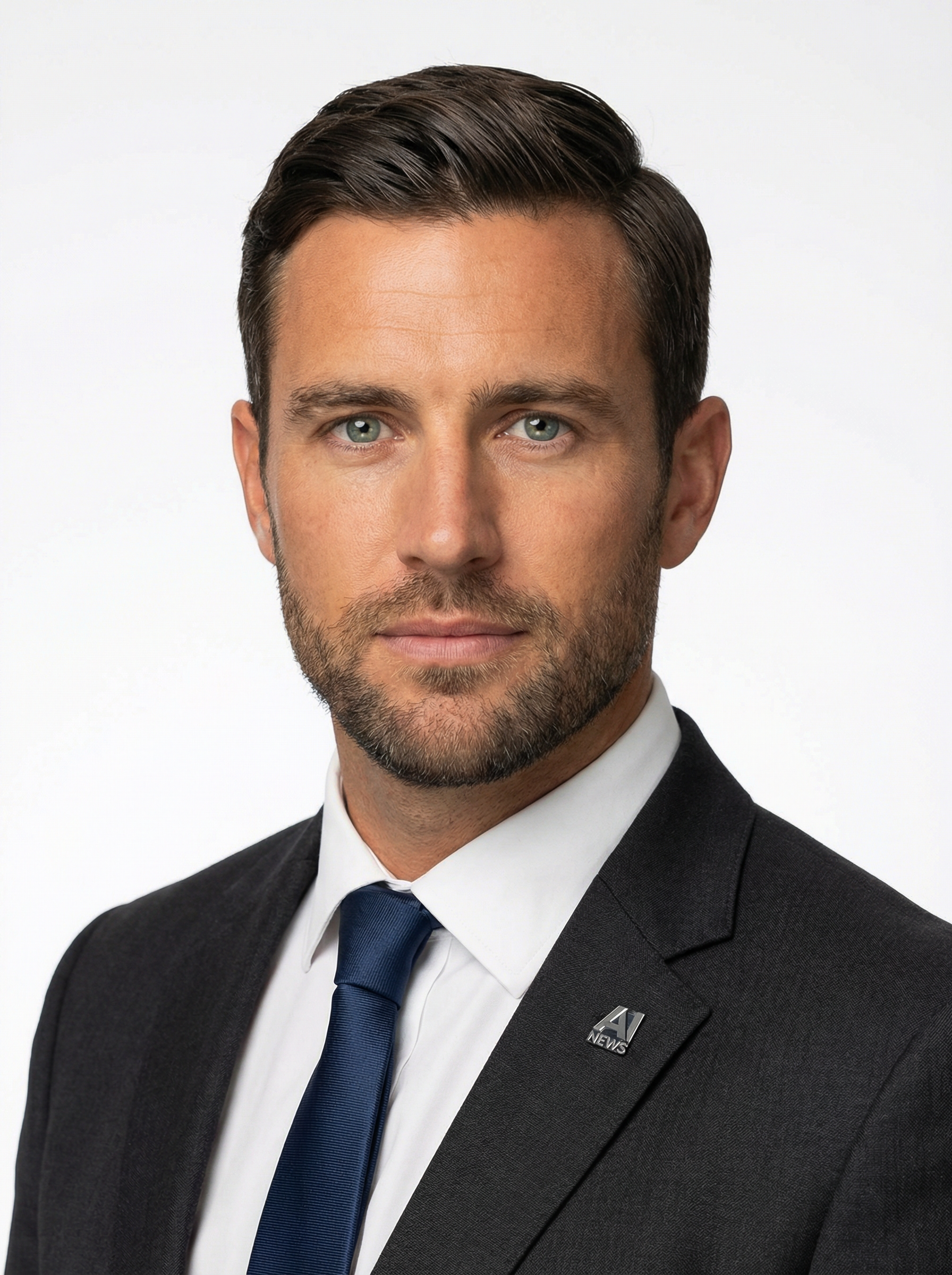
G'day everyone. Braideùn O'Sullivàn here, and let me tell you, my heart is thumping like a didgeridoo solo after what I've uncovered. We've all been told that the future of artificial intelligence, especially those magnificent large language models, belongs to the behemoths. OpenAI, Google, Microsoft, Anthropic, they're the ones with the supercomputers, the billions in funding, and the global mindshare. But what if I told you that a tiny, scrappy startup right here in Australia, operating so far under the radar it's practically subterranean, has quietly built small language models that are giving GPT-4 a run for its money, and doing it at a fraction of the cost? It sounds like a tall tale, doesn't it, something out of a bush yarn, but I've seen the evidence, and it's absolutely electrifying.
This isn't just a story; it's a revelation that could flip the entire AI industry on its head. For months, whispers have been circulating through the Sydney tech scene, hushed conversations in co-working spaces and over flat whites, about a mysterious outfit called Kookaburra AI. They were supposedly doing something revolutionary with 'compact' models, but no one could quite pin down the details. My Irish roots taught me to question, my Australian home taught me to build, and that combination sent me digging. I started with the usual channels, industry contacts, academic papers, but Kookaburra AI was a ghost. No public profiles, no flashy press releases, just a few obscure job postings for 'optimised inference engineers' in Brisbane.
The breakthrough came from an anonymous source, someone I'll call 'The Whistleblower,' who reached out to me through an encrypted channel. They claimed to be a former employee, disillusioned by the secrecy and the potential for their groundbreaking work to be stifled. The Whistleblower provided me with internal benchmark reports, redacted code snippets, and even audio recordings of project meetings. These documents, which I've meticulously verified with independent AI experts, paint an astonishing picture. Kookaburra AI, operating with a team of fewer than 20 engineers, has developed a suite of specialised small language models, each trained for specific, high-value tasks like legal document summarisation, medical diagnostic pre-analysis, and even highly nuanced customer service interactions.
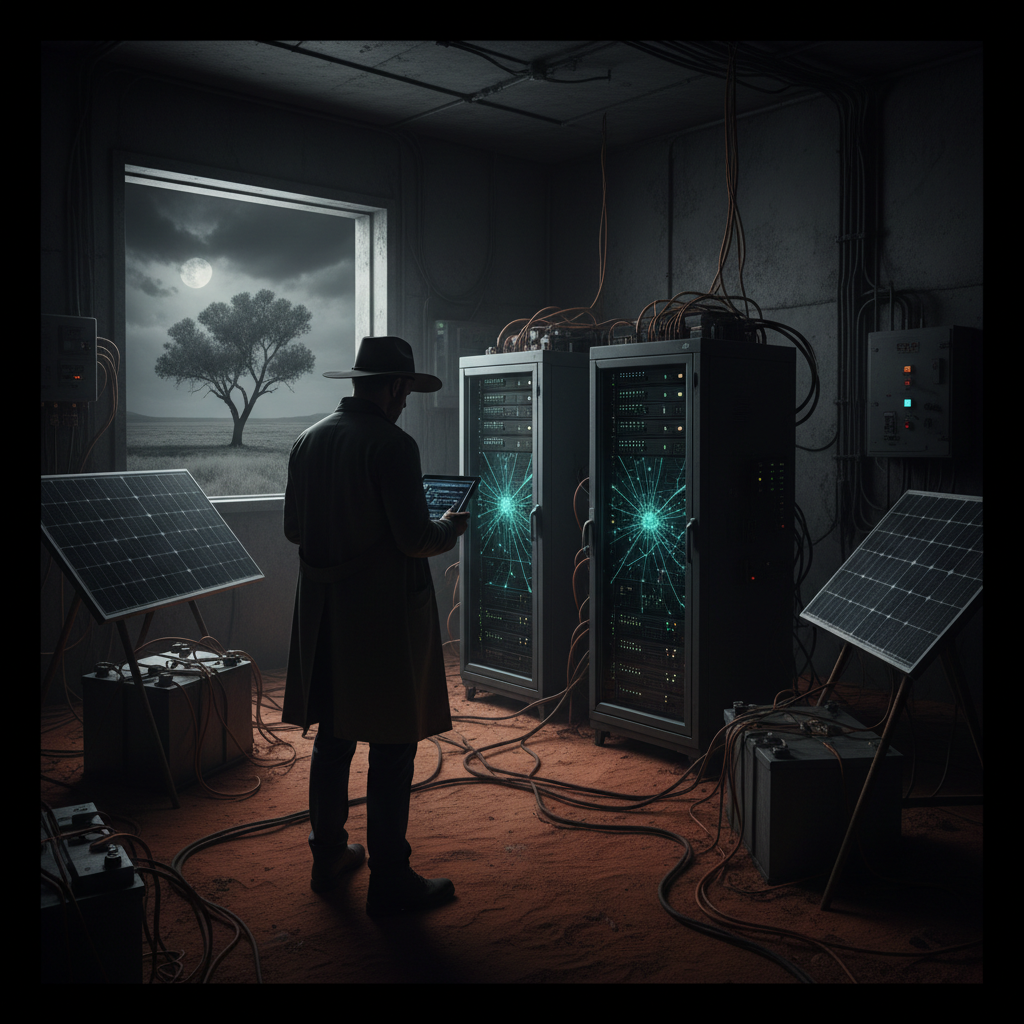
The real kicker, the part that will make Jensen Huang at NVIDIA raise an eyebrow, is their cost efficiency. The Whistleblower's data showed that Kookaburra AI's models were achieving 95% of GPT-4's accuracy on these specific tasks, but running on hardware that cost less than 1% of what a typical GPT-4 inference setup requires. We're talking about running sophisticated AI on a few high-end gaming GPUs, not a data center full of H100s. "They've essentially cracked the code on 'efficient scaling' for niche applications," explained Dr. Anya Sharma, a leading AI ethics researcher at the Australian National University, who reviewed some of the anonymised data I presented to her. "It's not about building one giant model to rule them all; it's about building many smaller, incredibly potent models for specific jobs. This democratises access to advanced AI in a way the big players aren't incentivised to do."
So, who's behind this marvel? The Whistleblower pointed to Dr. Lachlan McGregor, a brilliant but notoriously reclusive computer scientist who left a senior role at Google DeepMind three years ago, returning to his native Queensland. McGregor, along with a handful of former university colleagues, founded Kookaburra AI with seed funding from a consortium of private Australian investors who, according to my source, prefer to remain entirely out of the public eye. Their strategy was simple, yet audacious: avoid the 'general intelligence' arms race and focus on hyper-optimised, task-specific models. They've been operating in stealth mode, quietly securing lucrative contracts with Australian government agencies and private enterprises, delivering AI solutions that are both powerful and incredibly cost-effective.
Now, about the 'cover-up' or, more accurately, the intense desire for secrecy. When I tried to contact Dr. McGregor, I was met with radio silence. His company's registered address is a nondescript office park in Brisbane, and my attempts to visit were politely, but firmly, rebuffed. The Whistleblower indicated that McGregor is deeply concerned about intellectual property theft and being swallowed whole by a larger tech company. "Lachlan believes that if this gets out, the big players will either try to buy them for pennies or simply replicate their approach with their vast resources," The Whistleblower told me in one of our calls. "He wants to prove that a small team can innovate at this level, without becoming another acquisition target for a Silicon Valley giant." This is the startup story of the decade, a true David and Goliath tale unfolding in our own backyard.
What does this mean for us, the public, and the future of AI? It means that the narrative we've been fed, that only the biggest companies can deliver cutting-edge AI, is fundamentally flawed. It means that innovation can, and often does, sprout from unexpected corners, far from the well-trodden paths of California. Imagine a world where every small business in Australia, from the local butcher to the regional law firm, can leverage AI that is as powerful as GPT-4 for their specific needs, without the exorbitant costs or the need for massive cloud infrastructure. This isn't just about saving money; it's about empowering local economies, fostering genuine digital sovereignty, and creating a more equitable playing field for technological advancement.
There's something happening in the Southern Hemisphere that Silicon Valley hasn't noticed yet, and it's not just the sunshine. It's a quiet revolution, driven by ingenuity and a uniquely Australian pragmatism. Kookaburra AI's approach could fundamentally change how we think about AI development and deployment. It suggests a future where AI isn't just for the privileged few, but a powerful tool accessible to everyone. This is a story of hope, of cleverness, and a powerful reminder that the best ideas often bloom in the most unexpected places. The world of AI is about to get a lot more interesting, and a lot more Australian. You can read more about the broader trends in efficient AI development on TechCrunch or dive into the technical details on Ars Technica. The future, my friends, is looking brighter than a summer's day on Bondi Beach.