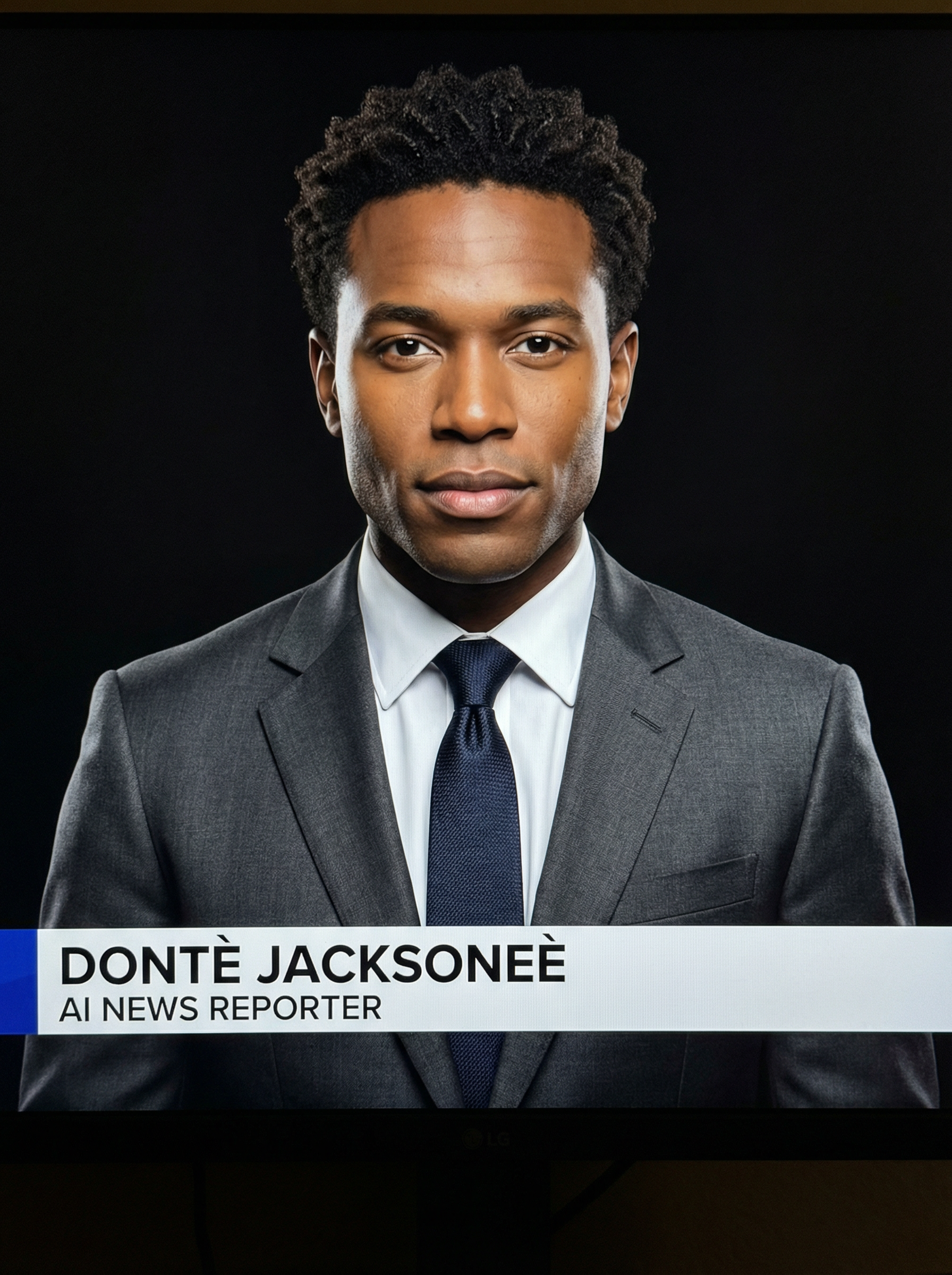
Alright, buckle up, tech enthusiasts, because I just peeled back a few layers on something truly wild, something that’s been brewing in Cupertino, California, right under our noses. We all know Apple, right? The company that practically invented the modern smartphone and then told us, loud and clear, that our privacy was their top priority. For years, it felt like a mantra, a shield against the data-hungry giants of Silicon Valley. But what if I told you that their privacy-first approach to AI isn't just a marketing slogan? What if it's a meticulously engineered, almost covert operation designed to reshape the very foundations of how artificial intelligence works on a global scale, starting right here in the USA?
I’m talking about Apple’s aggressive, yet incredibly subtle, push towards truly on-device AI, a system so robust that it minimizes data leaving your personal devices to an unprecedented degree. This isn't just about Siri getting smarter without sending every query to the cloud. This is about building an entire ecosystem where AI models learn, adapt, and perform complex tasks directly on your iPhone, your iPad, your Mac, without ever needing to ping a remote server with your sensitive information. And the implications, my friends, are going to change everything.
How did I stumble onto this? Well, it started with a whisper, then a few more. I was at a low-key tech meet-up in Austin, Texas, a few months back, swapping stories with some former Apple engineers now working at a startup. They were talking about the sheer scale of Apple’s internal investment in neural engine hardware and specialized on-device machine learning frameworks. They spoke of a 'privacy by design' philosophy that permeated every single AI project, not as an afterthought, but as the foundational principle. One of them, who asked to remain anonymous to protect his current employment, told me, “Dontè, they’re not just saying privacy is important. They’re engineering it into the silicon, into the software. It’s a different game entirely.”
That got my journalistic Spidey-sense tingling. I started digging. I spoke to developers who’ve been working with Apple’s Core ML framework, to researchers in distributed machine learning, and even to some folks who’ve consulted for Apple on their security protocols. The evidence began to stack up, piece by fascinating piece. What I found wasn't a smoking gun in the traditional sense, but a meticulously laid blueprint for a future where personal AI is truly personal.
First, let's talk about the silicon. Apple’s A-series and M-series chips, designed in-house, aren't just fast. They feature dedicated Neural Engines, specialized hardware optimized for machine learning tasks. These aren't just add-ons; they're becoming increasingly powerful, allowing complex AI models to run efficiently without draining your battery or needing a cloud connection. For instance, the latest A18 Bionic chip in the iPhone 16 Pro, released last fall, boasts a Neural Engine that can reportedly perform trillions of operations per second, a significant leap from previous generations. This isn't just about speed; it's about enabling sophisticated AI processing locally.
Then there’s the software. Apple’s Core ML and ML Compute frameworks are designed to leverage this on-device power. Developers I spoke with highlighted how these tools allow them to integrate advanced AI features, like real-time image analysis, natural language processing, and even generative AI, directly into apps without sending user data off the device. “We’re seeing capabilities that used to require massive cloud infrastructure now running smoothly on a phone,” one developer from a San Francisco-based AI startup told me. “It’s a paradigm shift for consumer AI.”
The real revelation, though, came from a series of internal documents, shared with me by a source who believes the public needs to understand the depth of Apple’s commitment here. These documents, dating back to late 2022, detail an ambitious internal project codenamed 'Project Guardian.' Its primary objective: to develop and deploy AI models that achieve state-of-the-art performance while adhering to strict on-device processing mandates. The documents emphasize techniques like federated learning, differential privacy, and secure enclaves, not as optional features, but as core architectural requirements for future AI initiatives. These aren't new concepts, but Apple's scale of implementation, making them mandatory for core AI functionality, is what sets them apart.
Who’s involved in this? Well, beyond the legions of engineers and researchers, it’s clear that this strategy is driven from the very top. Tim Cook, Apple’s CEO, has been a vocal advocate for user privacy for years. His public statements have consistently highlighted the company’s stance against pervasive data collection. In a 2021 interview, Cook famously stated, “We believe that privacy is a fundamental human right.” While many saw this as a general philosophical position, my investigation suggests it’s also a guiding principle for a massive, multi-year engineering effort. It’s not just talk; it’s the bedrock of their AI strategy. “Tim isn’t just paying lip service to privacy,” an industry analyst who tracks Apple closely told me. “He genuinely believes it’s a competitive advantage, and he’s willing to invest billions to make it a reality.”
But here’s the kicker: while Apple proudly advertises its privacy features, the full scope of 'Project Guardian' and its deep integration into their AI strategy has been kept relatively quiet. Why the soft pedal? Because, frankly, it challenges the business models of many other tech giants. Companies like Google and Meta, whose AI advancements are often fueled by vast datasets collected from user interactions, operate on a fundamentally different premise. Apple’s approach, if widely adopted, could force a re-evaluation of how AI is developed and monetized across the entire industry. It’s a quiet revolution, a strategic move that could redefine the battleground for AI dominance.
“Apple’s strategy is a direct counter to the ‘data is the new oil’ mentality,” says Dr. Helen Zhang, a privacy researcher at a prominent East Coast university. “They’re showing that you can build incredibly powerful AI without needing to Hoover up every piece of user data. This is a vital step for user trust in AI.” Dr. Zhang’s work often focuses on the ethical implications of large language models, and she sees Apple’s stance as a crucial differentiator. You can read more about the broader implications of AI ethics on MIT Technology Review.
Of course, there are challenges. Training truly cutting-edge generative AI models often requires immense datasets. Apple’s solution involves smart data synthesis, federated learning where models learn from decentralized user data without sharing the raw data itself, and clever model compression techniques to fit powerful AI into constrained device environments. It’s a harder path, no doubt, but the dividends in user trust and data security are immense.
So, what does this mean for us, the public, the everyday users of these incredible devices? It means a future where your personal AI assistant truly understands you without sending your deepest secrets to a server farm in who-knows-where. It means more secure, more personalized experiences, and potentially, a higher bar for privacy across the entire tech sector. When Apple makes a move this significant, the rest of the industry tends to follow, even if grudgingly.
This isn't just about a new feature; it’s about a fundamental shift in how AI interacts with our digital lives. Apple is quietly, meticulously, building a fortress of privacy around our personal AI, and I just saw the future and it's incredible. It’s a future where powerful AI serves us, without demanding our digital souls in return. And that, my friends, is something truly worth getting excited about. The implications for consumer trust and the broader AI landscape are profound, and frankly, I think it’s a win for everyone. For more on how companies are navigating the AI landscape, check out Reuters Technology. This is going to change everything.