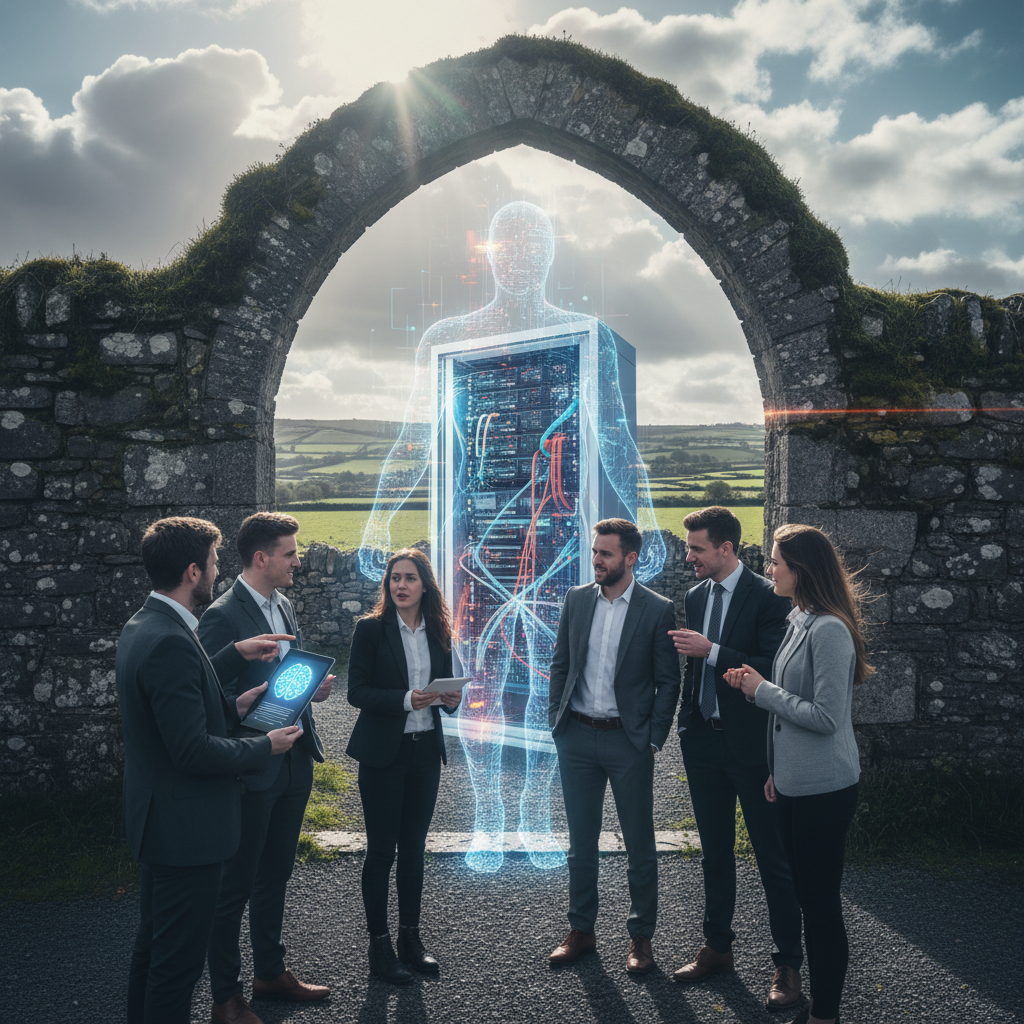

The air in Dublin often carries the scent of damp earth and distant industry, a fitting metaphor for the current state of artificial intelligence safety debates. On one hand, there are the grand, often abstract, pronouncements from Silicon Valley about existential risks, the potential for superintelligent AI to render humanity obsolete. On the other, closer to home, lies a far more immediate and insidious threat: the quiet, almost imperceptible, undermining of regulatory frameworks by powerful tech interests, often with Ireland caught in the crosshairs.
For years, Ireland has been a beacon for multinational technology corporations, a strategic gateway into the European market. Our favourable corporate tax regime and skilled workforce have attracted giants like Google, Meta, and OpenAI, transforming our economic landscape. Yet, this proximity to power comes with a price, one that is becoming increasingly evident as the European Union grapples with the monumental task of regulating AI.
I spent three months investigating this, here's what I found. The narrative around AI safety, particularly the more speculative 'existential risk' variety, often serves a dual purpose. It certainly highlights legitimate long-term concerns, but it also, perhaps inadvertently, diverts attention from the more prosaic, yet profoundly impactful, dangers already manifesting: algorithmic bias, data misuse, and the concentration of power in the hands of a few unelected entities. These are not future problems; they are present realities, and Ireland, with its significant role in housing these tech behemoths, is at the coalface.
Consider the recent discussions surrounding the EU AI Act, a landmark piece of legislation designed to foster trustworthy AI. While its intentions are laudable, the lobbying efforts by major tech players have been relentless. "The sheer volume of resources deployed by these companies to influence policy is staggering," remarked Dr. Aoife Brennan, a senior researcher at University College Dublin specializing in digital ethics. "They frame the debate, often pushing for self-regulation or less stringent oversight, all under the guise of fostering innovation. Behind the press release lies a very different story, one of carefully orchestrated influence campaigns."
Indeed, documents obtained through freedom of information requests, though heavily redacted, indicate a significant uptick in meetings between Irish government officials and representatives from leading AI firms in the months leading up to key EU legislative votes. While such engagement is not inherently nefarious, the pattern suggests a disproportionate access to policymakers, potentially skewing the regulatory landscape in favour of corporate interests rather than public safety.
One prominent concern raised by critics is the focus on 'frontier AI' models and their hypothetical dangers, while more immediate, 'high-risk' applications already in deployment receive less scrutiny. Think of AI systems used in credit scoring, employment screening, or even predictive policing. These systems, often opaque and prone to bias, are already impacting millions of lives across Europe, yet the existential risk debate often overshadows these tangible harms.
"The Irish tech sector has a secret it doesn't want you to know," stated Liam O'Connell, a former data protection officer for a prominent Irish tech firm who now consults on AI governance. "Many of these companies, while publicly endorsing AI safety principles, are simultaneously pushing for exemptions or weaker definitions of 'high-risk' AI that would allow their existing products to operate with minimal oversight. The rhetoric of 'saving humanity' from superintelligence often distracts from the more mundane, yet equally critical, task of protecting individuals from biased algorithms today." O'Connell's insights, drawn from years within the industry, paint a sobering picture.
The European Data Protection Board, headquartered in Brussels, has repeatedly highlighted the challenges of enforcing existing regulations like GDPR against powerful tech firms. The upcoming AI Act will undoubtedly present similar, if not greater, hurdles. The question for Ireland, and indeed for Europe, is whether the regulatory bodies will be adequately resourced and empowered to stand firm against the immense lobbying power of Big Tech.
Take, for instance, the concept of 'AI safety institutes' now being established globally. While these initiatives are presented as collaborative efforts to ensure responsible AI development, some critics view them with a healthy dose of cynicism. Are they genuinely independent bodies dedicated to public good, or are they yet another mechanism for industry to shape the safety agenda on its own terms, potentially delaying stricter external regulation? The answer, as always, lies in the details of their funding, governance, and transparency. Reuters has reported extensively on the formation of such bodies, highlighting the complex interplay of public and private interests.
Professor Maeve Gallagher, an expert in international law at Trinity College Dublin, articulated this concern succinctly. "We must be vigilant against regulatory capture. The very entities that stand to gain the most from lax regulation are often those championing the 'safety' narrative. It is a classic move, to define the problem in a way that suits your solution, or, more accurately, your desired lack of regulation. The public must demand genuine, independent oversight, not just industry-led initiatives." Her words echo a sentiment of caution that is increasingly prevalent among independent observers.
The debate over AI safety and existential risk is not merely academic; it has profound implications for how AI is developed, deployed, and governed. For Ireland, a nation that has so readily embraced its role as a European tech hub, the stakes are particularly high. Our reputation as a responsible regulatory environment, our commitment to data protection, and ultimately, the trust of our citizens, are all on the line. The allure of innovation and economic growth must not blind us to the imperative of robust, independent oversight. As the old Irish saying goes, 'níl aon tinteán mar do thinteán féin' there's no place like your own hearth. We must ensure that our digital hearth remains safe and warm for all, not just for the giants who gather around it. The future of AI, and indeed our society, hinges on our ability to distinguish genuine safety from carefully constructed narratives designed to obscure the true power dynamics at play. The time for passive observation is long past; active, informed scrutiny is now paramount. For further reading on the broader implications of AI's societal impact, Wired offers a wealth of perspectives on AI culture and society.