
The aroma of freshly brewed Turkish coffee still lingers in my memory from my last visit to a small, family-run baklava shop in Kadıköy. The owner, a man whose hands told stories of decades spent perfecting his craft, once told me, “Yıldız, some things, a machine can never truly understand. The feel of the dough, the exact moment the syrup is ready, that is instinct, that is art.” His words echo in my mind as I delve into the latest, rather startling, research coming out of Turkey, a research that might just challenge his deeply held belief.
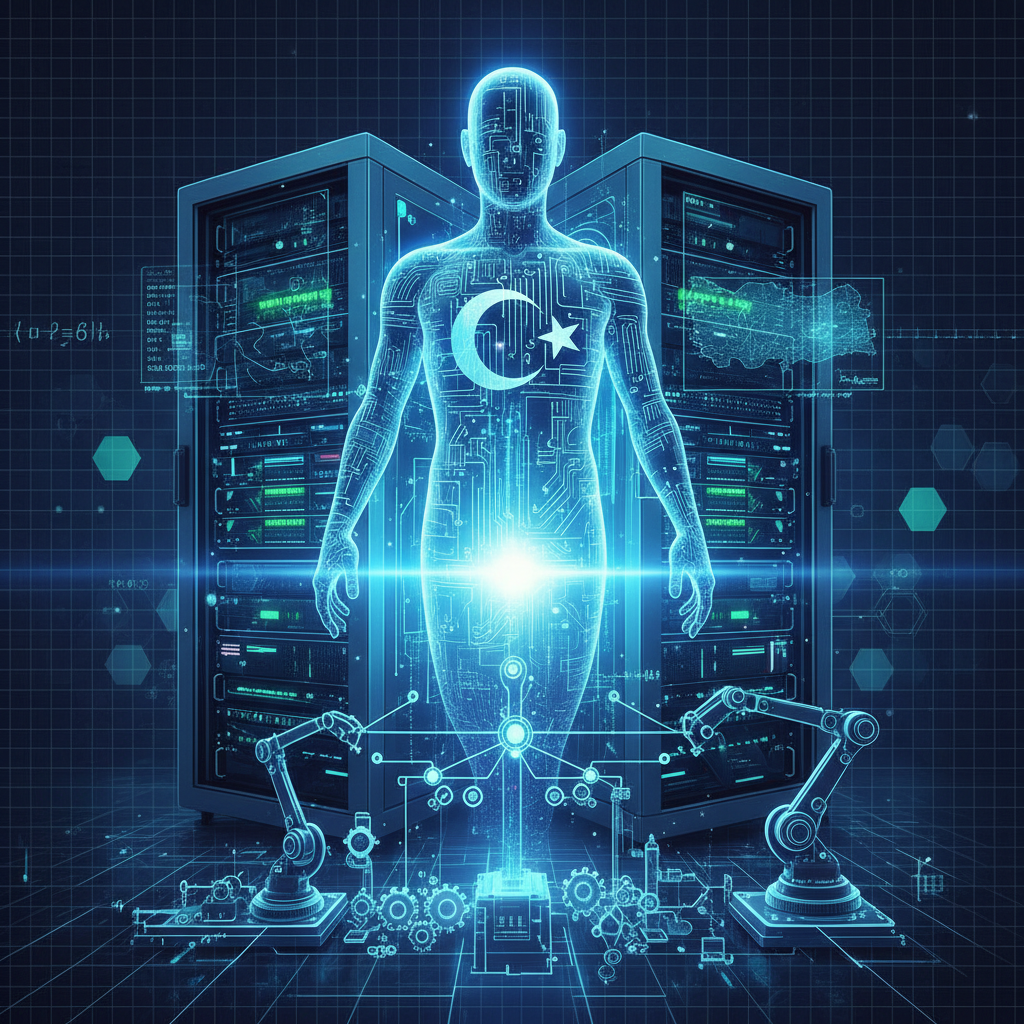
For years, we have debated the impact of artificial intelligence on employment. Will it free us from mundane tasks, or will it simply render millions obsolete? This question, a constant companion in our rapidly digitizing world, has found a new urgency with a recent breakthrough from the AI and Robotics Lab at Koç University. Their paper, titled “Precision Automation: A Deep Reinforcement Learning Approach to Task-Specific Workforce Displacement,” published in the Journal of Applied AI Economics this past March, offers not just predictions, but a tangible framework for understanding how AI is already, and will continue to, replace human roles with surgical precision.
At its heart, the research identifies a new class of AI systems, which they term “Adaptive Task Agents” or ATAs. Unlike previous generations of automation that focused on repetitive, rule-based tasks, ATAs utilize deep reinforcement learning to adapt and optimize complex, non-linear processes. Imagine a human worker who learns from every mistake and success, constantly refining their approach. Now, imagine that learning happening at an exponential rate, across millions of data points, without fatigue or error. That is the power of ATAs.
“We are moving beyond simple automation, beyond just robots on an assembly line,” explained Dr. Elif Kaya, lead researcher and a brilliant mind I had the pleasure of speaking with over a strong cup of Turkish tea. “Our ATAs are not just performing tasks, they are learning the optimal way to perform them, often exceeding human efficiency and accuracy in areas previously considered too nuanced for machines. This isn't just about speed, it's about a new level of operational intelligence.”
Why does this matter, particularly here in Turkey? Istanbul bridges two worlds and so does its AI scene, blending ancient traditions with cutting-edge innovation. Our economy, like many, relies heavily on sectors that involve intricate human skill and judgment: manufacturing, logistics, customer service, and even parts of our vibrant tourism industry. The Koç University study suggests that these very sectors are ripe for disruption by ATAs. For instance, the paper details a pilot project where an ATA system managed the entire supply chain of a mid-sized textile manufacturer in Bursa, from raw material procurement to final product distribution. The result: a 30 percent reduction in operational costs and a 15 percent increase in efficiency within six months. These are numbers that cannot be ignored by businesses striving for global competitiveness.
The technical details, while complex, can be understood through a simple analogy. Think of a master chess player. They do not just follow rules, they anticipate, they strategize, they learn from every game. Traditional automation is like a beginner following a rulebook. ATAs are like that grandmaster, constantly evolving their strategy based on real-time feedback and long-term goals. The researchers achieved this by developing a novel neural network architecture that integrates large language models for contextual understanding with deep Q-learning for sequential decision-making. This allows the ATA to not only understand the what of a task, but also the why and the how to optimize it, even in dynamic environments.
The team, led by Dr. Kaya and her colleague, Professor Cem Yılmaz, focused their initial research on three key areas: advanced logistics and inventory management, sophisticated customer support, and quality control in precision manufacturing. In each domain, their ATA models demonstrated superior performance compared to human benchmarks. For example, in customer support, the ATA system, after being trained on millions of anonymized customer interactions, could resolve complex inquiries with an 85 percent first-contact resolution rate, significantly higher than the human average of 60 percent in the test environment.
This research is not just theoretical; it has immediate implications. Professor Yılmaz emphasized the ethical considerations. “We are not advocating for wholesale job elimination. Our work is a mirror, showing us where the future is headed. The question is not if these jobs will be impacted, but how we prepare our workforce for this transformation. We must invest in reskilling and upskilling programs, focusing on uniquely human skills that ATAs cannot replicate, such as creativity, critical thinking, emotional intelligence, and complex problem-solving.”
Indeed, the implications are profound. If ATAs can manage supply chains, resolve customer issues, and ensure quality with such efficacy, what does that mean for the millions currently employed in these roles? The study projects that within the next five years, up to 10 percent of current roles in these specific sectors in Turkey could be directly impacted by ATA deployment. This is not a distant future; it is a present reality unfolding before our eyes.
This is where the human element, my passion, truly comes into play. We cannot simply stand by and watch. The government, educational institutions, and industry leaders must collaborate to create pathways for workers to transition into new roles. Perhaps we will see a surge in demand for AI trainers, data annotators, ethical AI oversight specialists, and roles that require the very human touch that ATAs lack. The baklava maker’s instinct, that unique human artistry, might become more valuable than ever.
The research team at Koç University is now exploring the application of ATAs in healthcare diagnostics and personalized education, areas where the stakes are even higher. Their next phase involves developing “human-in-the-loop” ATA systems, where human oversight and intervention remain crucial, ensuring that the benefits of automation are balanced with ethical responsibility and human well-being.
The findings from Koç University serve as a powerful wake-up call, not just for Turkey, but for the entire global economy. It is a reminder that at the crossroads of innovation, we must always prioritize people. The ghost in the machine is not an enemy, but a catalyst for change, urging us to redefine what it means to work, to create, and to thrive in an increasingly automated world. Our response to this challenge will define the next chapter of human progress, and I, for one, remain hopeful that our uniquely human spirit will find new ways to flourish amidst these technological tides.