
The scent of freshly brewed Turkish coffee still lingers in my memory from that afternoon in Kadıköy. It was just last autumn, and I was sitting with Ayşe, a bright young woman who runs a small, bustling bookstore near the ferry terminal. She was showing me a video on her phone, her brow furrowed with a mix of confusion and indignation. The video, seemingly of a prominent opposition leader, showed him making outlandish claims about foreign interference, speaking in a voice that was undeniably his, yet the words felt… wrong. "Yildizè, this cannot be real," she pleaded, her voice barely a whisper. "But it sounds so convincing. My uncle shared it, he believes every word." This was not an isolated incident. Across Turkey, from the bustling streets of Istanbul to the quiet villages of Anatolia, the digital mirage of deepfakes is blurring the lines of truth, especially as we approach critical election cycles.
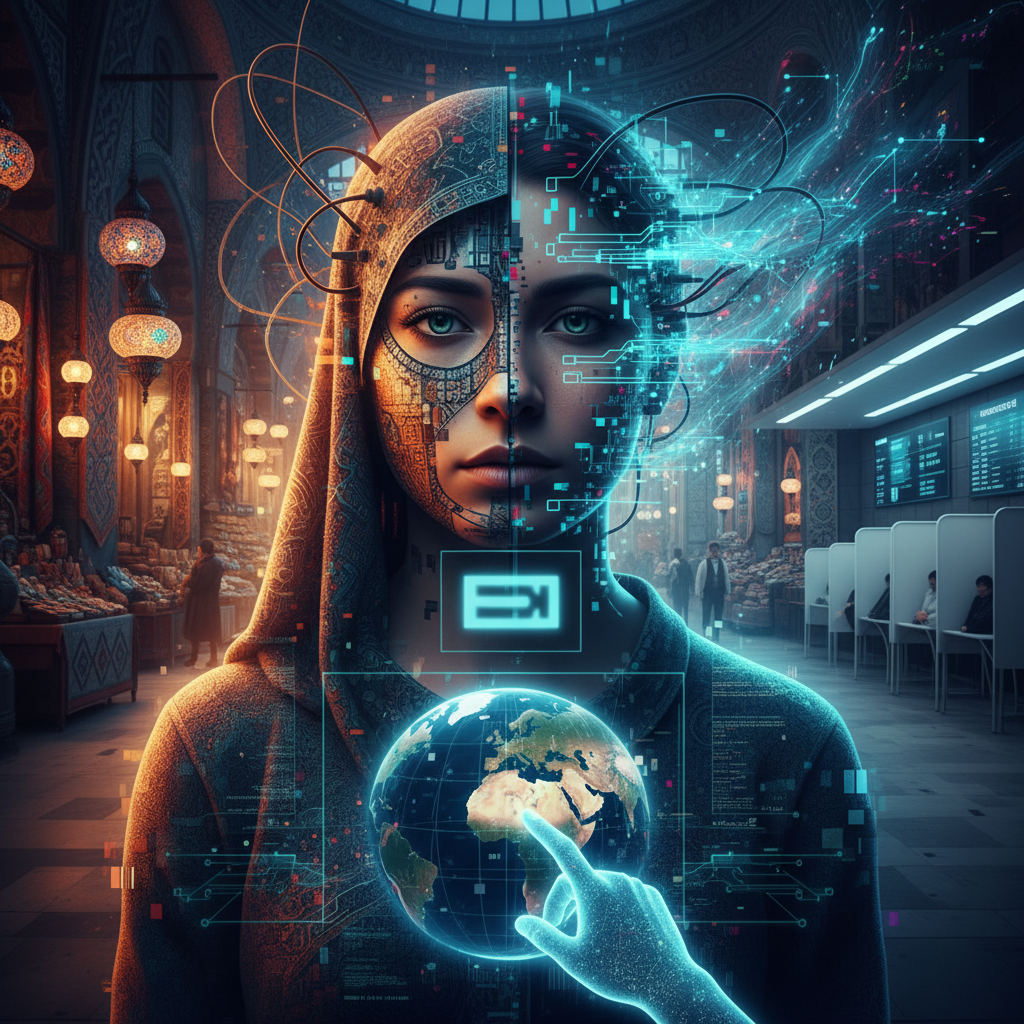
Ayşe’s story is a microcosm of a global phenomenon, but here, at the crossroads of innovation and tradition, its impact feels particularly acute. Istanbul bridges two worlds and so does its AI scene, where the rapid adoption of new technologies often outpaces our collective understanding of their implications. Deepfakes, AI-generated synthetic media that can convincingly portray someone saying or doing something they never did, are no longer science fiction. They are a potent tool, capable of swaying public opinion, eroding trust, and, most alarmingly, undermining democratic processes.
Recent research paints a stark picture. A study published by the MIT Technology Review in late 2025 indicated that exposure to even a single deepfake video could significantly alter a voter's perception of a candidate, reducing trust by as much as 15% and increasing the likelihood of voting for an opposing candidate by 8% in simulated election scenarios. The psychological impact is profound. Our brains are wired to trust what we see and hear, especially when it comes from a familiar face or voice. When that fundamental trust is betrayed by a hyper-realistic fabrication, it creates a cognitive dissonance that can be deeply unsettling and disorienting. We begin to doubt everything, a dangerous path for any society.
I spoke with Dr. Emre Can, a cognitive psychologist at Boğaziçi University, who has been studying the effects of digital misinformation on Turkish society. "The human mind struggles to process information that contradicts deeply held beliefs, even when presented with evidence," Dr. Can explained, his glasses perched on his nose. "With deepfakes, the visual and auditory cues are so compelling that they bypass our initial skepticism. It's like a digital Trojan horse, entering our minds under the guise of authenticity, then unleashing chaos." He emphasized that the emotional resonance of political content makes it particularly vulnerable to deepfake manipulation, triggering strong reactions that override critical thinking.
The problem is compounded by the speed at which these fabrications spread. Social media platforms, designed for rapid dissemination, become unwitting accomplices. A deepfake video, perhaps generated using tools from OpenAI or Meta's advanced AI models, can go viral within hours, reaching millions before fact-checkers can even begin to verify its authenticity. By then, the damage is often done, the seeds of doubt firmly planted.
Consider the recent local elections in a provincial town in central Anatolia. A deepfake audio clip, allegedly of a mayoral candidate promising to divert public funds to a private family enterprise, circulated widely on WhatsApp groups just days before the vote. Despite the candidate's vehement denials and eventual debunking by a local journalist, the perception of corruption lingered. The candidate lost by a narrow margin of just 0.7%, a difference many attributed to the viral audio. This isn't just about one election, it's about the erosion of the entire democratic process, piece by painful piece.
"The psychological toll on individuals is immense," said Professor Zeynep Aksoy, a political communication expert at Ankara University. "Voters become cynical, disengaged, and ultimately, lose faith in the information ecosystem. This creates fertile ground for populism and authoritarian tendencies, where 'truth' becomes whatever the most powerful voice dictates, not what can be verified." She told me her story over Turkish tea, explaining how her own students, digitally native as they are, often struggle to discern real from fake when the deepfakes are sophisticated enough.
Beyond elections, the broader societal implications are chilling. If we can no longer trust what we see and hear, how do we build consensus? How do we hold our leaders accountable? How do we even have a shared reality? The very foundation of civil discourse relies on a common understanding of facts. When that foundation crumbles under the weight of synthetic media, society itself begins to fracture.
Major tech companies like Google, Microsoft, and NVIDIA are investing heavily in deepfake detection technologies, but it's a constant arms race. As detection methods improve, so too do the generation techniques. It's a cat and mouse game with democracy hanging in the balance. The responsibility cannot fall solely on the tech giants, however. Governments, educational institutions, and individuals all have a role to play.
So, what can we, as ordinary citizens, do? The practical advice is both simple and profoundly challenging. First, cultivate a healthy skepticism. When you encounter emotionally charged political content, especially videos or audio clips, pause and question its origin. Is it from a reputable news source? Has it been verified by independent fact-checkers? Second, cross-reference information. Don't rely on a single source, particularly if it comes from an unknown or highly partisan channel. Check multiple established news outlets and fact-checking organizations. Third, support quality journalism. Invest in news organizations that prioritize truth and verification, for they are our frontline defense against the digital onslaught. Finally, and perhaps most importantly, engage in thoughtful conversations with those around you, rather than simply sharing unverified content. Encourage critical thinking within your own social circles.
The threat of deepfakes to our elections and, by extension, our democracies, is not a distant future problem. It is here, now, weaving its way into the fabric of our daily lives, from the bustling bazaars of Istanbul to the quiet corners of the internet. It demands our immediate and sustained attention. We must learn to navigate this new digital landscape with wisdom and discernment, lest we lose our grip on reality itself. The future of our shared truth depends on it. For more on this evolving challenge, you might find insights on The Verge's AI coverage or Reuters' technology section.
It is a battle for the mind, a struggle for the very soul of our democratic institutions. And like any good story, it is one where the human element, our capacity for critical thought and our commitment to truth, will ultimately determine the ending.