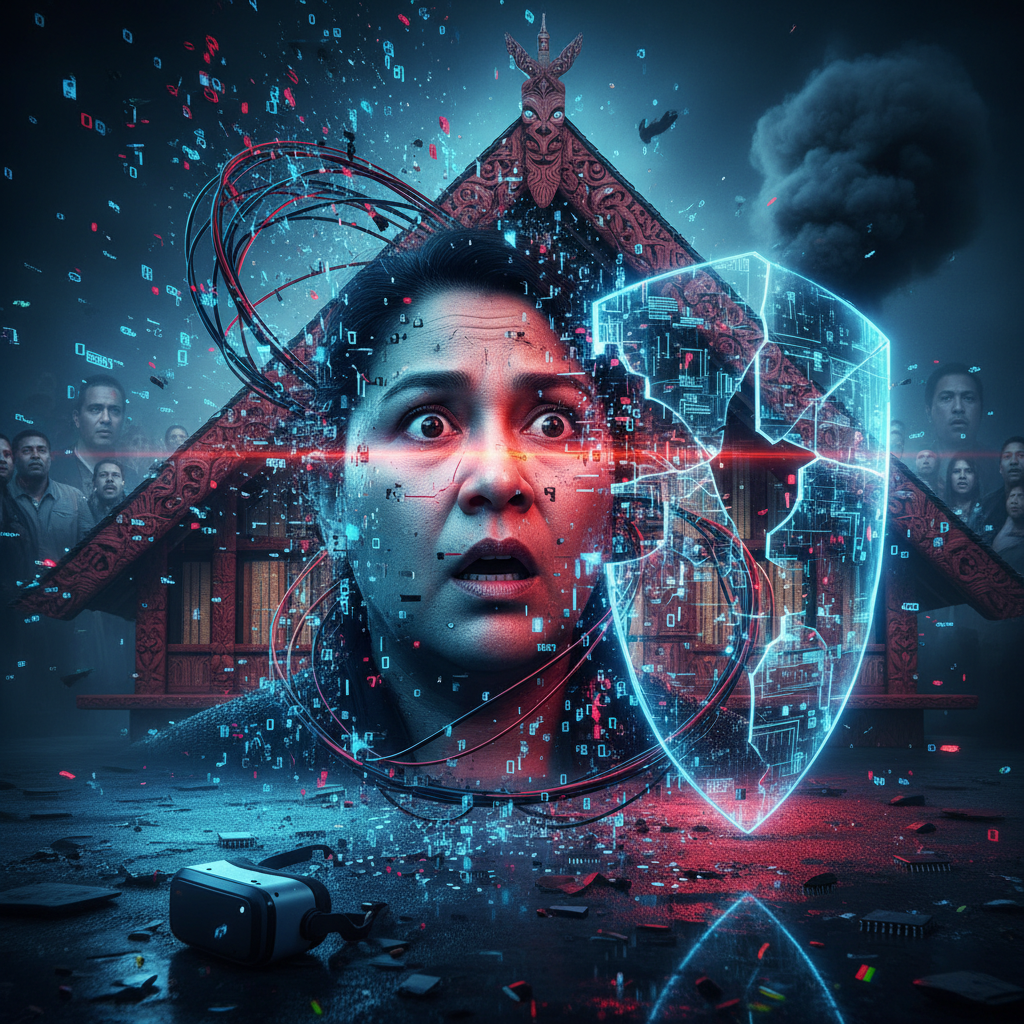
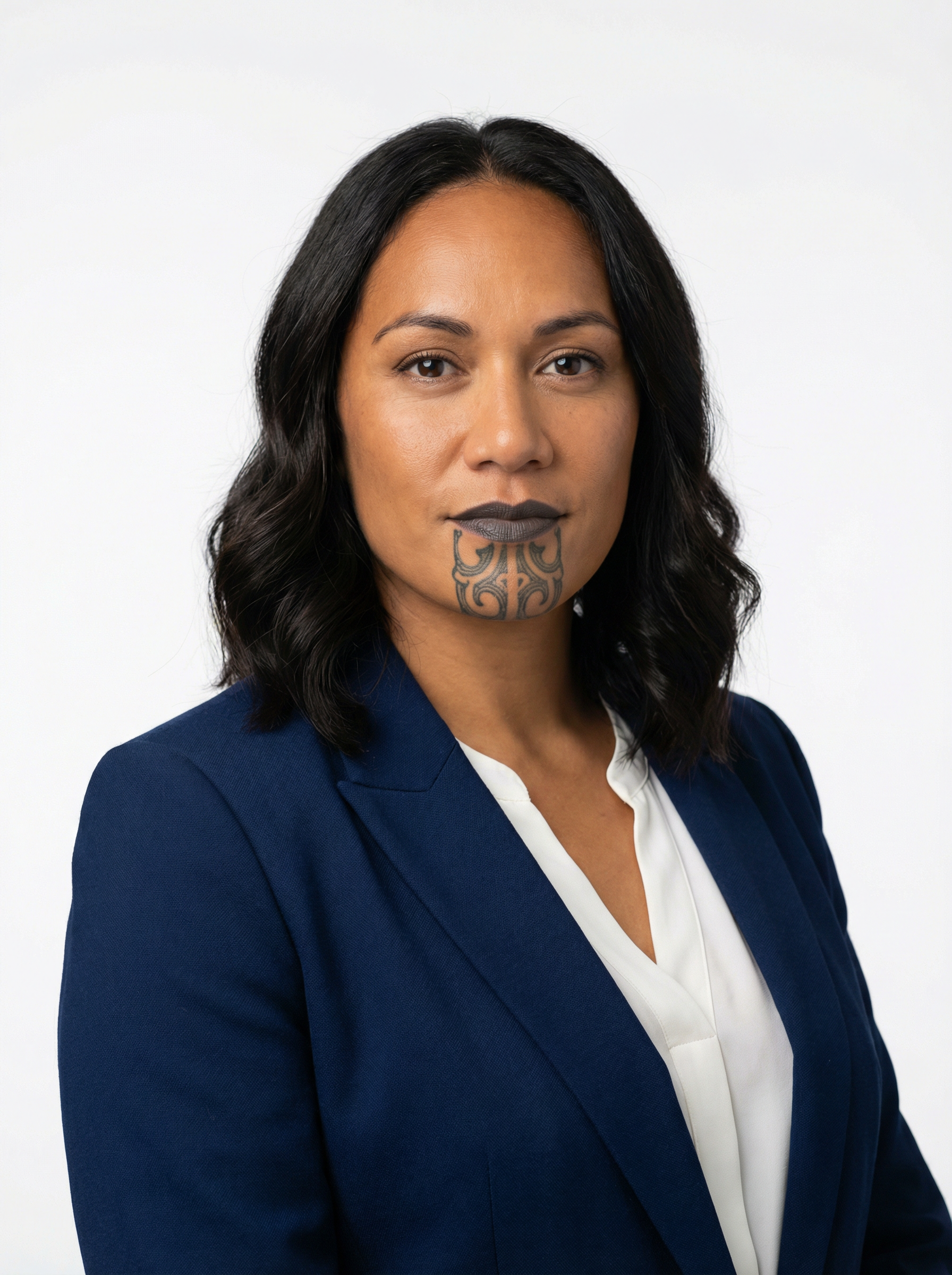
The digital storm broke just as the morning light touched the peaks of Aotearoa, a chill wind sweeping not from the Tasman but from the vast, unregulated expanse of the internet. It was a Tuesday, and the news cycle was already buzzing with the usual political chatter, but then, a video surfaced. It was short, insidious, and utterly convincing, featuring what appeared to be former Foreign Minister Nanaia Mahuta making inflammatory statements about a proposed land reform bill, using language entirely out of character for her measured public persona. The video quickly went viral, amplified by anonymous accounts across social media platforms, sowing confusion and outrage. This wasn't just a political attack; it was an assault on the fabric of our democracy, a chilling demonstration of how AI-generated deepfakes can be weaponized in elections.
Within hours, the video was debunked as a deepfake, a sophisticated fabrication created using advanced generative AI models. But the damage was already done. The initial shock, the doubt, the swift spread of misinformation, it all highlighted a vulnerability we in New Zealand, perhaps naively, thought we were somewhat insulated from. We often pride ourselves on our unique approach to technology, rooted in indigenous wisdom and a collective sense of community, but this incident proved that the global digital currents spare no one.
“This is a direct attack on our democratic process, designed to undermine public trust and create division,” stated Prime Minister Christopher Luxon in an emergency press conference later that day, his voice grave. “We are working with our cybersecurity agencies and international partners to trace the origin of this malicious content. Let me be clear: those who seek to manipulate our elections through such deceptive means will be held accountable.” He stressed the government's commitment to protecting the integrity of the upcoming general election, now just months away.
The deepfake was reportedly generated using a combination of publicly available footage of Mahuta, advanced voice cloning technology, and a sophisticated video synthesis model, likely from a commercially available platform or an open-source model like those from Meta or Stability AI. The quality was disturbingly high, capable of fooling even discerning viewers in the initial moments. This incident serves as a stark reminder that the tools of creation, when misused, can become weapons of mass deception.
Dr. Hineata Te Aho, a leading expert in AI ethics and Māori data sovereignty at Te Herenga Waka Victoria University of Wellington, expressed deep concern. “In Te Reo Māori, we have a word for this: whakapōrearea, meaning to cause trouble or disturbance, to confuse. This deepfake did exactly that. It didn't just target a politician; it targeted the trust we place in our leaders, in our media, and in the very information we consume. This is a profound violation of manaakitanga, of respect and care for our people and our collective well-being.” Dr. Te Aho emphasized the need for media literacy campaigns and robust detection tools, but also for a deeper societal conversation about digital ethics. “Technology must serve the people, not the other way around. We need to ensure our digital spaces reflect our values, not just the capabilities of the latest AI model.”
The incident has ignited a fierce debate across Aotearoa. Calls for immediate legislative action to combat deepfakes are growing louder. The Electoral Commission, already grappling with the complexities of digital campaigning, now faces an unprecedented challenge. “We’ve seen a significant increase in AI-generated content in the past year, but nothing of this sophistication and malicious intent targeting a high-profile figure in an election context,” said Sarah Wilson, Chief Electoral Officer. “Our teams are working around the clock to develop guidelines for political parties and to educate the public on how to identify synthetic media. This is a rapidly evolving threat, and our response must be equally agile.”
International reactions have also poured in, with many nations expressing solidarity and concern. The European Union, which has been at the forefront of AI regulation with its AI Act, reiterated the global nature of this threat. A spokesperson for the EU Commission noted that such incidents underscore the urgency of international cooperation on AI governance. Meanwhile, tech giants like Google and OpenAI, whose models could potentially be misused for such purposes, have faced renewed scrutiny regarding their content moderation policies and the safeguards built into their generative AI tools. While many platforms have policies against deceptive AI content, enforcement remains a significant hurdle, especially with the rapid proliferation of new models and techniques.
What happens next is critical. The government has indicated it will fast-track discussions on new legislation specifically targeting the malicious use of AI in elections, potentially including severe penalties for creators and distributors of deepfakes intended to mislead voters. There's also a push for greater investment in AI detection technologies and public education initiatives. But as Dr. Te Aho pointed out, laws alone won't be enough. “We need a collective shift, a societal understanding that our digital environment is a shared taonga, a treasure, that needs protection. It requires vigilance from every citizen, critical thinking, and a commitment to verifying information at its source.”
The deepfake attack on Nanaia Mahuta is a wake-up call for New Zealand, and indeed for democracies worldwide. It’s a stark reminder that as AI capabilities advance, so too does the potential for abuse. The fight against misinformation is no longer just about identifying false claims; it’s about discerning what is real from what is synthetically generated, a task that grows more challenging by the day. Our resilience, our manawaroa, will be tested. We must rise to this challenge, not just with technology, but with our collective wisdom and our unwavering commitment to truth and fairness. The future of our elections, and the very health of our democracy, depends on it. For more on the broader implications of AI in society, you can read analyses on Wired or MIT Technology Review. For breaking news and industry updates, TechCrunch often provides timely reports. The silent erosion of Māori data sovereignty, for instance, is another critical issue facing our nation, as explored in The Silent Erosion: How Salesforce Einstein AI's 'Efficiency' Is Undermining Māori Data Sovereignty in Aotearoa [blocked].
This incident forces us to confront uncomfortable truths about the digital age. It’s not enough to simply build better AI; we must also build a more resilient, informed, and ethically grounded society capable of navigating its complexities. The integrity of our whakapapa, our lineage of knowledge and trust, is at stake. We must protect it fiercely. {{youtube:bZQun8Y4L2A}}