The digital landscape of April 2026 is a complex terrain, one where the lines between reality and fabrication blur with increasing ease. For those of us who have witnessed technology's transformative power, from the rise of Nokia to the global success of Finnish gaming studios, this evolution is both fascinating and, at times, concerning. One particular technological advancement, the 'deepfake,' has emerged as a significant point of discussion, especially as electoral cycles intensify across the globe. It demands a clear, unvarnished explanation.
What is a Deepfake?
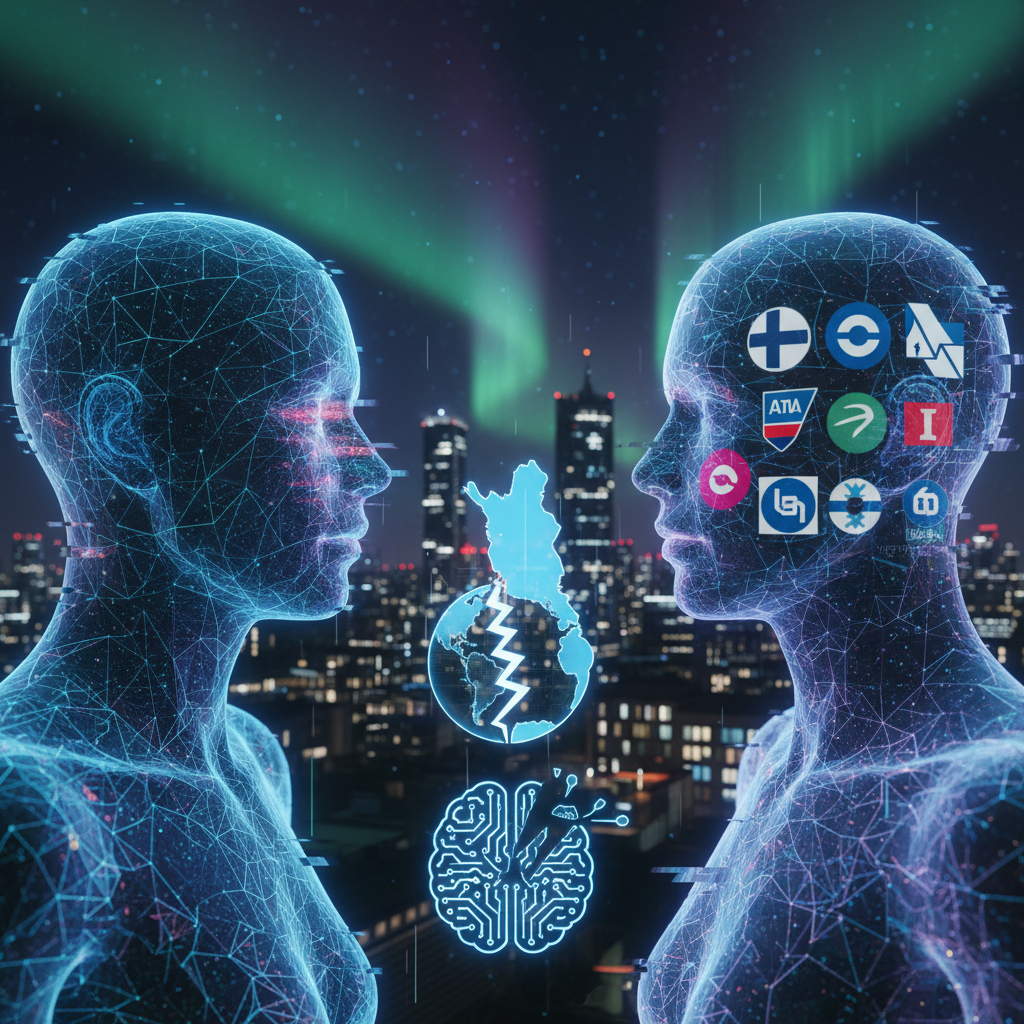
At its core, a deepfake is synthetic media, typically video or audio, that has been manipulated or generated by artificial intelligence to depict someone saying or doing something they never did. The term itself is a portmanteau of 'deep learning' and 'fake,' reflecting the advanced AI techniques, primarily neural networks, used to create these convincing forgeries. Imagine a video of a political leader delivering a speech, but the words coming out of their mouth were never uttered by them, nor were they ever in that location. That is the essence of a deepfake.
Why Should You Care?
For citizens, the integrity of information is paramount, particularly in a democracy. The ability to discern truth from falsehood directly impacts our capacity to make informed decisions, whether at the ballot box or in everyday life. Deepfakes, especially those deployed with malicious intent, can sow discord, spread misinformation, and undermine public trust in institutions, media, and even our own perceptions. In an election context, a strategically timed deepfake could sway public opinion, discredit a candidate, or even incite unrest. The potential for societal destabilization is not merely theoretical, it is a tangible risk that demands our collective attention. The very foundation of democratic discourse, which relies on a shared understanding of reality, is under threat.
How Did It Develop?
The journey to sophisticated deepfake technology began with advancements in artificial intelligence, particularly in machine learning and computer vision. Early forms of image manipulation have existed for decades, but the breakthrough came with the development of Generative Adversarial Networks, or GANs, in 2014 by Ian Goodfellow and his colleagues. GANs involve two neural networks, a 'generator' and a 'discriminator,' competing against each other. The generator creates synthetic data, while the discriminator tries to distinguish between real and fake data. Through this adversarial process, both networks improve, leading to increasingly realistic outputs. Over time, other architectures like variational autoencoders and diffusion models have further refined the process, allowing for astonishingly high fidelity. Companies like Google, Meta, and OpenAI have invested heavily in AI research, inadvertently contributing to the underlying technologies that can be repurposed for deepfake creation, even as they also develop detection methods.
How Does It Work in Simple Terms?
Think of it like a highly skilled forger learning to paint. Initially, the forger produces clumsy copies. But with access to countless real paintings and a critical art expert constantly pointing out flaws, the forger learns to mimic brushstrokes, colors, and textures perfectly. In the deepfake world, the 'forger' is the generator network, and the 'art expert' is the discriminator network. The generator is fed a large dataset of a person's images and audio recordings. It then learns to map their facial expressions, speech patterns, and vocal nuances. To create a deepfake, the AI takes a target video or audio, extracts the facial movements and speech, and then superimposes the learned characteristics of the chosen individual onto it. The result is a video where, for instance, a politician's face moves and speaks words that were never originally theirs. It is a digital puppet show, but one where the strings are invisible and the puppeteer is an algorithm. The process is computationally intensive, often requiring powerful GPUs from companies like NVIDIA, but the tools are becoming more accessible.
Real-World Examples and Their Implications
- The 2022 US Midterm Elections: While not widely deployed in a decisive manner, several instances of manipulated audio surfaced, purporting to be candidates making controversial statements. These were quickly debunked, but they highlighted the potential for disruption and the need for rapid verification. The intent was clearly to sow doubt and influence voter perception.
- Slovakian Elections in 2023: Just days before the election, audio recordings circulated on social media, allegedly featuring a leading pro-Western candidate discussing vote rigging and increased beer prices. Forensic analysis later indicated these were likely deepfakes, but the timing was critical, and the damage to public trust was immediate. This demonstrated the speed at which such content can spread and impact a campaign.
- Ukrainian Conflict Propaganda: Both sides have reportedly used or accused the other of using deepfake technology to create propaganda videos, including fabricated surrender announcements or calls for violence. This underscores how geopolitical tensions can exacerbate the deepfake problem, turning it into a tool of information warfare.
- Corporate Impersonation: Beyond politics, deepfakes have been used in sophisticated scams. In one notable incident, a UK energy firm CEO was reportedly tricked into transferring $243,000 after receiving a deepfake audio call from someone impersonating his boss, demanding an urgent transfer. This illustrates the financial and reputational risks extending beyond elections.
Common Misconceptions
One common misconception is that all deepfakes are perfect and undetectable. While the technology is rapidly advancing, many deepfakes still contain subtle tells: unnatural blinking patterns, inconsistent lighting, or strange distortions around the edges of the face. However, these imperfections are diminishing, and human eyes are not always reliable detectors, especially when content is viewed quickly on social media feeds. Another misconception is that only state actors or highly skilled individuals can create them. While the most sophisticated deepfakes require significant resources, user-friendly tools and applications are making basic deepfake creation accessible to a broader audience, lowering the barrier to entry for malicious actors. TechCrunch often reports on these emerging tools.
What to Watch for Next
The battle against malicious deepfakes is multi-faceted. We are seeing a race between those who create synthetic media and those who develop detection methods. Companies like Meta and Google are investing in watermarking and provenance technologies, aiming to digitally sign authentic content and make it easier to identify manipulated media. Regulatory bodies worldwide are also grappling with how to legislate against the misuse of deepfakes without stifling legitimate creative applications. The European Union, for instance, is exploring provisions within its AI Act to address transparency around AI-generated content. MIT Technology Review has extensively covered these regulatory efforts.
Education is another critical front. Teaching media literacy and critical thinking skills, particularly to younger generations, is essential. Finland's approach is quietly revolutionary in this regard, with a strong emphasis on media education within its school system. This equips citizens to critically evaluate information, a skill more vital than ever. Nokia taught us something about reinvention, and now we must apply that lesson to our information ecosystem. We need robust technical solutions, clear legal frameworks, and an educated populace capable of navigating this new digital reality. The sauna principle of AI development, slow heat, lasting results, applies here too: a measured, thoughtful approach will yield the most enduring defenses against this evolving threat. The future of democratic processes hinges on our ability to adapt and defend against these digital doppelgängers. We must remain vigilant, analytical, and committed to the pursuit of verifiable truth.