
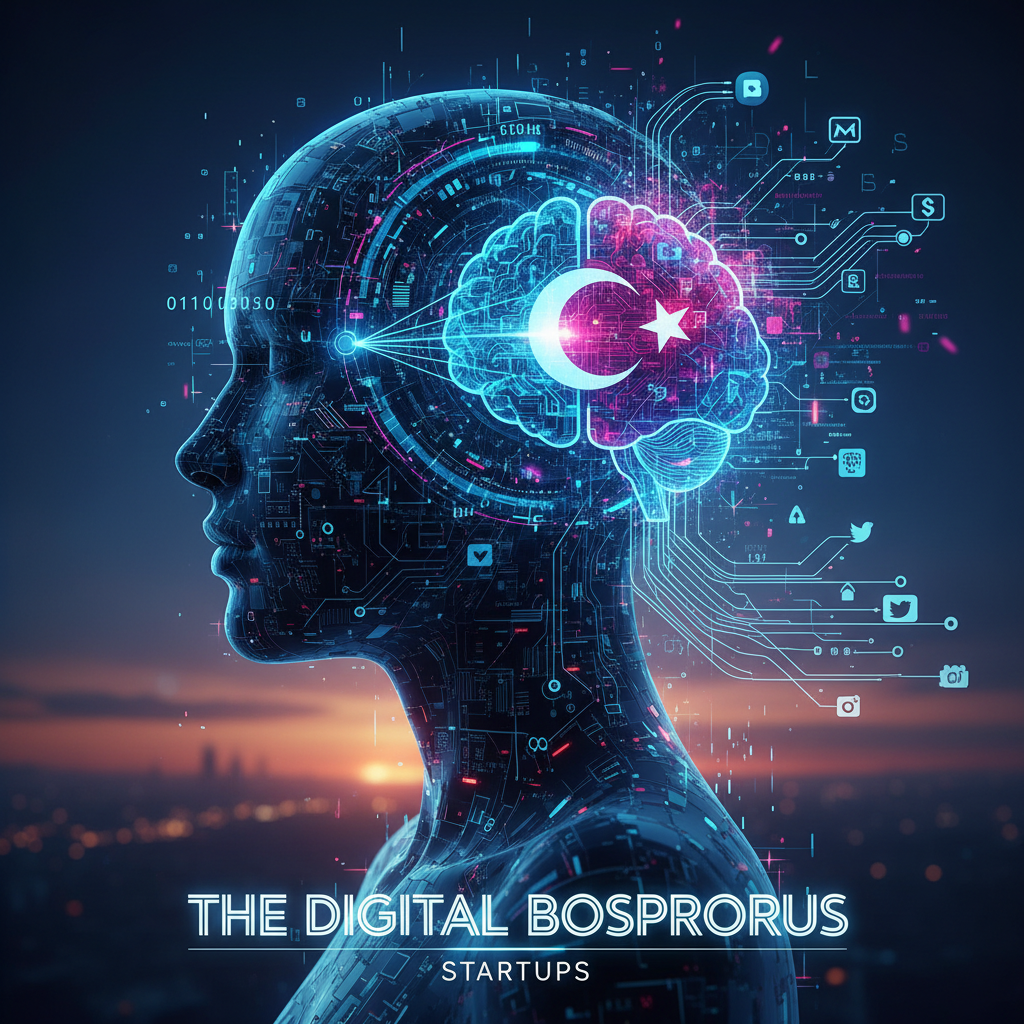
The aroma of freshly brewed Turkish coffee still fills the air in Kadıköy, the seagulls still cry over the Bosphorus, and the call to prayer still echoes five times a day. Life, on the surface, feels reassuringly familiar. Yet, beneath this timeless rhythm, something profound is shifting in Turkey, and indeed, across the globe. We are not just witnessing a technological revolution, my friends, we are living through a quiet, psychological re-engineering driven by the relentless currents of geopolitical tension and the burgeoning AI cold war.
Consider Ayşe, a bright young engineer in Istanbul, just 28 years old. She spends her days coding for a Turkish defense tech startup, developing AI-powered drone systems that are gaining serious international attention. By night, she unwinds with global streaming services, chats with friends on international platforms, and follows tech news from Silicon Valley, Beijing, and even places like Riyadh. Her digital world is borderless, but her professional world is increasingly defined by the lines drawn between competing global powers. She feels the pressure, the subtle anxiety of choosing sides, even when the choice is not explicitly hers. Her company, like many in Turkey, grapples with supply chain restrictions on advanced chips, forcing them to innovate with what they have, to build resilience. This isn't just about hardware, it's about a mental shift, a constant state of adaptation and strategic thinking that permeates daily life, even in her downtime.
This isn't just anecdotal. Researchers are beginning to quantify the cognitive load imposed by this fractured digital landscape. A recent study by Boğaziçi University's Cognitive Science Department, for instance, found that individuals in countries at geopolitical crossroads, like Turkey, exhibit higher levels of cognitive dissonance and information processing fatigue. "Our participants, particularly those engaged in tech or international relations, reported a significant increase in mental effort required to reconcile conflicting narratives and navigate platform biases," explains Dr. Elif Demir, a lead researcher on the project. "The constant need to discern the 'source' behind the information, to question the algorithm's intent, it's exhausting. It erodes trust, not just in institutions, but in the very digital tools we rely on daily." This mirrors findings from institutions abroad, suggesting a global trend, but with unique intensity in our region.
We are seeing a subtle but pervasive shift in human behavior. The technology cold war, with its emphasis on data sovereignty, national AI champions, and restricted access to cutting-edge components, forces us to make choices. Do we use a Western-developed operating system, knowing its data policies might align with one bloc, or an Eastern alternative, with its own set of concerns? These aren't just technical decisions; they are psychological ones. They breed a low-level paranoia, a constant awareness that our digital footprint is being scrutinized, perhaps even weaponized. This is particularly acute for startups in Turkey, where the talent pool is deep and ambition is boundless. They must navigate a minefield of export controls, sanctions, and intellectual property disputes, all while trying to build the next big thing. Istanbul's tech ambitions are massive and realistic but the landscape is increasingly complex.
From a psychological perspective, this constant state of digital vigilance can lead to several outcomes. On one hand, it fosters a heightened sense of critical thinking, a necessary skepticism towards information. On the other, it can lead to burnout, cynicism, and even a retreat from global engagement. "The 'filter bubble' effect is exacerbated when geopolitical lines are drawn through our algorithms," says Professor Can Öztürk, a social psychologist at Koç University. "People naturally gravitate towards information that confirms their existing biases, and when those biases are tied to national identity or perceived geopolitical alignment, the divides deepen. We see this in online discussions, where nuanced debate is replaced by tribalistic shouting, often fueled by algorithmic amplification designed to maximize engagement, regardless of truth or harmony." This isn't just about what we see; it's about how we think and feel about the world.
The broader societal implications are staggering. If individuals become increasingly distrustful of globally interconnected platforms, will we see a fragmentation of the internet, a 'splinternet' where different regions use entirely separate digital ecosystems? This would not only hinder global collaboration but also deepen cultural divides, making it harder for people to understand perspectives beyond their own digital borders. Imagine a world where your search results, your social media feed, and even your AI assistant are all subtly tailored to reinforce a specific geopolitical narrative. This isn't science fiction; it's the trajectory we're on. The Ottoman approach to AI empire-building, for instance, focuses on developing indigenous solutions and fostering regional partnerships, a direct response to these global tensions.
This digital balkanization also impacts innovation. While some argue it fosters local development, it also limits the cross-pollination of ideas and talent. Turkish startups, for example, might find it harder to access the latest AI models or cloud infrastructure from certain providers, forcing them to build from scratch or rely on less advanced alternatives. This creates a fascinating tension: a drive for self-sufficiency versus the undeniable benefits of global collaboration. According to a report by Reuters Technology, global AI investment saw a 15% dip in cross-border ventures last year, a direct consequence of these rising tensions.
So, what is a citizen to do in this increasingly complex digital landscape? Here's some practical advice, rooted in both ancient wisdom and modern psychology:
First, cultivate digital literacy as a core life skill. Understand how algorithms work, how data is collected, and the potential biases embedded in the tools you use. Don't just consume; critically evaluate. Think of it as navigating the Grand Bazaar, where you must discern genuine craftsmanship from clever imitation.
Second, diversify your information sources. Actively seek out news and perspectives from different regions and political leanings. Don't let a single algorithm dictate your worldview. Read The Verge for product news, but also delve into local analyses from other countries.
Third, practice digital mindfulness. Recognize when you are feeling overwhelmed or anxious by the constant influx of information, especially that colored by geopolitical narratives. Step away. Engage with the physical world, your community, your family. Remember the simple pleasures of a walk along the Bosphorus, a conversation over tea, or the genuine connection with another human being.
Fourth, support local innovation and ethical AI development. Turkey is building the future at the crossroads, and our ability to develop our own robust, ethical AI solutions is paramount. By supporting companies that prioritize transparency, privacy, and human-centric design, we can help shape a more resilient and trustworthy digital future.
The geopolitical currents shaping our digital world are powerful, and they are undeniably impacting our minds. But we are not passive recipients of these forces. By understanding them, by cultivating critical awareness, and by making conscious choices about our digital engagement, we can navigate these turbulent waters and emerge with our cognitive integrity intact. The future, as always, is ours to shape, one thoughtful click and one critical thought at a time. It is a long game, a marathon, not a sprint, and our collective mental resilience will be our greatest asset.```