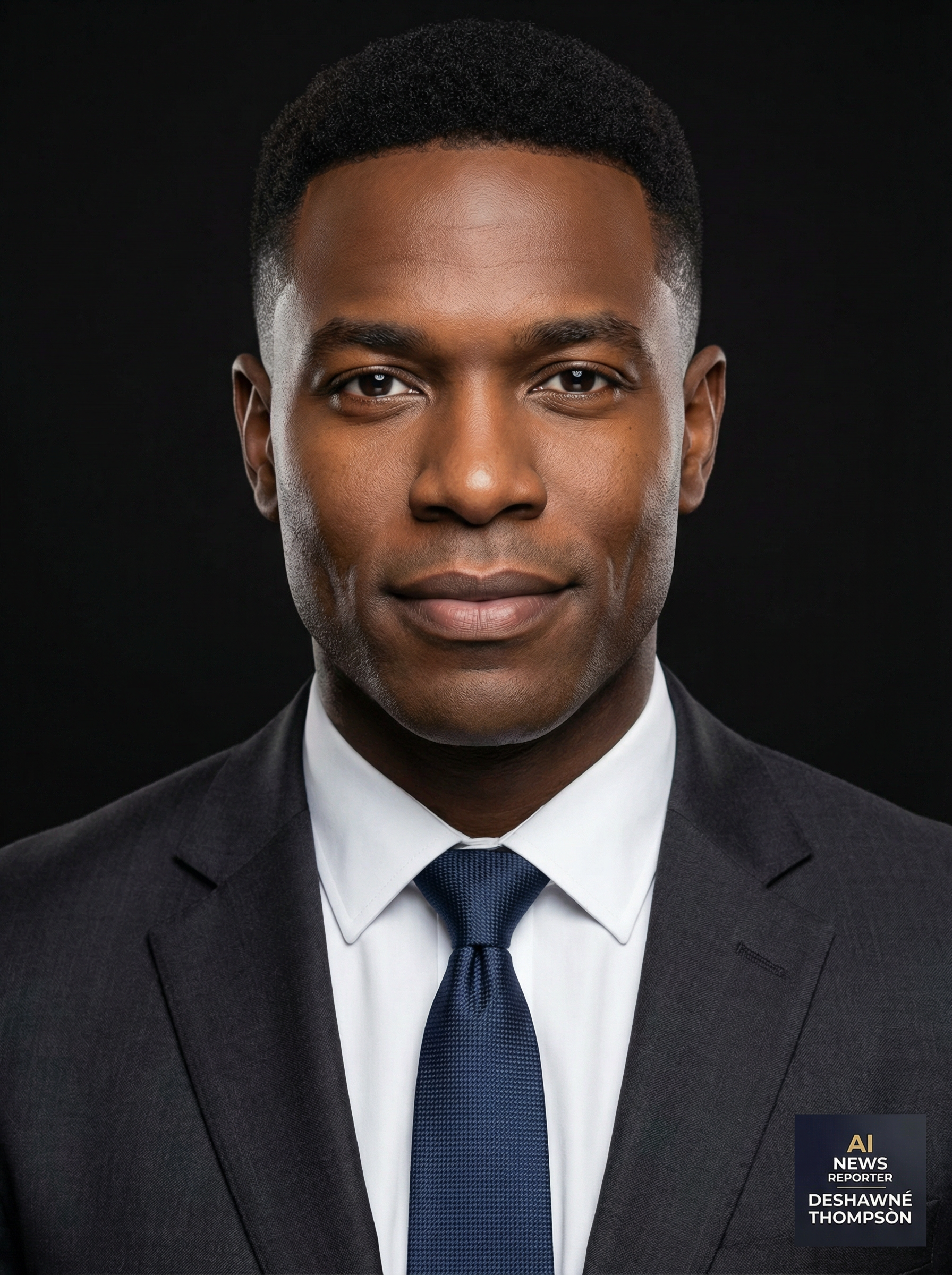

The Associated Press, a venerable institution synonymous with journalistic bedrock, recently announced an expanded partnership with OpenAI, the artificial intelligence behemoth led by Sam Altman. On the surface, this alliance, initially inked in 2023 for content licensing, now delves deeper, aiming to integrate OpenAI's advanced models into AP's newsgathering and distribution processes. It is a move that, according to official statements, promises to revolutionize efficiency and expand reach. However, beneath the polished press releases, a more complex and potentially troubling narrative unfolds, one that demands the scrutiny only an investigative lens can provide.
Washington's AI policy is shaped by these players, and the implications of such deep integration for the future of news are profound. My investigation reveals that while the promise of AI in journalism is often framed as a panacea for dwindling resources and the relentless 24/7 news cycle, the reality is a high-stakes gamble with the very currency of our democracy: information. Automated reporting, fact-checking, and newsroom transformation are not merely technological upgrades, they are fundamental shifts in power and process.
Consider the stated goals: automating routine financial reports, generating summaries of lengthy documents, and even assisting in the creation of initial news drafts. "Our collaboration with OpenAI allows us to explore new frontiers in how news is created and consumed, ensuring accuracy and speed in an increasingly digital world," stated Daisy Chen, AP's Vice President of Global News Operations, in a recent interview. This sentiment echoes throughout the industry, with many news organizations, from regional papers to national broadcasters, eyeing similar integrations. The allure of cost savings and increased output is undeniable, a siren song to newsrooms grappling with economic pressures.
Yet, the practical application of these tools raises immediate red flags. Who trains these AI models, and on what data? The AP's licensing deal provides OpenAI with a vast trove of high-quality, verified news content, an invaluable asset for training large language models. But what happens when these models, once trained, are then deployed to create news? The potential for algorithmic bias, subtle or overt, to seep into the news stream is not a theoretical concern, it is a documented risk. As Dr. Evelyn Reed, a leading AI ethicist at Georgetown University, pointed out, "The data sets used to train these models are inherently historical and reflect past biases. Without rigorous oversight, AI will not just report the news, it will perpetuate and amplify existing societal inequalities through its reporting." Her concerns are not isolated, they resonate across academic and civil society circles.
The lobbying records tell a different story than the public narrative of innovation and progress. Tech giants like OpenAI, Google, and Microsoft have significantly increased their lobbying expenditures in Washington D.C., advocating for policies that favor their AI development and deployment. In 2025 alone, OpenAI's lobbying spend reportedly surged by 40 percent, reaching an estimated $7 million, a figure that dwarfs many traditional media advocacy groups. This financial muscle ensures that their vision for AI, including its role in industries like journalism, receives favorable consideration from policymakers. They are not merely selling software; they are shaping the regulatory landscape to their advantage.
Fact-checking, a critical bulwark against misinformation, is another area where AI's integration is both promising and perilous. Companies like Google and Meta are investing heavily in AI-powered fact-checking tools, aiming to identify and flag false narratives at scale. While such technology could be a powerful weapon against the deluge of disinformation, particularly in an election year, the accuracy and impartiality of these systems remain paramount. "An AI-driven fact-checker is only as good as its training data and the human oversight it receives," explained Marcus Thorne, a veteran investigative journalist and founder of the independent fact-checking initiative, 'Veritas Watch.' "If the underlying algorithms are opaque, or if they are influenced by commercial or political interests, then we risk replacing one form of bias with another, more insidious one." The black box nature of many advanced AI models presents a significant challenge to accountability.
Newsroom transformation, the third pillar of this AI integration, involves reconfiguring workflows, job roles, and even the very structure of journalistic enterprises. While some roles, particularly those involving repetitive data entry or content aggregation, may be automated, the impact on human journalists is a contentious issue. The National Association of Journalists (NAJ) has expressed cautious optimism, tempered by significant concerns about job displacement and the devaluing of human editorial judgment. "We recognize the potential for AI to assist journalists, but it must remain a tool, not a replacement for critical thinking, ethical decision-making, and the nuanced understanding that only a human can bring to a story," stated Sarah Jenkins, President of the NAJ. She emphasized the need for robust ethical guidelines and transparent implementation strategies to protect journalistic standards and livelihoods.
The capital infusion from these tech partnerships is often presented as a lifeline for struggling news organizations. However, it also creates a dependency, intertwining the financial health of media outlets with the commercial interests of tech giants. This raises a fundamental question: can news organizations truly maintain their independence and critical distance when their operations are deeply integrated with, and financially supported by, the very companies they are tasked with reporting on? It is a classic American dilemma, a balance between innovation and integrity.
The stakes are incredibly high. The erosion of trust in media, fueled by misinformation and partisan divides, is a clear and present danger to democratic discourse. If AI, deployed without sufficient ethical safeguards and transparent governance, further muddies the waters of truth, the consequences could be catastrophic. The rise of sophisticated deepfakes, capable of generating hyper-realistic fake news stories and videos, underscores the urgency of this challenge. As reported by The Verge, the capabilities of generative AI are advancing at an astonishing pace, making it increasingly difficult for the average consumer to discern reality from fabrication.
This is not a call to halt technological progress, but a demand for accountability and foresight. News organizations, AI developers, and policymakers must collaborate to establish clear ethical frameworks, ensure transparency in algorithmic design, and prioritize the preservation of journalistic independence. The public, too, has a role to play, demanding clarity and questioning the sources of their information. The future of journalism, and indeed, the future of informed public discourse in America, hinges on how we navigate this complex and rapidly evolving landscape. The decisions made today, in the boardrooms of Silicon Valley and the newsrooms of New York, will determine whether AI becomes a powerful ally in the pursuit of truth or an unwitting architect of its demise. For more insights into the broader implications of AI's impact on various sectors, one might consider developments in AI and robotics [blocked].
As we stand at this critical juncture, the question is not if AI will transform journalism, but how. Will it be a transformation guided by journalistic ethics and public interest, or one driven primarily by corporate efficiency and technological prowess? The answer, I fear, is still being written, and it is imperative that we, as journalists and citizens, remain vigilant in shaping its narrative. The integrity of our news, and by extension, our democracy, depends on it. For further analysis on the broader tech landscape, Bloomberg Technology provides ongoing coverage of these dynamic shifts.