The fluorescent lights hummed a familiar, monotonous tune above João’s head, a stark contrast to the rhythmic clang of metal that used to define the Estaleiro Naval de Viana do Castelo. João, a man whose hands bore the indelible marks of decades spent coaxing steel into shape, now stared at a tablet. His task, once a tactile symphony of welding and grinding, was now to supervise a robotic arm, its movements precise and tireless, inspecting hull integrity with AI-powered vision systems. He missed the smell of salt and freshly cut metal, the camaraderie born from shared sweat and effort. Now, it was just him and the machine, a silent, efficient, and slightly unsettling partnership.
“It’s faster, they say,” João grumbled to no one in particular, swiping a calloused thumb across the screen. “More accurate. Less… human error.” He paused, a wry smile playing on his lips. “Soon, they’ll probably have AI making the bacalhau, too. And then where will we be?”
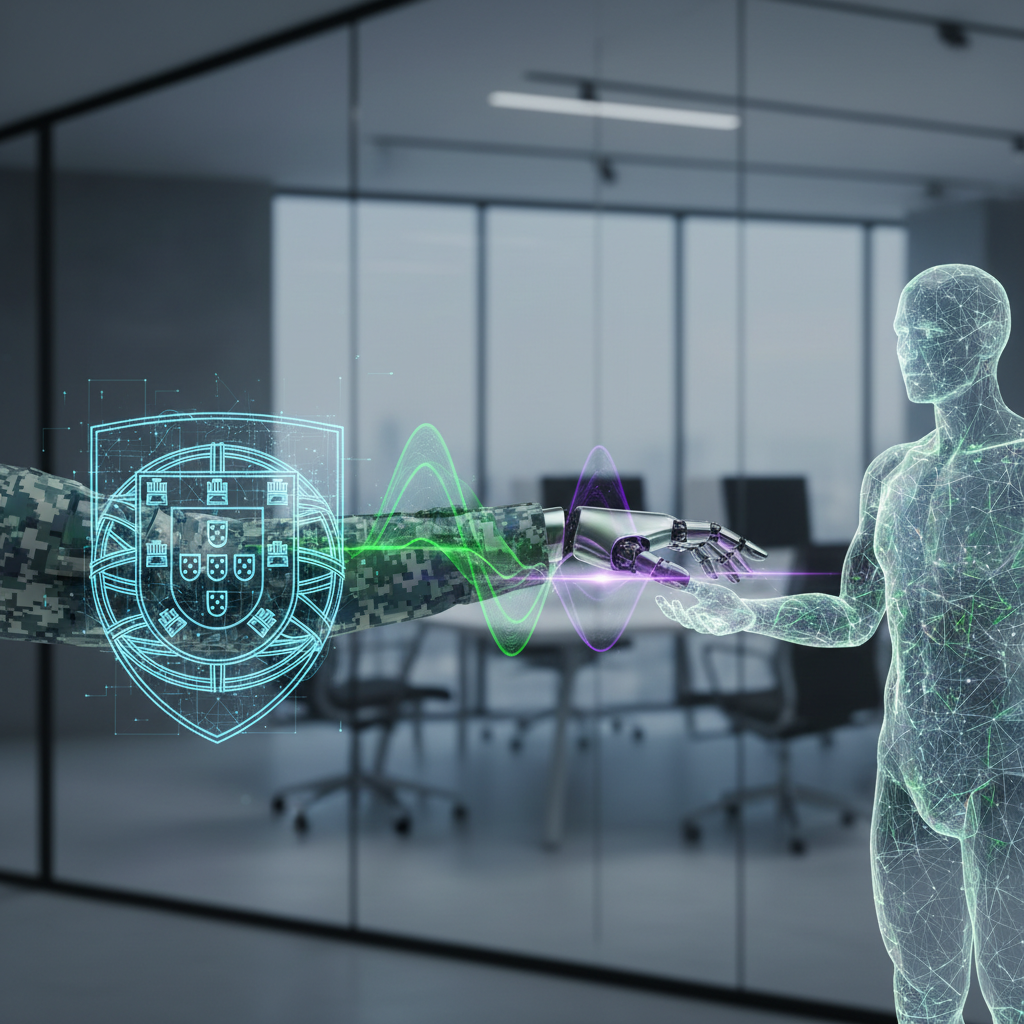
This scene, repeated in various forms across Portugal, is the quiet revolution of AI in defense and military applications. It is not about futuristic battlefields, at least not yet, but about the mundane, the logistical, the often-overlooked gears of the military-industrial complex. And Portugal, a nation that historically punches above its weight, is finding its footing in this new, algorithm-driven world.
According to a recent report by the European Defence Agency, AI adoption in European defense industries has surged by 45% in the last three years, with Portugal showing a particularly keen interest in applications related to predictive maintenance, logistics optimization, and cyber defense. A study commissioned by the Portuguese Ministry of Defense in late 2025 indicated that companies integrating AI solutions reported an average 18% increase in operational efficiency and a 12% reduction in maintenance costs within their first year. These numbers, while impressive on paper, tell only part of the story.
Take, for instance, the case of NavalTech Solutions, a mid-sized firm based near Setúbal that specializes in naval systems. They invested heavily in AI-driven predictive analytics for submarine component failure, reducing unexpected downtime by 25%. Their CEO, Dr. Sofia Rodrigues, a former naval engineer with a pragmatic streak, told me, “We were losing millions in unplanned repairs. AI doesn’t replace our engineers, it empowers them to be proactive, to focus on innovation rather than crisis management. It’s like having a very clever, tireless apprentice.”
On the other hand, we have SecurePort Systems, a company in Porto that struggled. They poured capital into an AI-powered perimeter security system for military bases, promising autonomous threat detection and response. The system, however, proved overly sensitive, generating a flood of false positives from seagulls and stray dogs, leading to constant human intervention and ultimately, a 30% increase in security team workload. “It was a disaster,” admitted Miguel Costa, their head of operations, shaking his head. “We tried to run before we could walk. The AI was brilliant at identifying things, but terrible at understanding context. It lacked the common sense of a security guard who’s been on the job for five minutes.”
The human element, as always, is where the rubber meets the road, or perhaps, where the algorithm meets the azulejo. Workers like João are not Luddites, but they are understandably wary. A survey conducted by a local labor union in Aveiro found that 63% of defense sector employees expressed concerns about job displacement due to AI, while 77% felt they lacked adequate training to adapt to new AI-driven roles. This isn't just about losing jobs, it's about losing identity, the pride in craftsmanship that defines so much of Portuguese industry.
“It’s a delicate balance, isn’t it?” mused Professor Ricardo Silva, a leading expert in AI ethics from the University of Coimbra. “We’re not just talking about efficiency; we’re talking about trust, about the very nature of work. The key isn't to replace humans, but to augment them. To use AI for the tasks that are dangerous, repetitive, or beyond human cognitive capacity, while preserving the uniquely human aspects of decision-making and creativity.” He pointed out that while the immediate impact on frontline manufacturing jobs is noticeable, there is a growing demand for AI trainers, data annotators, and ethical AI oversight specialists, roles that require a different, but equally valuable, skill set.
The ethical considerations are, of course, paramount. The very idea of AI in defense conjures images of autonomous weapons, a topic that makes many in Europe uneasy. While Portugal’s current focus is far from ‘killer robots,’ the underlying technologies are often dual-use. “We must be vigilant,” warned Dr. Helena Pires, a policy advisor at the European Parliament, speaking from Brussels. “The lines between defensive AI and offensive AI can blur rapidly. Robust ethical frameworks, transparency, and human oversight are not optional; they are foundational. We cannot allow algorithms to dictate our values or our future.” For more on these broader ethical debates, one might look to Wired's coverage of AI and society.
Looking ahead, the trajectory for AI in Portugal’s defense sector seems clear, albeit with a few bumps along the estrada. The Ministry of Defense recently announced a new initiative, “Defesa Digital 2030,” allocating €150 million over the next five years to foster AI research and development within national companies and universities. The goal is not just to acquire technology, but to build indigenous capabilities, ensuring strategic autonomy. This includes partnerships with startups emerging from Lisbon's vibrant tech scene, which, much like a good port wine, is complex and improving with age. These startups are often agile, innovative, and less burdened by legacy systems, making them ideal partners for rapid AI prototyping and deployment.
One promising area is the use of AI for environmental monitoring in coastal defense, leveraging satellite imagery and drone data to detect illegal fishing or pollution, a critical concern for a maritime nation like Portugal. Another is in cybersecurity, where AI-driven threat intelligence platforms are becoming indispensable for protecting critical infrastructure. The sardine can of European tech is actually a treasure chest, brimming with ingenuity.
The challenge, then, is not just technological, but cultural and educational. How do we retrain João, the skilled shipbuilder, to become a supervisor of intelligent machines? How do we instill in the next generation of engineers not just coding prowess, but a deep understanding of ethical implications? The answer, I suspect, lies in a blend of practical training, continuous learning, and a healthy dose of Portuguese pragmatism. We are a people who have always adapted, always innovated, whether it was navigating uncharted seas or building resilient communities. The algorithms are just another sea to navigate, another tool to master. But we must ensure that in our pursuit of efficiency and security, we do not lose sight of the human values that truly define us. The future, as always, is a journey, not a destination, and it demands our full, thoughtful attention. For more insights into emerging AI business trends, Reuters Technology often provides excellent analysis.