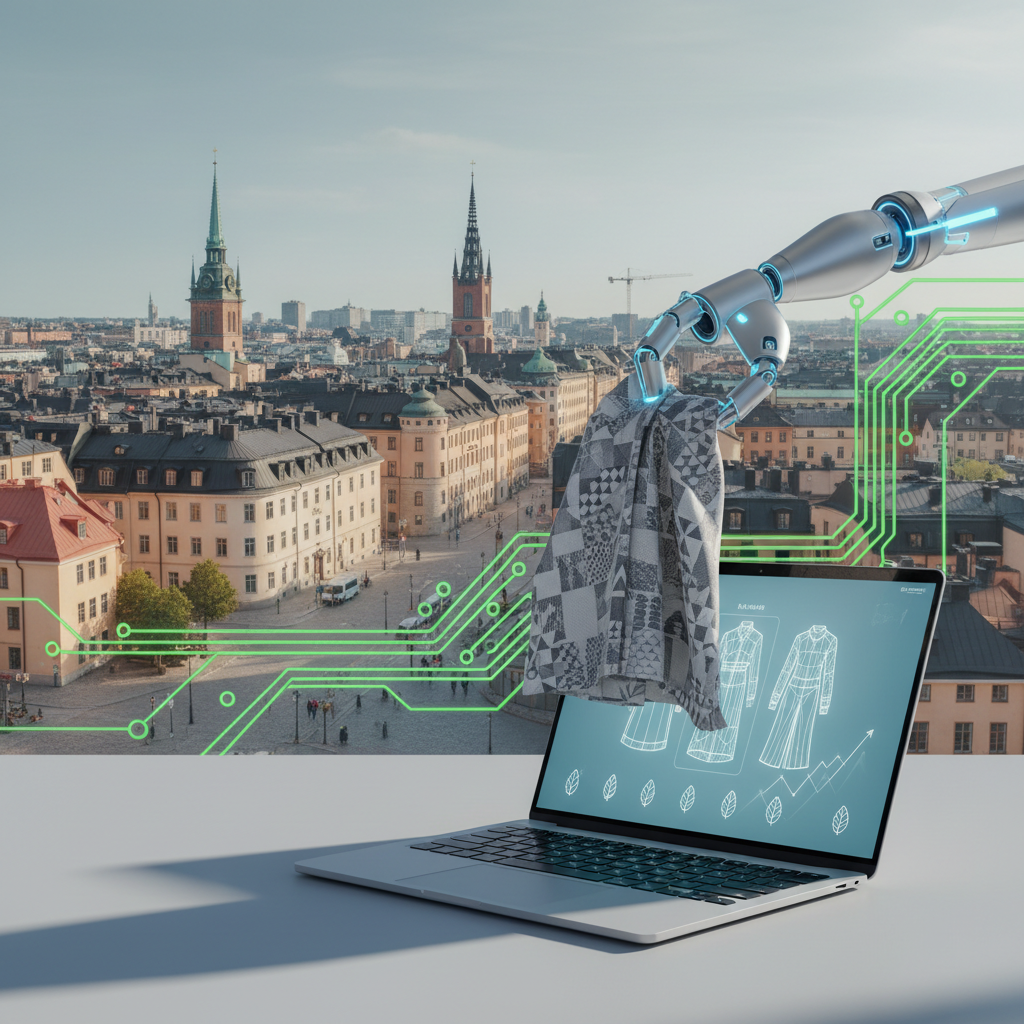

Let us be frank, shall we? The world of accounting and audit, for most of us, conjures images of dusty ledgers, late nights, and perhaps a faint whiff of desperation. It is not exactly the stuff of thrilling fado songs or sun-drenched Algarve beaches. Yet, here we are, in April 2026, with the tech prophets telling us that artificial intelligence is about to descend upon this venerable profession, transforming it from a meticulous chore into a sleek, automated ballet of numbers. They speak of automated bookkeeping, anomaly detection so sharp it could spot a rogue sardine in a school of millions, and compliance so perfect it would make a Swiss watchmaker weep with joy. My friends, I say, let us pour ourselves a glass of something strong, perhaps a good port wine, and critically examine this digital revolution, because I suspect there is more than meets the eye, and perhaps a few more zeroes than necessary on the invoice.
The narrative is compelling, I grant you. Imagine, if you will, a world where the tedious, repetitive tasks that consume countless hours for accountants and auditors are simply… gone. Replaced by algorithms humming away in the cloud, processing invoices, reconciling accounts, and flagging discrepancies with a speed and accuracy no human could ever hope to match. Companies like UiPath, a darling of the Robotic Process Automation (RPA) world, have been pushing this vision for years, and now with generative AI, the capabilities are expanding exponentially. We are talking about systems that can interpret natural language, understand complex financial documents, and even learn from past data to improve their performance. This is not just about crunching numbers faster; it is about intelligent automation that promises to free up human talent for more strategic, value-added work. The European Union, with its labyrinthine regulations, could certainly benefit from a more streamlined approach to compliance, and AI offers a glimmer of hope in that regard.
Indeed, the statistics are persuasive. A report by the Association of Chartered Certified Accountants (acca) and Forbes Insights from a couple of years ago suggested that a significant percentage of finance leaders expected AI to have a transformative impact on their operations within five years. And we are seeing it now. Firms are adopting AI tools for everything from expense report processing to fraud detection. Microsoft's Copilot, for instance, is not just writing emails, it is assisting with data analysis in Excel, which is a common tool in every finance department. The idea is that AI can sift through colossal datasets, identifying patterns and anomalies that would be invisible to the human eye, thereby enhancing the quality and reliability of audits. This is particularly crucial in an era where data volumes are exploding, and the complexity of financial transactions continues to grow. It is tempting to believe that the future of accounting is simply a matter of better algorithms and faster processors.
However, let us pause for a moment, like a good Portuguese contemplating the meaning of saudade. While the efficiency gains are undeniable, and the prospect of reducing human error is alluring, I find myself asking: what are we losing in this pursuit of algorithmic perfection? The human element in accounting and audit is not merely about mechanical execution, it is about judgment, ethics, and the subtle art of interpretation. A seasoned auditor, for example, does not just check boxes; they understand the context of a business, its culture, and the motivations of its people. They can smell a rat, as we say, even when all the numbers appear to align perfectly. AI, for all its prowess in anomaly detection, is still operating within the parameters of its training data. It can tell you what is unusual, but it struggles with why it is unusual, especially when the anomaly stems from a novel, unforeseen circumstance or, worse, from deliberate, sophisticated deception. As The Verge recently highlighted, the limitations of AI often surface when dealing with nuance and unforeseen variables.
Some will argue, of course, that this is simply a matter of training data and model refinement. They will say that as AI models become more sophisticated, as they are fed more diverse and complex datasets, they will develop a form of