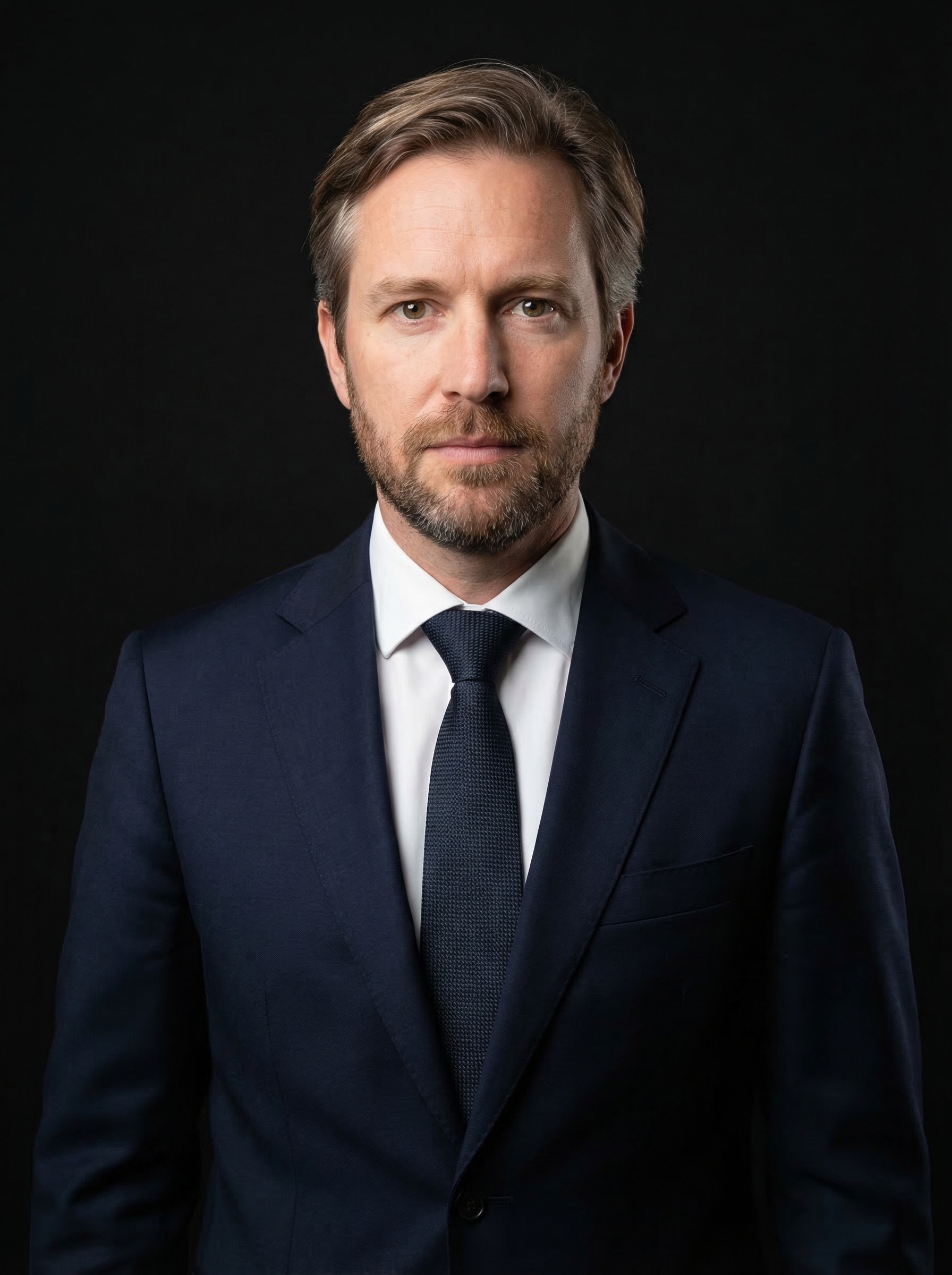

The world of artificial intelligence often focuses on the dazzling breakthroughs, the colossal funding rounds, and the charismatic figures leading companies like OpenAI and Anthropic. Yet, beneath this glittering surface, a more fundamental, and often more lucrative, industry thrives: the provision of high-quality training data. It is here, in the less glamorous but critically essential realm of data annotation and curation, that a 23-year-old founder, Ivan Yamshchikov, has quietly built a formidable enterprise, reportedly achieving over $100 million in revenue. His story is not just one of entrepreneurial success, it is a testament to the intricate, often hidden, connections that bind the global tech ecosystem, even amidst geopolitical tensions.
Yamshchikov, a name that resonates with a certain intellectual rigor in Russian academic circles, is not entirely new to the AI scene. Before founding his data company, DataForge AI, he was known for his work at Skolkovo Institute of Science and Technology, a hub for scientific innovation near Moscow. His early career also included a significant stint at Yandex, Russia's largest technology company, where he worked on machine learning applications. It was during this period that he reportedly caught the attention of figures like Ilya Sutskever, then a leading researcher at Google Brain and later a co-founder of OpenAI. My sources in the tech sector confirm that Yamshchikov's early research on data efficiency and model interpretability was highly regarded, laying the groundwork for his future endeavors.
The defining moment for Yamshchikov, however, came not in a grand Silicon Valley boardroom, but in the quiet, often overlooked, necessity of AI development: the sheer volume of clean, labeled data required to train large language models. While at Yandex, he observed firsthand the bottlenecks created by insufficient or poor-quality datasets. This was not merely an academic problem, it was a practical impediment to deploying advanced AI systems. He recognized that as models grew larger and more complex, the demand for meticulously curated data would explode. This insight, seemingly simple, proved to be prophetic.
Yamshchikov's origin story begins in a modest apartment in St. Petersburg, a city known for its intellectual heritage and scientific prowess. His parents, both engineers, instilled in him a rigorous approach to problem-solving. He excelled in mathematics and computer science olympiads, a common path for many bright young minds in Russia. He pursued his higher education at Saint Petersburg State University, one of Russia's oldest and most prestigious institutions, where he focused on computational linguistics and machine learning. This academic foundation, coupled with his practical experience at Yandex, provided him with a unique perspective on the challenges and opportunities within the nascent AI industry.
The idea for DataForge AI solidified during a period of intense collaboration between Russian and Western AI researchers, a time before the current geopolitical chill. Yamshchikov, then barely out of his teenage years, saw an opportunity to bridge the gap between the theoretical advancements in AI and the practical needs of model developers. He understood that companies like OpenAI and Anthropic, while possessing unparalleled algorithmic expertise, would eventually outsource the labor-intensive, yet critical, task of data preparation. He founded DataForge AI with a small team, initially focusing on niche datasets for specialized AI applications.
Building DataForge AI was not without its challenges. The initial capital was modest, primarily from angel investors within Russia's tech community who believed in his vision. Hiring talent was also a hurdle, as many of Russia's top AI specialists were being lured by lucrative offers from Western tech giants. This brain drain, a persistent issue for Russia's tech sector, forced Yamshchikov to innovate in his recruitment strategies, focusing on untapped talent pools in regional universities and offering flexible work arrangements. He emphasized a culture of meticulousness and scientific rigor, attracting individuals who valued the intellectual challenge of data annotation over simply chasing the highest salary.
His breakthrough came when early clients, impressed by the quality and speed of DataForge AI's output, began to spread the word. The company developed proprietary tools for data labeling, quality control, and adversarial data generation, allowing them to provide datasets that were not only large but also robust and unbiased. This technological edge, combined with a cost-effective operational model, made them an attractive partner for leading AI labs. The Kremlin's digital strategy reveals a growing emphasis on domestic AI development, yet the practical reality is that global collaboration, even if indirect, remains essential for cutting-edge progress. DataForge AI subtly exemplifies this complex interdependence.
By late 2024, DataForge AI had secured contracts with several major players, including OpenAI and Anthropic, though the specifics of these agreements remain confidential. These partnerships were not merely transactional, they involved deep technical collaboration to ensure the datasets met the exacting standards required for training advanced large language models. The company's revenue trajectory soared, reportedly surpassing the $100 million mark by early 2026. This rapid growth, achieved with minimal public fanfare, underscores the immense demand for high-quality data in the current AI boom.
Today, Yamshchikov operates DataForge AI from a distributed model, with significant operational hubs in Eastern Europe and Central Asia, allowing him to tap into diverse talent pools while navigating the complexities of international business. He remains a private figure, preferring to let his company's work speak for itself. When asked about his motivations in a rare interview with a Russian tech publication, he reportedly stated, “The future of AI is not just about algorithms, it is about understanding the world through data. We are building the eyes and ears for the next generation of intelligent systems.” This perspective highlights his foundational belief in the importance of data quality.
What drives Yamshchikov now is not just financial success, but the profound impact his company has on the global AI landscape. DataForge AI is not merely a vendor, it is an integral component of the AI supply chain, enabling the advancements that capture headlines. The company is reportedly exploring new frontiers in synthetic data generation and ethical AI data auditing, recognizing that the challenges of bias and fairness in AI begin with the data itself. Reuters has reported extensively on the growing scrutiny of AI training data, a trend that positions DataForge AI strategically for future growth.
Looking ahead, DataForge AI faces the dual challenge of scaling its operations while maintaining its rigorous quality standards. The demand for data will only intensify as AI models become more multimodal and capable. Yamshchikov's ability to anticipate these needs, coupled with his meticulous approach to data curation, positions DataForge AI as a critical, albeit often unseen, player in the ongoing AI revolution. Moscow's AI ambitions tell a bigger story, one where individuals like Yamshchikov, despite their global reach, remain deeply rooted in the intellectual traditions that shaped them. The journey of DataForge AI is a compelling narrative of how a young, Russian-born founder leveraged a deep understanding of AI's foundational needs to build an enterprise that is quietly, yet powerfully, shaping the future of artificial intelligence across the globe. TechCrunch frequently covers the startups that power this ecosystem, and DataForge AI's story is a prime example of such foundational innovation. The intricate dance between global demand and localized expertise continues to define this fascinating sector.