Let's be real, the AI world right now feels like a high-stakes poker game where the house always wins, and the house is usually wearing a turtleneck in Palo Alto. But then there was Stability AI, right? They burst onto the scene like a breath of fresh air, a defiant shout against the closed, proprietary models dominating the headlines. Their promise was simple, yet revolutionary: open-source AI for everyone, a democratizing force that would put powerful tools in the hands of artists, developers, and everyday folks, not just the tech giants.
And for a minute, it felt like they were doing it. Stable Diffusion, their flagship image generation model, became a phenomenon. It was accessible, powerful, and most importantly, it was open. It felt like the future of AI was being built in places you'd never expect, not just the usual suspects. I saw artists in Atlanta using it to create stunning visuals for local music videos, small businesses in Detroit designing their own marketing materials, and coders in Houston building new applications on top of it. This was the real AI revolution, happening on the ground, empowering communities that too often get left out of the tech narrative.
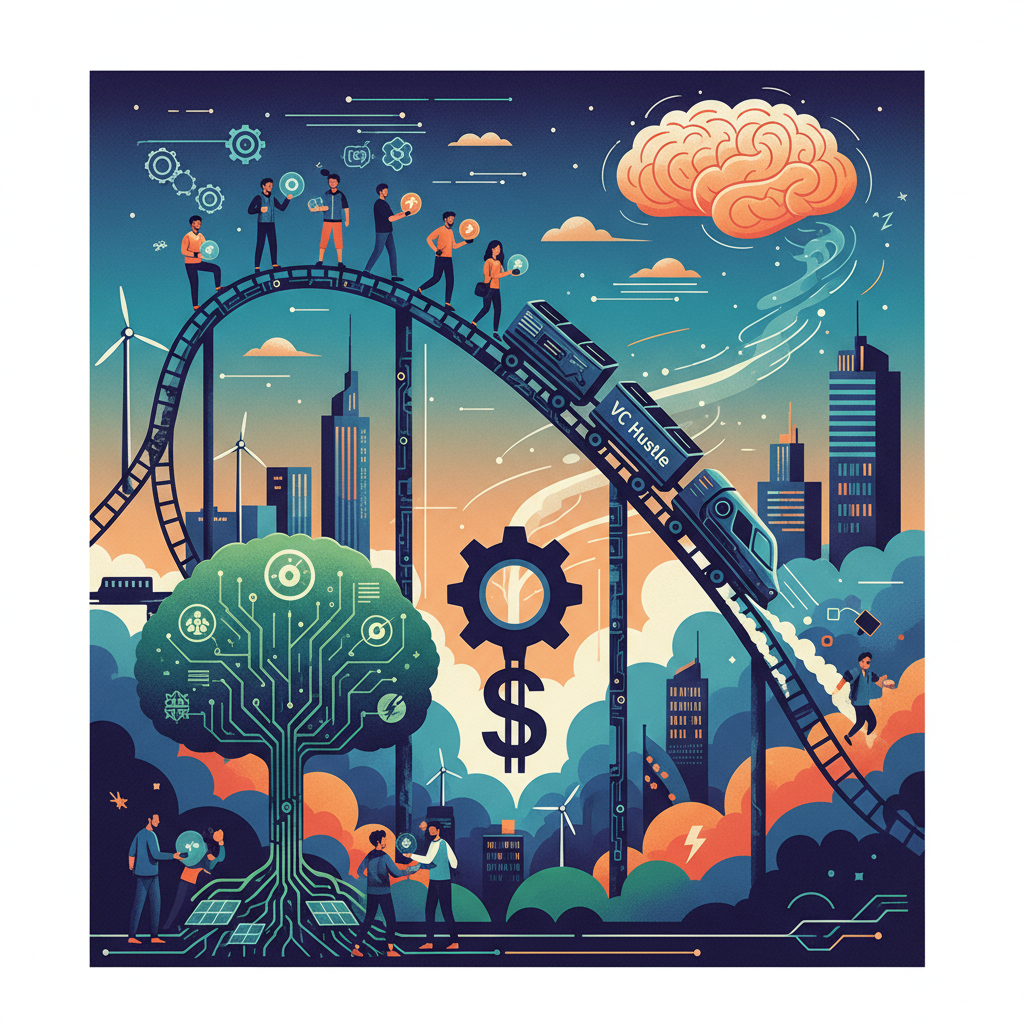
But here we are in April 2026, and the ride has been, well, turbulent. Stability AI has faced a whirlwind of challenges, from high-profile executive departures and internal strife to persistent questions about its financial stability. It's a classic tale, one we've seen play out before: open-source idealism crashing head-first into the brutal realities of venture capital and the demand for profitability. The company, once valued at over a billion dollars, has reportedly struggled to secure follow-on funding, leading to layoffs and a general air of uncertainty. It makes you wonder, can the dream of truly open, democratized AI survive the pressure to deliver quarterly returns?
My take? The struggle at Stability AI isn't just about one company. It's a bellwether for the entire open-source AI movement. If a company with their initial momentum and impact can't make it work, what does that mean for everyone else trying to build an alternative to the walled gardens of OpenAI, Google, and Microsoft? It's a critical moment, and frankly, I'm worried that the promise of accessible AI is being eroded by the very forces that claim to foster innovation.
Some folks will tell you, "That's just business, Jamàl. It's a competitive market. If they can't execute, they deserve to fail." They'll point to the fact that even with open models, you still need massive compute power, specialized talent, and a coherent business strategy. They'll argue that proprietary models, with their tightly controlled ecosystems and deep pockets, are simply better positioned to innovate and deliver reliable products. And sure, there's a grain of truth to that. Building and maintaining cutting-edge AI models is incredibly expensive, requiring billions in investment and access to the best GPU clusters money can buy, often from NVIDIA. It's not a hobby, it's an industrial undertaking.
But that argument misses the bigger picture, the societal cost of allowing AI to become a monopoly. When a few companies control the foundational models, they control the narrative, the capabilities, and ultimately, the future. We've seen this movie before with social media and search engines. Do we really want to repeat that mistake with the most transformative technology of our lifetime? I don't think so. The beauty of open-source, even with its messiness, is that it fosters true innovation, allowing countless individuals and smaller entities to build on top of a shared foundation. It creates a diverse ecosystem, not a monoculture.
As Dr. Timnit Gebru, a leading voice in ethical AI and founder of the Distributed AI Research Institute, once put it, "If you don't have diverse voices at the table, you're going to build systems that reflect the biases of a very narrow group." Her words resonate deeply here. Open-source isn't just about code, it's about access, inclusion, and ensuring that AI serves humanity broadly, not just a select few. When companies like Stability AI falter, it's not just a business failure, it's a setback for that broader vision.
We need to remember why Stability AI mattered in the first place. They showed us that you don't need to be a multi-trillion dollar corporation to push the boundaries of AI. They proved that a community-driven approach could yield incredible results. Their models, like Stable Diffusion, sparked a creative explosion. It allowed independent creators to compete with well-funded studios, giving them tools that were previously out of reach. This is democratizing technology in action, and it's something worth fighting for.
So, what's next for Stability AI? It's hard to say. The departure of key figures, including founder Emad Mostaque, has left a void. The company needs to find a path to sustainable revenue that doesn't compromise its open-source principles. This isn't an easy tightrope walk. They need to figure out how to monetize their expertise and services without closing off the very models that made them famous. It's a challenge many open-source companies face, but for AI, the stakes feel higher.
I believe the solution isn't to abandon the open-source ideal, but to double down on it, perhaps with a different business model. Maybe it's a consortium approach, a non-profit foundation, or even a public utility model, something that prioritizes long-term access and development over short-term investor returns. We need models that are truly public goods, accessible to all, and not just another product in the race for market dominance. This is where government and philanthropic organizations could step in, recognizing the strategic importance of open AI infrastructure.
Forget the Valley, look at Atlanta, Detroit, Houston. These are the places where the true impact of accessible AI can be felt, where it can uplift communities and create new economic opportunities. We need Stability AI, or companies like it, to succeed. Not just for their sake, but for the sake of a more equitable and innovative AI future for everyone. The alternative, a world where AI is controlled by a handful of corporate behemoths, is a future I don't want to see. The fight for open AI is far from over, and its outcome will shape the next decade, not just the next quarter. We need to support the pioneers who are still pushing for an open, accessible AI ecosystem, because their success is our collective success. For more on the ongoing challenges in the AI startup landscape, you can check out coverage on TechCrunch or Reuters Technology. The future of innovation depends on it.