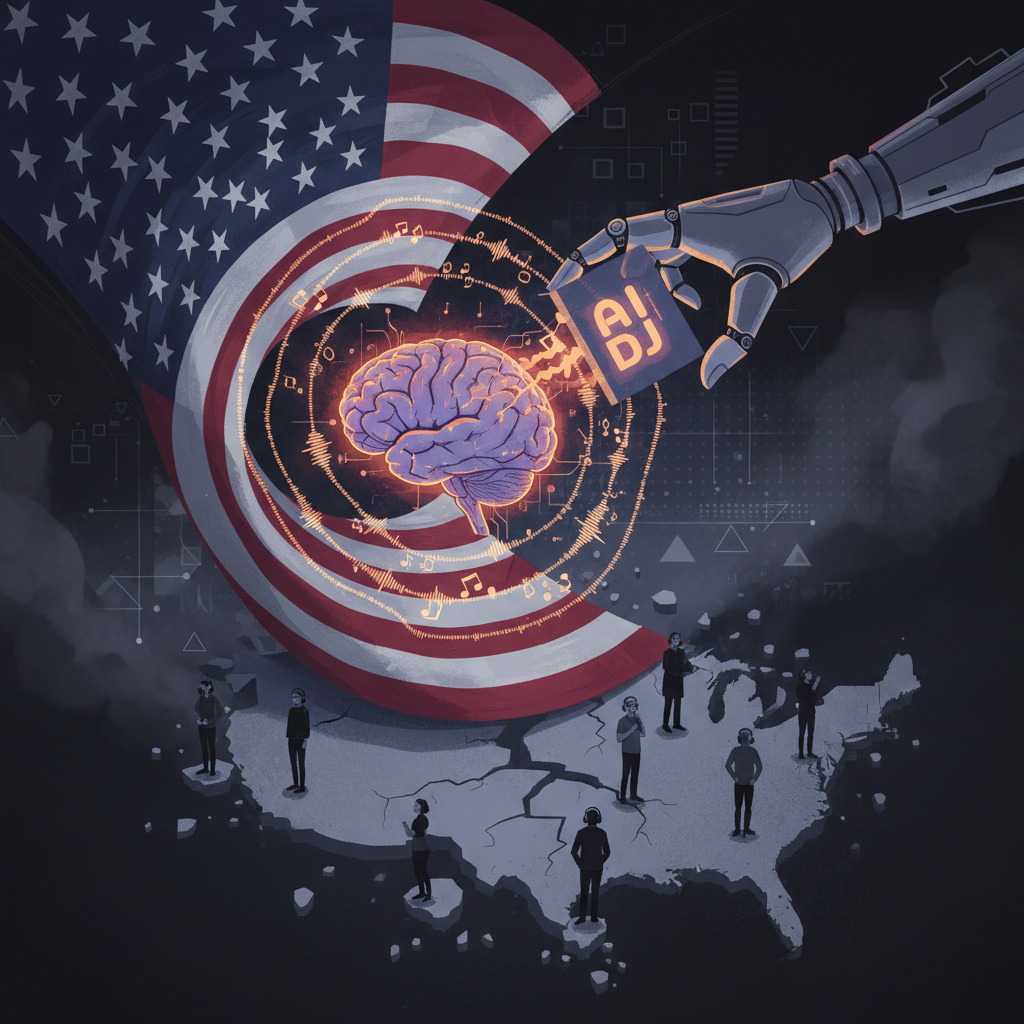
In the bustling digital landscape of 2026, where algorithms increasingly mediate our experiences, Spotify’s AI DJ and its sophisticated personalization engine stand as towering examples of artificial intelligence shaping human culture. For millions across the United States, this AI is not merely a feature, it is often the primary conduit through which new sounds and artists are discovered. But as with any powerful technology operating at scale, the promise of infinite personalization harbors a shadow of potential risks, risks that demand a rigorous, investigative lens.
My investigation reveals that while Spotify touts its AI DJ as a revolutionary step in music curation, offering a personalized audio stream complete with AI generated commentary, the underlying mechanisms raise critical questions about algorithmic bias, cultural homogenization, and the very nature of artistic discovery. This is not merely about what songs appear in your daily mix, it is about who controls the narrative of our collective soundscape, and the economic implications for artists struggling for visibility in an increasingly opaque system.
The risk scenario is deceptively simple: a hyper personalized music experience, while initially appealing, can inadvertently construct an algorithmic echo chamber. Users are fed more of what they already like, or what the AI predicts they will like, based on vast datasets of listening habits. While this might seem efficient, it can lead to a narrowing of musical horizons, limiting exposure to diverse genres, emerging artists, and culturally significant works that fall outside the algorithm's predictive model. For a nation as culturally diverse as the USA, this has profound implications for how new generations engage with the rich tapestry of global and local music traditions.
Technically, Spotify’s personalization engine leverages a complex array of machine learning techniques. At its core are collaborative filtering algorithms, which recommend items based on the preferences of similar users, and content based filtering, which analyzes features of songs like genre, tempo, and instrumentation to suggest similar tracks. The AI DJ layers on top of this a large language model, likely a variant of a transformer architecture, to generate natural language commentary and transitions between songs. This system learns from every skip, every like, every repeated listen, constantly refining its understanding of individual taste. The data points are immense, encompassing billions of user interactions daily, creating a feedback loop that is both powerful and potentially self reinforcing. The company has invested heavily in this technology, recognizing its central role in user retention and engagement, a critical metric in the fiercely competitive streaming market.
Expert debate on this topic is vibrant and often polarized. On one side, proponents argue that AI driven personalization is a net positive, democratizing access to music and helping listeners navigate an overwhelming catalog of millions of tracks. “These systems are designed to enhance user experience, not restrict it,” states Dr. Anya Sharma, a leading AI ethicist at Stanford University. “They can introduce listeners to niche genres they might never encounter otherwise, fostering a deeper connection with music.” Sharma emphasizes the potential for AI to act as a benevolent guide, expanding tastes rather than narrowing them. Spotify itself often highlights its “Discover Weekly” playlist as evidence of its AI’s ability to surprise and delight users with new music, a point frequently echoed in their public statements and investor calls.
Conversely, critics voice significant concerns. Dr. Ethan Vance, a musicologist and cultural critic based in New York City, warns of the insidious effects of algorithmic gatekeeping. “When an AI decides what you hear, it inevitably shapes what you know, what you value, and ultimately, what becomes culturally relevant,” Vance argues. “The lobbying records tell a different story than the public narrative. The focus is on engagement metrics, not necessarily artistic diversity.” He points to the potential for algorithmic bias, where certain genres, artists, or even demographic groups might be underrepresented due to historical data imbalances or commercial pressures influencing the algorithm’s design. This could exacerbate existing inequalities in the music industry, making it harder for independent artists or those outside mainstream genres to gain traction. The very definition of “discovery” becomes warped when it is preordained by a machine.
The real world implications of this technology are already manifesting. For artists, the algorithm has become a formidable, often inscrutable, gatekeeper. Gaining placement on popular playlists or being featured by the AI DJ can mean the difference between obscurity and a viable career. This creates immense pressure to produce music that is algorithmically friendly, potentially stifling creative experimentation and pushing artists towards more commercially predictable sounds. Smaller independent labels and artists, particularly those from marginalized communities, often lack the resources to understand or influence these algorithmic dynamics, further consolidating power within major labels and established artists. This dynamic is particularly acute in the USA, where the music industry is a multi billion dollar enterprise, and access to platforms like Spotify is paramount for reaching audiences.
For listeners, the subtle manipulation of taste can be profound. If an AI consistently feeds you music similar to what you already enjoy, it can reinforce existing biases and limit exposure to new perspectives. This could lead to a less adventurous listening culture, where the serendipitous discovery of truly novel or challenging music becomes increasingly rare. The AI DJ, with its conversational interface, adds another layer of persuasive power, as the AI’s recommendations are presented with a veneer of human like authority. This raises questions about agency and the extent to which individuals are truly making their own choices in their media consumption.
What should be done? Addressing these concerns requires a multi faceted approach. Firstly, greater transparency from platforms like Spotify is essential. While proprietary algorithms are closely guarded secrets, understanding the general principles, biases, and evaluation metrics used to train these systems would allow for independent scrutiny and public discourse. Regulators in Washington are beginning to take notice, with discussions around algorithmic accountability gaining traction. The Federal Trade Commission, for example, has expressed interest in how AI systems impact consumer choice and market competition, an area where music discovery platforms clearly operate.
Secondly, platforms should actively design for diversity and serendipity, rather than solely optimizing for engagement. This could involve introducing mechanisms that intentionally expose users to music outside their predicted preferences, perhaps through curated human led playlists or AI models specifically trained to prioritize novelty and cultural breadth. Initiatives like those seen in Europe, where digital services acts are pushing for greater algorithmic transparency and user control, offer a potential blueprint for similar policies in the USA. Reuters has reported on these regulatory movements with increasing frequency.
Finally, empowering artists and independent creators with tools and data to navigate the algorithmic landscape is crucial. This includes providing clearer insights into how their music is being discovered and consumed, and fostering alternative distribution and discovery channels that are less reliant on centralized AI gatekeepers. The conversation around fair compensation for artists, already a contentious issue in streaming, becomes even more urgent when AI plays such a pivotal role in dictating reach and revenue. As MIT Technology Review often highlights, the intersection of AI and creative industries is fraught with both opportunity and ethical dilemmas.
Spotify’s AI DJ is a technological marvel, a testament to the power of artificial intelligence to personalize and enhance our daily lives. Yet, like all powerful tools, it carries the potential for unintended consequences. As Washington's AI policy is shaped by these players, we must ensure that the future of music discovery remains vibrant, diverse, and truly open to all, rather than a meticulously curated echo chamber designed by an algorithm. The stakes are too high for our cultural future to leave this solely to the machines.