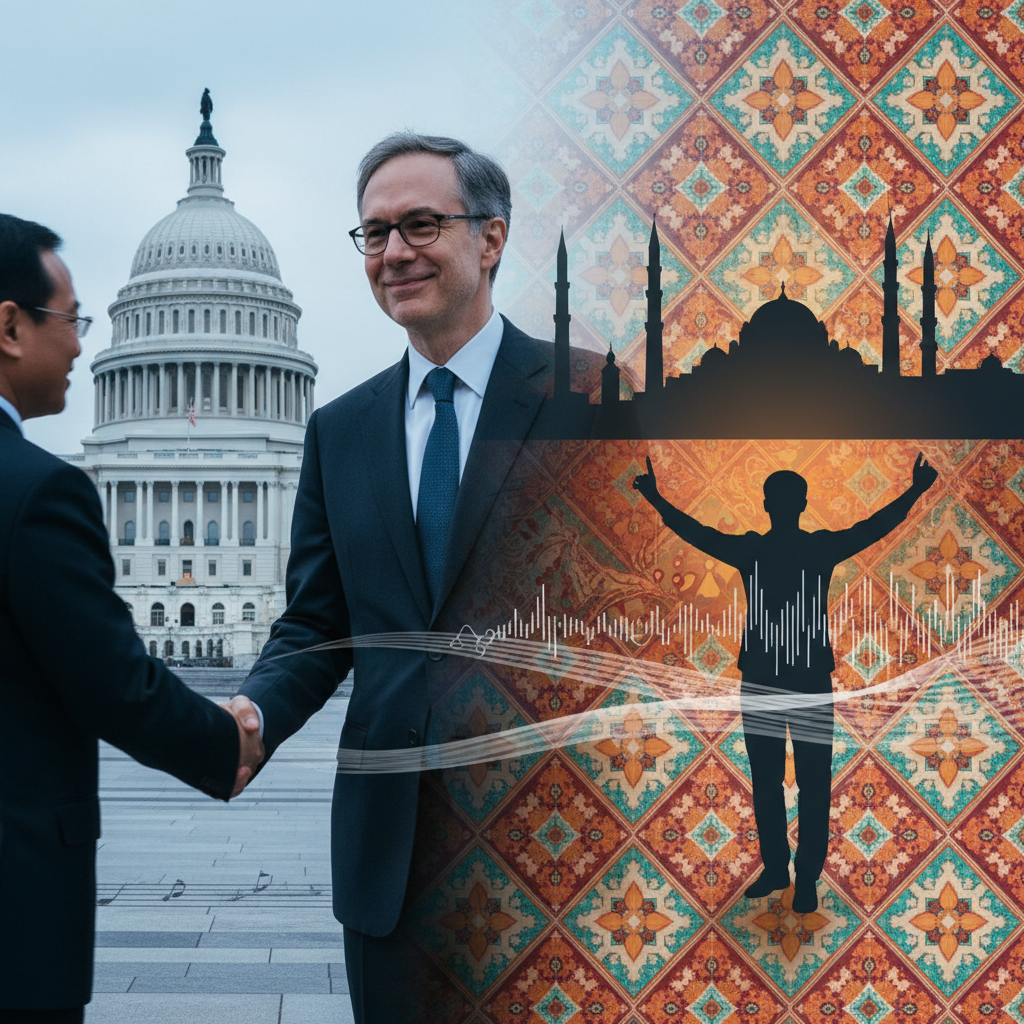

From my perch here in Istanbul, watching the political theater unfold in Washington D.C. regarding artificial intelligence feels like observing a slow-motion chess match. The US Congress, with its usual methodical pace, is currently locked in intense debates over comprehensive AI legislation. Meanwhile, the titans of Silicon Valley, from OpenAI's Sam Altman to Microsoft's Satya Nadella, are not just spectators; they are active, and very vocal, participants in shaping the rules of this new digital frontier. It is a dance between innovation and control, and the stakes, my friends, could not be higher.
For too long, the narrative around AI regulation has been dominated by Western perspectives, largely from Brussels and Washington. The EU AI Act, a monumental effort, has set a certain benchmark, and now the US is attempting to find its own path, balancing national security, economic competitiveness, and ethical concerns. But what does this mean for nations like Turkey, which are not just consumers of AI, but increasingly, formidable developers and innovators in this space?
My opinion, clear as the Bosphorus on a sunny day, is this: while the US debates, Turkey is building the future at the crossroads. We are not waiting for a definitive regulatory framework from across the Atlantic to dictate our pace. Instead, we are observing, learning, and forging our own path, one that leverages our unique geopolitical position and our burgeoning tech ecosystem.
Consider the sheer scale of lobbying efforts in Washington. Reports suggest that tech giants spent hundreds of millions of dollars in 2023 alone to influence policy, with AI emerging as a top priority. Companies like Google, Meta, and NVIDIA are pouring resources into ensuring that any legislation passed does not stifle their innovation or competitive edge. Sam Altman, CEO of OpenAI, has been particularly active, advocating for a new US agency to license powerful AI models, a suggestion that has garnered both support and skepticism. He has repeatedly spoken about the need for careful regulation, while also emphasizing the immense potential of AI. "We need to balance the immense benefits of AI with the very real risks," Altman stated in a recent interview, a sentiment echoed by many industry leaders.
This push for a federal framework is driven by several factors: the rapid advancement of large language models, the increasing concern over deepfakes and misinformation, and the potential impact on employment and national security. The proposed legislation often touches on data privacy, algorithmic transparency, and accountability for AI systems. Yet, the challenge lies in crafting laws that are future-proof, given the exponential growth of AI capabilities.
But let us turn our gaze to our own backyard. While Washington deliberates, Istanbul's tech ambitions are massive and realistic. We are witnessing a vibrant startup scene, particularly in areas like defense tech, gaming, and fintech. Turkish companies are not just importing AI; they are creating it. Our defense industry, for instance, has been a pioneer in integrating AI into drone technology, with companies like Baykar developing advanced autonomous systems that are gaining international recognition. This is not just about military might; it is about demonstrating sophisticated AI engineering capabilities that have dual-use potential.
Professor Dr. Alper Kılıç, a leading AI researcher at Boğaziçi University, recently articulated this local dynamism. "Turkey's approach to AI is pragmatic and focused on real-world applications. We are not just debating ethics; we are deploying solutions, from smart city initiatives to advanced manufacturing, that directly benefit our society and economy," he observed. This hands-on, problem-solving ethos is a critical differentiator.
Furthermore, the Turkish government, through institutions like Tübi̇tak, the Scientific and Technological Research Council of Turkey, is actively funding AI research and development. They are investing in talent, fostering collaboration between academia and industry, and creating an environment where AI innovation can flourish. This strategic investment is crucial, as it ensures that our domestic AI capabilities are robust and self-sufficient, rather than solely reliant on foreign technology.
What the US Congress decides will undoubtedly have ripple effects globally. Their regulatory choices could influence international standards, trade agreements, and even the pace of AI development. However, it is imperative for nations like Turkey to avoid simply mirroring these frameworks without critical adaptation. Our cultural context, our economic priorities, and our national security needs are distinct. The Ottoman approach to AI empire-building, if you will, is not about conquest in the traditional sense, but about cultivating a powerful, self-sustaining technological ecosystem that can stand on its own.
The global AI landscape is not a monolith. While the US and Europe grapple with their respective regulatory hurdles, other regions are charting their own courses. China, for example, has a vastly different approach to data governance and state control over AI development. This diversity is not a weakness; it is a strength, offering different models and lessons learned.
For Turkey, the focus remains on nurturing our homegrown talent and fostering an environment conducive to innovation. We see the discussions in Washington, and indeed across the globe, as valuable insights, but not as prescriptive mandates. Our goal is to develop AI that is ethical, secure, and aligned with our values, while simultaneously ensuring that our industries remain globally competitive. The future of AI is not a single path, but a tapestry woven with threads from every corner of the world. And Turkey, with its rich history and forward-looking vision, is weaving some of the most vibrant threads.
The coming decade will be defined by how nations navigate this complex AI terrain. Will the US manage to legislate effectively without stifling innovation? Will the EU's comprehensive approach prove adaptable enough? And crucially, will emerging AI powers like Turkey continue to build their own strong foundations, contributing to a truly multi-polar AI world? My bet is on the latter. The world is changing, and the old centers of power will find that innovation, like water, finds its own path, often through unexpected channels. We are ready for that future.
For more insights into global AI trends and policy, I recommend following reports from MIT Technology Review and keeping an eye on Reuters' AI coverage. The conversation is only just beginning. And here in Turkey, we are not just talking; we are doing. We are building. We are innovating. The future is being forged right here, right now.