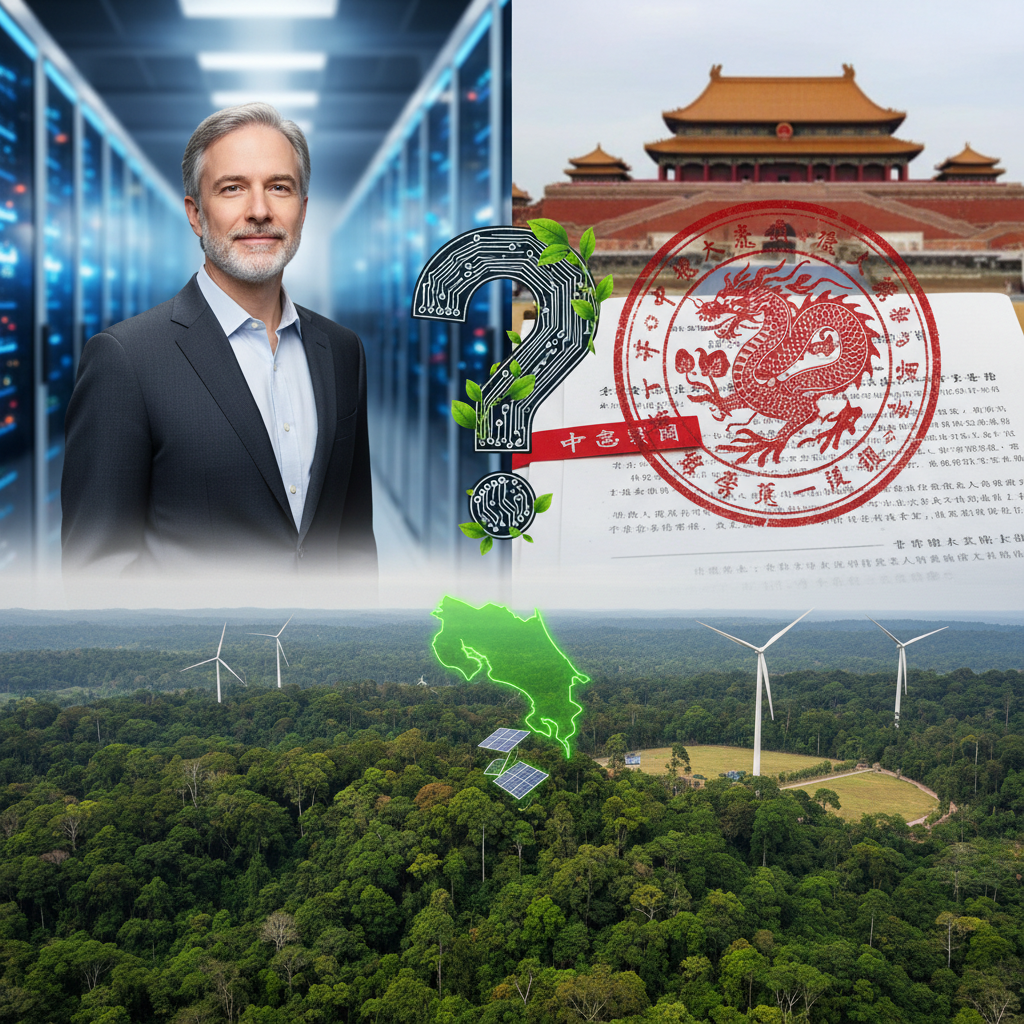
The conversation around artificial intelligence these days often feels like a high-stakes poker game, with Sam Altman of OpenAI and leaders in Beijing holding very different hands. Everyone is talking about AI, but when it comes to setting the rules, it is more like a cacophony than a chorus. We are seeing a global AI governance gap widen, a chasm between nations and ideologies, and it is a problem that should concern everyone, especially here in Costa Rica.
What is happening, you ask? Well, while companies like Google and Microsoft are pushing the boundaries of what AI can do, governments are struggling to catch up. The European Union, for example, has been working on its AI Act for years, aiming for a comprehensive, risk-based approach. Meanwhile, the United States, with its tech giants and innovation-first mindset, leans more towards voluntary codes of conduct and sector-specific regulations. Then you have countries like China, where the state plays a much more direct role, often prioritizing control and national security in its AI development and deployment. This isn't just a difference in legal frameworks; it is a fundamental divergence in philosophy, and it is creating a patchwork of rules that makes international cooperation incredibly difficult.
Why are most people ignoring this? It is easy to get caught up in the latest AI chatbot craze or the promise of self-driving cars. The daily headlines focus on new product launches, investment rounds, or the occasional ethical stumble. The nitty-gritty of international policy discussions, the slow grind of diplomatic negotiations, it all feels distant, academic even. People are busy with their lives, their jobs, and the immediate challenges of rising costs or local politics. The idea of a 'global governance gap' sounds abstract, like something for politicians in fancy suits to debate in Geneva or New York. It does not feel personal, not yet anyway, but it should.
How does this affect you? Let us bring it home. Imagine a future where the AI tools you use every day, from your phone's assistant to the algorithms that decide your loan eligibility, operate under vastly different ethical and privacy standards depending on where they were developed or where their data centers are located. If a company like Anthropic develops a new, powerful AI model with strong safety guardrails, but another nation's AI is built with minimal oversight, whose standards will prevail when these systems interact globally? Will your data be protected by Costa Rica's strong privacy laws, or will it be swept up by a less regulated system operating across borders? This fragmentation could lead to a 'race to the bottom' in terms of safety and ethics, or it could create incompatible systems that hinder global trade and collaboration. Your job might be impacted by AI developed under one set of rules, competing with AI from another region with different labor standards. Even the information you consume could be shaped by algorithms designed with vastly different societal values. The stakes are profoundly personal.
The bigger picture here is one of potential digital balkanization. We are not just talking about trade wars; we are talking about 'AI wars' of a different kind. Without common ground, we risk a future where AI systems from different blocs cannot communicate effectively, or worse, are designed to undermine each other. This could impact everything from global supply chains to climate change initiatives, where AI could be a powerful tool for good, but only if we can agree on how to use it safely and equitably. For a nation like Costa Rica, which prides itself on its environmental leadership and commitment to peace, this fragmentation is particularly worrying. We rely on international cooperation for many of our sustainability goals, and a fractured AI landscape could make those goals harder to achieve. Wired has often highlighted the societal implications of unchecked tech, and this is a prime example.
What are experts saying about this? The consensus among those who truly understand the technology and its implications is clear: we need more international dialogue, not less.
Dr. Elena Vargas, Director of the Center for AI Ethics at the University of Costa Rica, recently stated,