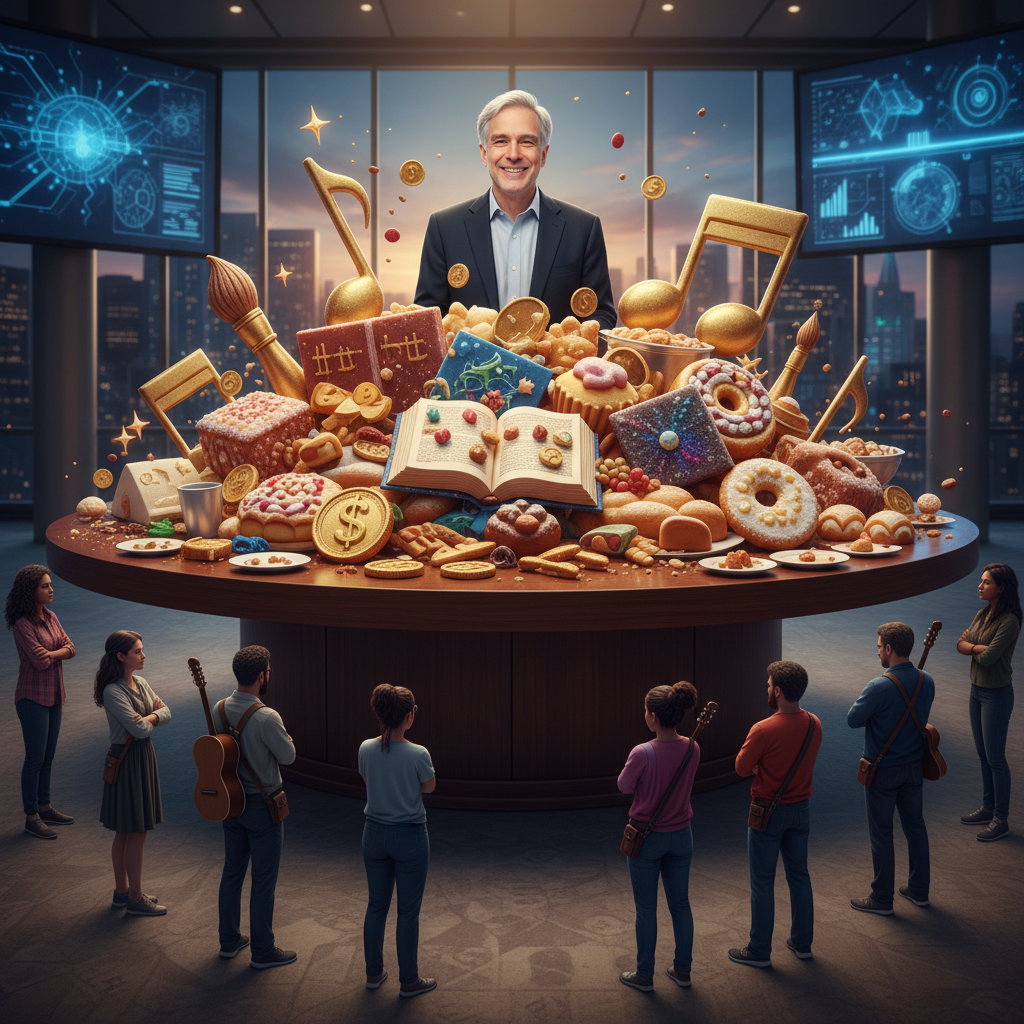
Let's be real. For too long, Silicon Valley has operated like a digital wild west, grabbing whatever data it could get its hands on, then asking for forgiveness later, if at all. Now, with generative AI models like OpenAI's GPT and Google's Gemini churning out text, images, and music that often eerily resemble human-created work, the chickens are finally coming home to roost. Artists, authors, and musicians, from the indie creators in Brooklyn to the best-selling novelists in Los Angeles, are done being the uncredited, unpaid training data for the tech industry's next multi-billion-dollar idea.
This isn't some niche legal squabble; this is the AI copyright war, and it's heating up faster than a summer sidewalk in Phoenix. We're talking about a fundamental challenge to the business model of every major AI company, from OpenAI and Google to Meta and Stability AI. They built their empires on the backs of human creativity, scraping the internet clean of books, artwork, songs, and code, then claiming fair use or transformative new works. But here's what the tech bros don't want to talk about: when your 'transformative' work sounds exactly like a Taylor Swift song or reads like a Stephen King novel, it starts to look a whole lot like theft.
Uncomfortable truth time: the sheer scale of the alleged infringement is staggering. Imagine every book ever published, every song ever recorded, every image ever posted online, all ingested by an algorithm without a single permission slip or royalty payment. That's the accusation. The Authors Guild, representing thousands of writers, has filed lawsuits against OpenAI and others, alleging massive copyright infringement. Sarah Miller, the Guild's executive director, didn't mince words in a recent interview. “Our members' livelihoods are at stake,” she stated plainly. “These AI companies are building products that directly compete with human creators, using our copyrighted material as their raw fuel, and they expect to do it for free. That's not innovation; that's exploitation.”
It's not just authors. Visual artists are up in arms, too. Remember the initial shock when AI art generators started spitting out images in the style of famous artists, sometimes even replicating their signatures? Artists like Karla Ortiz have been vocal, joining class-action lawsuits against companies like Stability AI, DeviantArt, and Midjourney. “My entire career, my unique style, my voice, is being mimicked and monetized by these machines,” Ortiz shared in a panel discussion last month. “It feels like a digital invasion, and the companies behind it just shrug. They think they're above the law.” This sentiment echoes across creative communities, from the galleries of Chelsea to the animation studios of Burbank.
And then there's the music industry. Always quick to protect its intellectual property, the Recording Industry Association of America (riaa) and major labels are circling. While direct lawsuits from the music industry haven't hit the headlines with the same frequency as those from authors and artists just yet, the rumblings are getting louder. Imagine an AI generating a new hit that sounds exactly like a Drake track, or a classical piece indistinguishable from Beethoven. The potential for disruption, and financial harm, is immense. “The music industry has been down this road before with Napster and illegal file sharing,” explained Marcus Thorne, a music industry analyst based in Nashville. “They learned their lesson. They're not going to let AI companies walk all over their rights this time. Expect a full-court press, complete with licensing demands and, yes, more lawsuits.”
This isn't just about the big names, either. This fight impacts every aspiring artist, every struggling writer, every musician trying to make a living. Silicon Valley has a blind spot the size of Texas when it comes to understanding the human cost of their technological advancements. They see data points; we see dreams, livelihoods, and cultural heritage. The argument from tech giants often boils down to fair use, claiming that training an AI model is akin to a human reading a book or listening to music for inspiration. But there's a crucial difference: the AI then reproduces and monetizes that 'inspiration' at an unprecedented scale, often without attribution or compensation.
The legal battles are complex, navigating uncharted waters of copyright law in the digital age. Courts are grappling with questions like: Is an AI model's output truly 'transformative' if it closely resembles the original? Does the act of ingesting copyrighted material for training constitute infringement, even if the output isn't identical? These are not easy questions, and the outcomes will set precedents for decades to come. The stakes are incredibly high, influencing everything from how AI is developed to how creative works are valued in the digital economy.
Legal experts like Professor Angela Chen of Stanford Law School believe the courts will lean towards protecting creators. “While the technology is new, the principles of copyright are not,” Chen noted during a recent legal tech conference. “The core idea is to incentivize creation by granting creators exclusive rights to their work. If AI companies can simply vacuum up all existing creative works without consequence, that incentive disappears. It would be devastating for human creativity.”
What's the solution? Some propose compulsory licensing schemes, similar to how radio stations pay royalties to play music. Others advocate for opt-in systems, where creators explicitly grant permission for their work to be used for AI training, presumably for a fee. OpenAI, for its part, has started to engage with some publishers and news organizations for licensing deals, a tacit acknowledgment that their previous 'scrape first, ask later' strategy might not hold up in court. This move, however, feels more like damage control than a genuine shift in philosophy, especially when compared to the vast amount of data they've already ingested.
This isn't just an American problem, though the bulk of these lawsuits are currently unfolding in U.S. courts. The implications are global. If U.S. courts rule against the tech companies, it could force a fundamental change in how AI models are trained worldwide. Conversely, if the tech giants prevail, it could set a dangerous precedent, essentially giving them a green light to continue building their AI empires on the uncompensated labor of human creators. For more on the global implications of AI regulation, you might want to check out Sam Altman's Vision Versus Beijing's Red Tape: Why Global AI Rules Are a Mess, and What It Means for Costa Rica's Green Future [blocked].
The fight isn't just in the courts. It's also in the court of public opinion. Creators are mobilizing, sharing their stories, and demanding fair treatment. This isn't just about a few disgruntled artists; it's a movement. The tech industry, with its endless venture capital and powerful lobbying arms, may seem invincible, but they are not immune to public pressure or legal precedent. As reported by Wired, the conversation around AI ethics and creator rights is intensifying, moving beyond academic circles into mainstream discourse.
Ultimately, this AI copyright war is a battle for the soul of creativity in the digital age. Will human artists continue to be the engine of culture, fairly compensated for their work, or will they be relegated to mere data points in an algorithm's training set? The answer will define not just the future of AI, but the future of art itself. The tech giants, from Sam Altman at OpenAI to Sundar Pichai at Google, need to understand that creativity is not a free resource to be plundered. It's a sacred trust, and the creators are ready to fight for it. The future of human ingenuity depends on it, and frankly, so does the integrity of our cultural landscape. We're watching, and the world is watching, to see if justice will prevail over unchecked technological ambition. The lawsuits are just beginning, and this story is far from over. Keep an eye on TechCrunch for the latest developments, because this is going to get messy before it gets resolved.