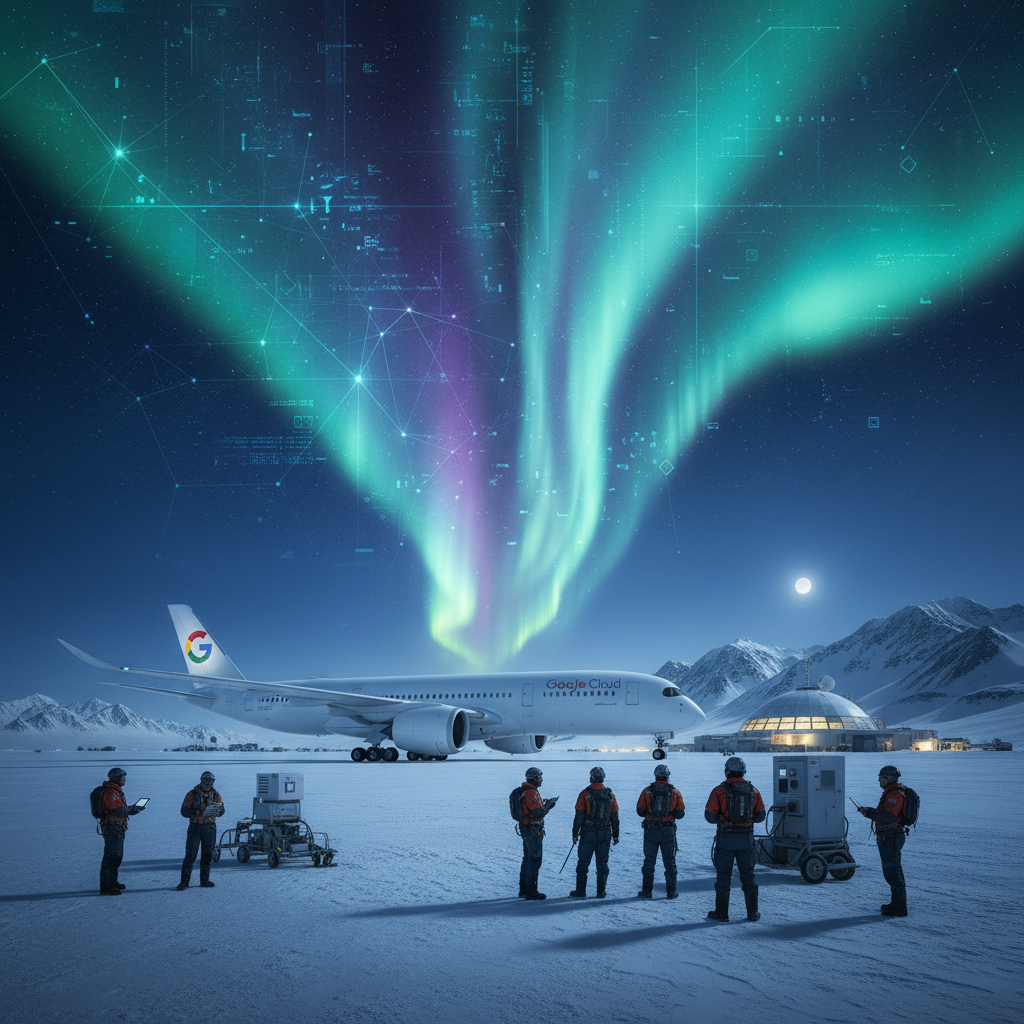

Last night, the aurora lit up our research station, painting the sky with greens and purples that defy description. It is moments like these, under the vast, silent canvas of Antarctica, that I often ponder the grander questions of existence, and how humanity's relentless pursuit of knowledge pushes the boundaries of what is possible. Here, at the very edge of the world, our scientists grapple with the planet's most profound mysteries, often using tools that feel almost as alien as the landscape itself. And increasingly, those tools include artificial intelligence, soon to be supercharged by quantum computing.
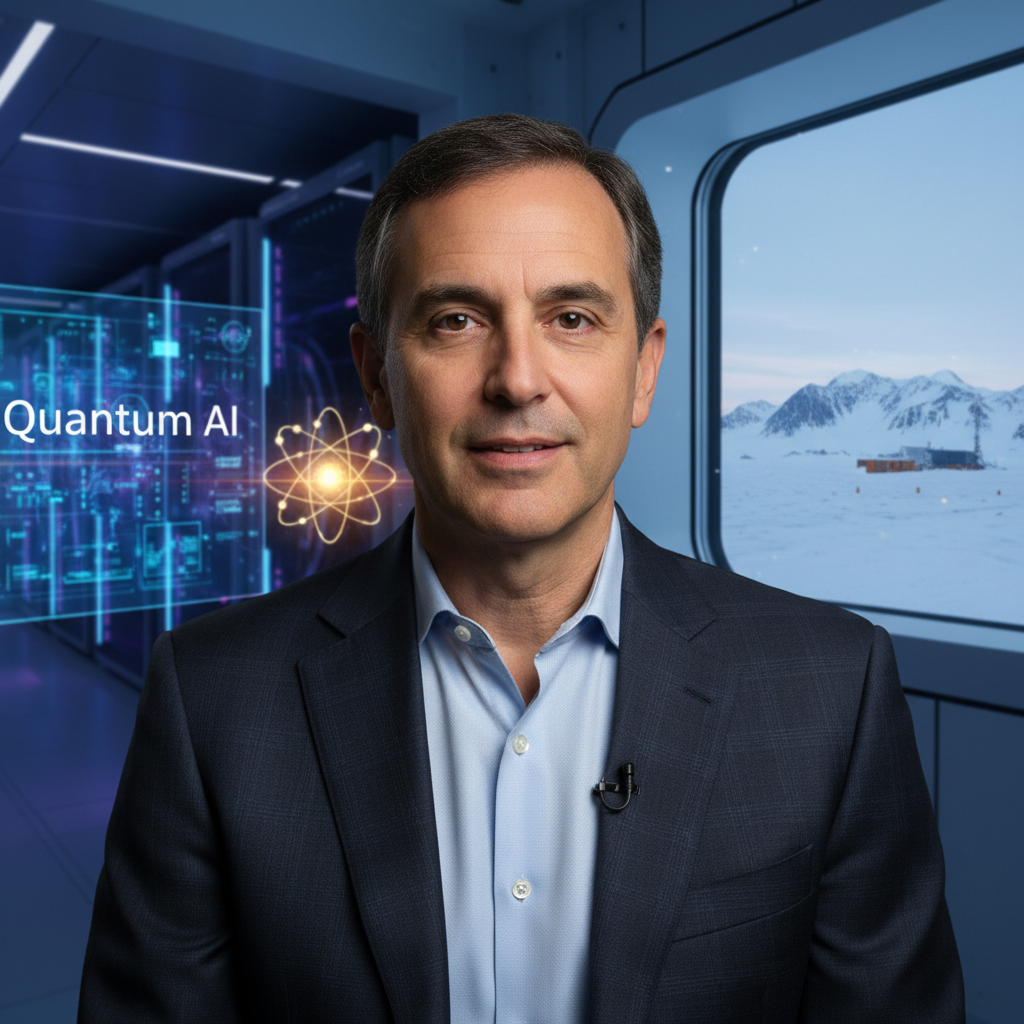
This convergence, the quantum-AI frontier, is not just a theoretical concept debated in distant Silicon Valley boardrooms. It is a tangible force, one that promises to reshape everything from drug discovery to climate modeling, and even our understanding of the cosmos. To truly grasp its potential, I sought out someone who stands at the very forefront of this revolution: Dario Gil, the Senior Vice President and Director of Research at IBM. His name resonates with a quiet authority in the quantum world, a world that feels both impossibly complex and profoundly hopeful.
Speaking with Dario, even across continents and time zones, felt like a journey into the future. He is a man whose passion for science is palpable, a true visionary who sees beyond the immediate challenges to the transformative power of these technologies. Born in Spain, Gil's journey to leading IBM Research, a global powerhouse of innovation, is a testament to dedication. He earned his Ph.D. in electrical engineering and computer science from MIT, a place synonymous with groundbreaking research. His career at IBM has been marked by a steadfast commitment to advancing fundamental science and translating it into real-world impact. He has consistently championed the idea that quantum computing is not just an incremental improvement, but a paradigm shift, much like AI itself.
When we discussed the intersection of quantum and AI, Dario's voice carried a clear sense of purpose. He has often emphasized that these are not separate paths, but rather two sides of the same coin, each poised to unlock capabilities currently beyond our reach. "Quantum computing will allow us to solve problems that even the most powerful classical supercomputers cannot handle," Gil has stated publicly, a sentiment that echoes the profound challenges we face here in Antarctica, from predicting ice sheet dynamics to understanding complex biological systems. "And when you combine that with AI, particularly in areas like optimization and machine learning, you get a synergistic effect that is truly game-changing."
He explained that quantum computers, with their ability to process information using quantum mechanical phenomena like superposition and entanglement, could dramatically accelerate certain types of AI algorithms. Imagine, for instance, an AI model trained to discover new materials for sustainable energy or to design more efficient carbon capture technologies. A classical computer might take millennia to explore the vast combinatorial space of possible molecular structures. A quantum computer, however, could potentially navigate this space with unprecedented speed, finding optimal solutions in a fraction of the time. This is what AI looks like at the end of the world, a tool to help us understand and protect our fragile planet.
IBM, under Gil's leadership, has been a pioneer in making quantum computing accessible. They have been steadfast in their commitment to building a robust quantum ecosystem, from developing quantum processors like the 'Osprey' and 'Condor' to creating cloud-based platforms for researchers and developers. "Our vision at IBM is to bring quantum computing out of the labs and into the hands of a broad community," Gil noted, a goal that resonates deeply with the collaborative spirit we foster in our international research stations. "We are building a full stack, from hardware to software, to enable this future."
One of the most exciting prospects Gil highlighted was the potential for quantum AI in drug discovery and personalized medicine. Here in Antarctica, our medical teams face unique challenges, and the ability to rapidly analyze complex biological data could be revolutionary. Quantum machine learning algorithms, for example, could identify novel drug candidates by simulating molecular interactions with unparalleled accuracy, or personalize treatments by analyzing a patient's unique genetic makeup against a vast database of disease markers. "The complexity of biological systems is immense," Gil has said, "and quantum computing offers a new lens through which to understand and manipulate that complexity for human benefit." You can explore more about IBM's quantum efforts on their research page here.
Of course, the path to a fully realized quantum-AI future is not without its hurdles. Quantum computers are still in their early stages, prone to errors, and require extremely cold temperatures to operate, making them a logistical challenge. But Gil remains optimistic, pointing to the rapid progress being made in quantum error correction and the development of more stable qubits. "We are on a clear roadmap to building fault-tolerant quantum computers," he asserted, emphasizing that while the journey is long, the destination is worth every effort.
His vision also extends to the realm of cybersecurity, a critical concern for any advanced technological society, and especially for remote, sensitive research operations like ours. The advent of powerful quantum computers poses a potential threat to current encryption methods, a scenario known as 'post-quantum cryptography'. IBM has been actively involved in developing and standardizing new cryptographic algorithms that are resistant to quantum attacks. "We are not just building quantum computers, we are also building the defenses against them," Gil explained, underscoring a holistic approach to technological advancement. This proactive stance is essential, as the data gathered from our polar research, from climate models to biodiversity studies, is invaluable and must be protected. You can read more about the broader implications of AI and cybersecurity on sites like TechCrunch.
In the silence of Antarctica, you hear things differently. The hum of the generators, the creak of the ice, the distant cry of a penguin. And sometimes, if you listen closely enough, you can almost hear the faint whisper of a quantum bit, entangled with another, working in harmony with an AI to unravel the universe's secrets. Dario Gil's work and vision offer a beacon of hope, reminding us that even in the most challenging environments, human ingenuity continues to push the boundaries of knowledge. The convergence of quantum computing and AI is not just about faster calculations; it is about a deeper understanding, a new way of seeing the world, and perhaps, a better way to protect it. It is a story of human curiosity, persistence, and the profound impact of technology on our shared future. The challenges of climate change, for example, demand such powerful tools, and the insights gained from quantum AI could be truly transformative for our planet. For a deeper dive into the ethical considerations of such powerful technologies, one might turn to articles on MIT Technology Review.
As I concluded my conversation with Dario, watching the last vestiges of the aurora fade into the Antarctic dawn, I felt a renewed sense of purpose. The work we do here, gathering data from the most remote corners of the Earth, will feed into these advanced AI and quantum systems, creating a feedback loop of discovery. The future, with its quantum algorithms and intelligent machines, is not just arriving; it is being meticulously built, qubit by qubit, algorithm by algorithm, by brilliant minds like Dario Gil and the dedicated teams at IBM, all working towards a future where the impossible becomes possible. It is a future that feels very much alive, even here, at the end of the world. Perhaps even more so. Perhaps this is the very place where such profound shifts will first be truly understood. After all, what is more quantum than the vast, unpredictable beauty of the polar night? And what is more intelligent than humanity's endless quest to comprehend it all? This is what AI looks like at the end of the world: a promise of understanding, a whisper of hope against the vast silence. It reminds me of the article about how AI is reshaping Sweden's fjords and Antarctica's labs, a testament to how global these technologies have become, even in the most remote places. [/article/from-the-ice-to-the-cloud-how-satya-nadellas-ai-gamble-is-reshaping-swedens-fjords-and-antarcticas-labs-molzlwny]