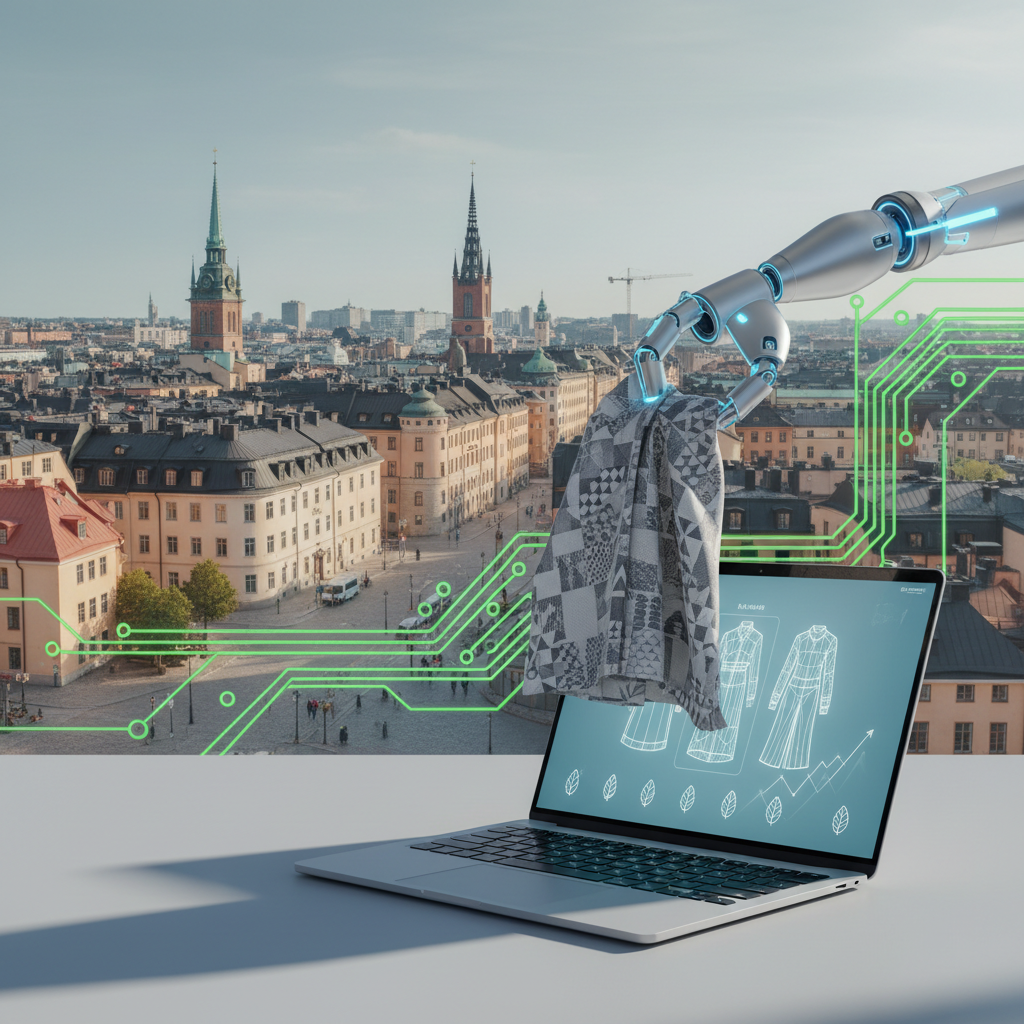

The digital landscape, much like the Baltic Sea, appears vast and open, yet its currents are often dictated by forces far from our shores. Qualcomm's aggressive push for on-device AI in smartphones and edge computing is one such powerful current, promising a new era of privacy, speed, and efficiency. From a systems perspective, the allure is undeniable: processing data locally, reducing latency, and potentially enhancing security by minimizing cloud reliance. Yet, as a journalist observing these developments from Poland, I see not just opportunity, but also a subtle, yet significant, shift in the architecture of control, one that demands our critical attention.
Qualcomm, a dominant force in the mobile chip industry, has been consistently enhancing its Snapdragon platforms with dedicated Neural Processing Units, or NPUs. Their latest offerings, such as the Snapdragon 8 Gen 3 and its successors, boast impressive tera-operations per second, enabling large language models and advanced AI applications to run directly on devices. Cristiano Amon, Qualcomm's CEO, frequently articulates this vision, stating, “On-device AI is fundamental to the future of mobile and edge computing. It will unlock new experiences and empower users with unprecedented capabilities, all while maintaining privacy.” This narrative, emphasizing user empowerment and data privacy, resonates deeply in a Europe increasingly wary of data centralization and surveillance.
However, the question we must ask ourselves, particularly in nations like Poland that have historically valued self-determination, is whether this on-device intelligence truly decentralizes power or merely reconfigures its locus. My argument is provocative, but I believe necessary: Qualcomm's on-device AI, despite its technical brilliance, risks becoming a Trojan horse. It promises autonomy, yet it could subtly reinforce the technological dependency of peripheral nations on a few dominant hardware and software ecosystems.
Consider the implications. The algorithm works like this: for advanced on-device AI to function optimally, it requires not only powerful NPUs but also highly optimized software stacks, developer tools, and proprietary AI models specifically tailored for these architectures. Qualcomm, alongside its partners, is investing heavily in these ecosystems. This creates a formidable barrier to entry for smaller players, including our burgeoning Polish AI startups and research institutions. While the immediate benefit to the end-user is a faster, more responsive device, the long-term consequence could be a further narrowing of the field of innovation, pushing us towards a future where the definition of 'smart' is dictated by a handful of global corporations.
We saw a similar dynamic with the rise of personal computing and later, cloud computing. Initially, each promised decentralization, yet both eventually led to significant consolidation of power in the hands of a few tech giants. The shift to on-device AI, while technically distinct, follows a familiar pattern. It moves the computational burden, but not necessarily the intellectual or economic control, away from the cloud. The underlying models, the training data, and the core frameworks still largely originate from a few dominant players in Silicon Valley and Beijing.
One might counter, quite reasonably, that on-device AI enhances privacy by keeping sensitive data off remote servers. This is a valid point. For applications like personalized health monitoring, local image processing, or real-time language translation, the privacy benefits are clear. As Reuters recently reported, data security is a primary driver for many enterprises adopting edge AI solutions. However, privacy is not synonymous with sovereignty. Our digital sovereignty, particularly in Europe, hinges on our ability to develop, control, and audit the foundational technologies that underpin our society. If the most advanced AI capabilities are inextricably tied to specific, proprietary hardware and software stacks, our capacity for genuine independent innovation diminishes.
Poland's engineering talent explains why this issue resonates so strongly here. We have a vibrant tech sector, with universities like AGH University of Science and Technology in Kraków and Warsaw University of Technology producing world-class engineers and researchers. Many of these brilliant minds are working on open-source AI frameworks, federated learning, and privacy-preserving machine learning. Their work aims to build an AI future that is more transparent, auditable, and truly decentralized. However, the proprietary nature of much on-device AI development, with its tightly integrated hardware and software, often sidelines these efforts. It creates a 'black box' at the very edge of our networks, making it harder for independent developers or regulators to understand, verify, or even adapt the underlying AI models.
Furthermore, the sheer computational power required for the most advanced on-device AI models means that only premium devices, often from a few major manufacturers, will truly benefit. This creates a digital divide, not just between those with internet access and those without, but between those with 'smart' AI and those with 'dumb' AI. This exacerbates existing inequalities and limits access to cutting-edge tools for a significant portion of the global population, including many in Central and Eastern Europe who rely on more affordable devices.
The challenge, then, is not to reject on-device AI outright. Its technical merits for efficiency and certain privacy aspects are undeniable. The challenge is to ensure that its implementation does not inadvertently centralize power further. We need open standards, transparent development practices, and robust regulatory frameworks that demand interoperability and auditability, even for AI operating at the device edge. We must advocate for the ability to swap out or modify AI models on our devices, much like we can choose our operating systems or applications.
The European Union, with its pioneering AI Act, has taken a significant step towards regulating AI. However, this act primarily focuses on high-risk AI systems and their deployment. The more subtle influence of proprietary hardware and software ecosystems at the device level also requires scrutiny. We need to ensure that the promise of on-device intelligence does not become a gilded cage, offering convenience in exchange for control. As MIT Technology Review often highlights, the intersection of hardware, software, and policy is where the true battle for technological autonomy will be fought.
Ultimately, the future of AI, whether in the cloud or on our devices, must be one that empowers individuals and nations, not one that merely shifts the levers of control to a new set of gatekeepers. Poland, and indeed Europe, must push for an open, auditable, and truly decentralized AI future, lest we find ourselves merely spectators in a game whose rules are written elsewhere.