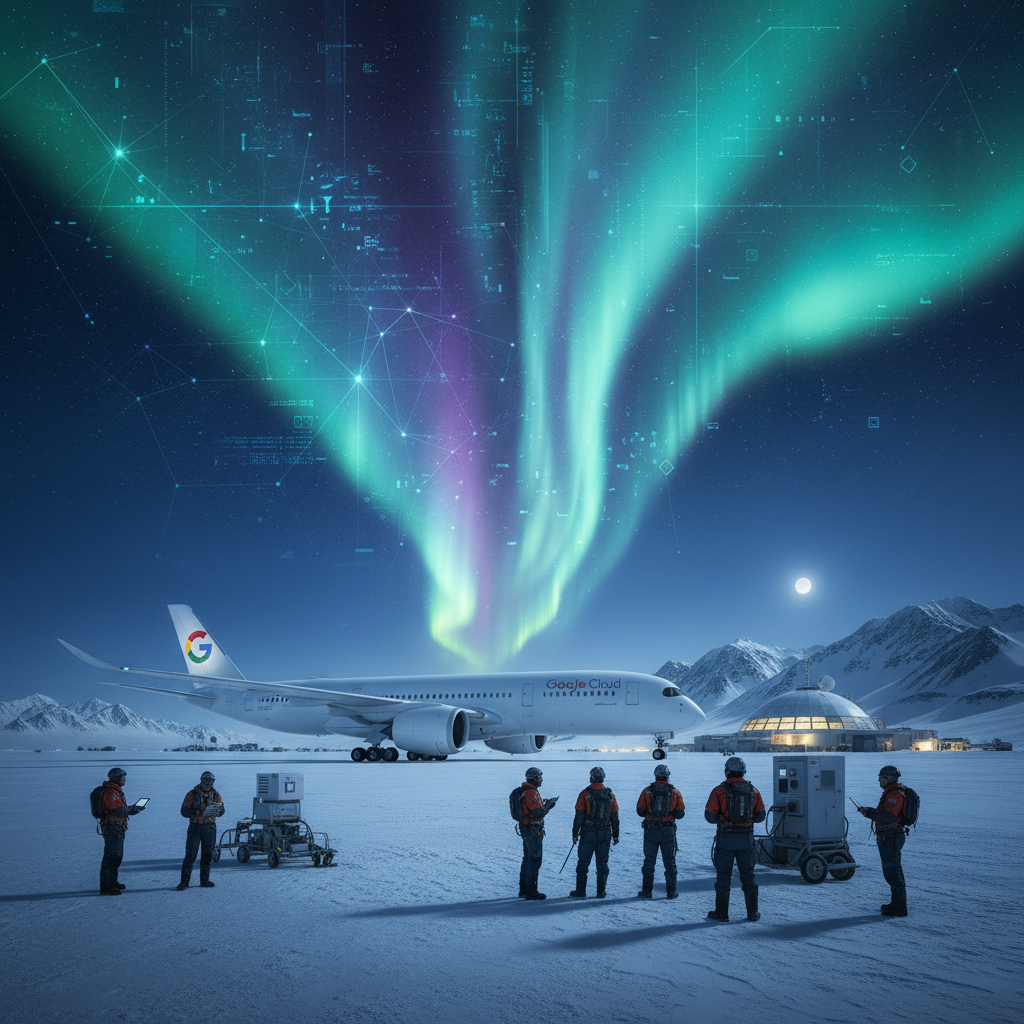
From the desolate, wind-swept plains of the Antarctic, where the very air crystallizes our breath into visible data, the world of artificial intelligence often appears as a distant, yet profoundly impactful, phenomenon. Here, at Vostok Station, our instruments meticulously record atmospheric conditions, ice core data, and cosmic rays, operating under conditions where even the simplest technology can falter. At -40°C, technology behaves differently, and the reliability of data is paramount. This rigorous environment shapes our perspective on information, making the rapid proliferation of AI-generated video, championed by entities like Pika Labs, a subject of intense scrutiny.
The ambition of Pika Labs, alongside competitors such as Runway ML and Google's Veo, is to democratize video creation, transforming text prompts into dynamic visual narratives. This is not merely an evolution of digital tools; it is a fundamental shift in how information can be manufactured and consumed. The vision is clear: a 'YouTube of AI-generated content' where anyone can produce high-quality video with minimal effort. While the creative potential is undeniable, the concomitant risks to truth and societal stability are profound, particularly when considering the delicate balance of scientific communication and geopolitical narratives.
The Risk Scenario: A Blizzard of Fabricated Reality
The primary risk stems from the ease with which hyper-realistic, yet entirely fabricated, video content can be produced and disseminated. Imagine a scenario where meticulously crafted deepfake videos depicting false scientific discoveries or geopolitical events are indistinguishable from genuine footage. For a region like Antarctica, which is a global scientific commons, the integrity of visual evidence is critical. Misinformation campaigns could exploit this technology to sow doubt about climate change data, territorial claims, or even the safety of scientific expeditions. A video could depict a catastrophic ice shelf collapse with altered timelines or causes, or show fabricated environmental damage attributed to a specific nation's research activities, thus undermining international cooperation and scientific consensus.
Dr. Anya Petrova, a leading glaciologist at the Russian Antarctic Expedition, articulated this concern during a recent virtual seminar. "Our work relies on verifiable data and shared trust," she stated. "If AI can generate convincing footage of, for example, a non-existent drilling operation or an accelerated glacial melt that contradicts all ground observations, the very foundation of evidence-based policy making for this continent is jeopardized. The data from our Antarctic station reveals the slow, methodical pace of natural processes, which can be easily misrepresented by instantaneous AI fabrication." This highlights the vulnerability of scientific discourse to visually compelling, yet factually baseless, narratives.
Technical Explanation: The Generative Adversarial Network at Play
At the core of these advanced video generation systems are sophisticated models, often variants of Generative Adversarial Networks (GANs) or diffusion models. These architectures learn to produce highly realistic images and sequences by training on vast datasets of existing video content. A 'generator' network creates new video frames, while a 'discriminator' network attempts to distinguish these synthetic frames from real ones. Through this adversarial process, the generator becomes incredibly adept at fooling the discriminator, leading to outputs that are increasingly difficult for humans to identify as artificial. Companies like Pika Labs have refined these models, making them more accessible and user-friendly, pushing the boundaries of what was previously possible only with extensive computational resources and specialized expertise. The advent of models that can generate consistent, high-fidelity video from simple text prompts, often in mere minutes, marks a significant leap in this capability.
These systems are not merely stitching together existing footage; they are creating novel visual information. The control over elements like character movements, lighting, camera angles, and scene composition is becoming increasingly granular. This technical prowess, while a marvel of engineering, is precisely what makes the potential for misuse so potent. As detailed in recent analyses by MIT Technology Review, the speed and quality of these generations are accelerating at an exponential rate, outpacing the development of robust detection mechanisms.
Expert Debate: Innovation Versus Regulation
The debate surrounding AI video generation mirrors many discussions in the broader AI safety community. On one side are the proponents of rapid innovation, arguing that the benefits of democratized creativity and storytelling outweigh the risks. They emphasize the potential for new forms of art, education, and entertainment. "The ability for a single individual to produce Hollywood-quality visuals from their laptop is a creative revolution," remarked Dr. Elena Volkov, a computational media specialist at the Moscow Institute of Physics and Technology. "We must foster this innovation, not stifle it, while simultaneously developing robust ethical frameworks and watermarking technologies." She points to the potential for AI to aid in scientific visualization, making complex Antarctic phenomena, for example, more accessible to a global audience.
Conversely, a growing chorus of experts, including those at organizations like Anthropic and OpenAI, advocate for proactive regulation and stringent safety measures. They highlight the potential for widespread disinformation, identity theft, and the erosion of trust in visual media. Professor Mikhail Kuznetsov, a legal scholar specializing in digital rights at Saint Petersburg State University, articulated this perspective. "The 'move fast and break things' ethos is utterly incompatible with the potential for societal disruption posed by unchecked AI video," he asserted. "We need clear legal liabilities for platforms that host harmful AI-generated content and mandatory provenance tracking for all synthetic media. Without it, we risk a digital Wild West where truth is merely a suggestion." These concerns are amplified in contexts where visual media is often taken as irrefutable proof, such as in legal proceedings or journalistic reporting.
Real-World Implications: The Polar Echo
The implications extend far beyond abstract ethical debates. For Russia and its scientific endeavors in the Antarctic, the rise of sophisticated AI video presents tangible challenges. Consider the meticulous documentation required for environmental compliance or international treaties governing the continent. Fabricated videos could be used to falsely accuse research stations of environmental violations, leading to diplomatic incidents or sanctions. Conversely, deepfakes could be employed to discredit genuine environmental activism or scientific findings that challenge powerful interests. The unique geopolitical status of Antarctica, governed by the Antarctic Treaty System, makes it particularly susceptible to information warfare tactics, where visual evidence can sway public opinion and international policy.
Furthermore, the economic impact on traditional media and content creation industries is substantial. As AI tools become more adept, the demand for human videographers, editors, and even actors could diminish, leading to significant job displacement. This economic shift, while perhaps less immediate in the remote Antarctic, will ripple globally, affecting the livelihoods of millions. The challenge is not just about detecting fakes, but about adapting economies to a world where synthetic media is ubiquitous. As The Verge recently documented, the creative industry is already grappling with these seismic shifts.
What Should Be Done: A Collaborative Icebreaker
Addressing these multifaceted risks requires a concerted, multi-pronged approach. Firstly, technological solutions are paramount. The development of robust AI detection tools, digital watermarking, and cryptographic provenance systems for all synthetic media must be accelerated. Initiatives like the Coalition for Content Provenance and Authenticity (C2PA) offer a promising framework, but adoption needs to be universal and mandatory. Researchers at institutions like the Kurchatov Institute in Russia are already exploring advanced forensic AI to identify subtle artifacts left by generative models.
Secondly, legislative and regulatory frameworks are urgently needed. Governments must establish clear legal definitions for AI-generated content, assign liability for misuse, and mandate transparency from platforms. This includes international cooperation, perhaps through bodies like the United Nations, to create global standards for AI safety and content authenticity, particularly for sensitive regions like Antarctica. The European Union's AI Act provides a starting point, but its scope must expand to address the specific challenges of synthetic media at scale.
Thirdly, public education is crucial. Media literacy programs must be updated to equip citizens with the critical thinking skills necessary to navigate a landscape saturated with AI-generated content. People need to understand not just what deepfakes are, but how they are made and why they are used. This is particularly vital for younger generations who are digital natives but may lack the discernment to question sophisticated synthetic visuals.
Finally, the scientific community must proactively engage with these technologies. Researchers should explore how AI video can be used responsibly for education and outreach, while simultaneously developing ethical guidelines for its use in scientific communication. Science at the bottom of the world demands unwavering commitment to truth, and our vigilance against the permafrost of fabricated reality must be as unyielding as the Antarctic ice itself. The race to build the YouTube of AI-generated video is underway, but the true victory will not be in speed, but in ensuring that the digital content we consume remains tethered to verifiable truth.