
Mon Dieu, the arrogance of Big Tech. While the world fawns over the latest AI models, few truly grasp the precarious foundations upon which this digital empire is built. We speak of intelligence, of innovation, yet we remain utterly dependent on a handful of companies for the very silicon that powers these dreams. I am speaking, of course, about the global economic shifts and trade wars that are not merely reshaping, but actively fracturing, the technology supply chain. Is this a temporary inconvenience, a mere blip on the radar, or the new normal that will define our digital future for decades to come?
The answer, from my perspective here in France, is unequivocally the latter. This is not a fad, my friends, it is a tectonic shift. For too long, we in Europe have been content to be consumers, to marvel at the innovations birthed in Silicon Valley or Shenzhen, without truly questioning the underlying power dynamics. Now, with the geopolitical winds howling, the fragility of this arrangement is laid bare.
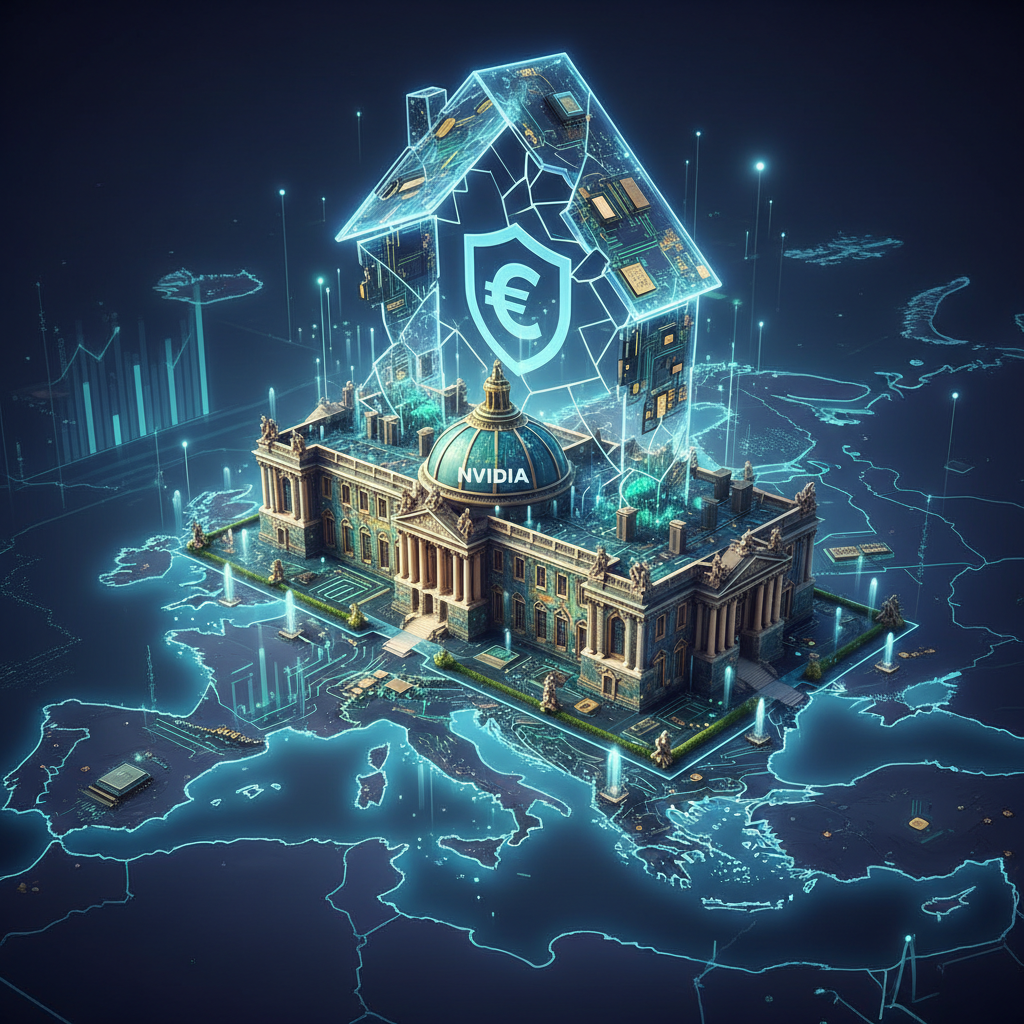
Let us consider the elephant in the server room: NVIDIA. Jensen Huang, a visionary no doubt, has built an empire on graphics processing units, GPUs, that are now the indispensable currency of the AI age. From OpenAI's latest GPT iterations to the most ambitious research projects at Google DeepMind, everyone needs NVIDIA's chips. In 2023, NVIDIA reportedly controlled over 90 percent of the market for AI chips, a staggering dominance. This is not just about computing power; it is about strategic control. Every AI model, every breakthrough, every digital service, relies on this single choke point.
Historically, such dependencies have always led to vulnerabilities. Think of the oil crises of the last century. Nations that did not control their energy supply were at the mercy of those who did. Today, data is the new oil, and AI chips are the new refinery. The United States, through companies like NVIDIA and Intel, and to a lesser extent Taiwan through Tsmc, holds immense leverage. When Washington decides to impose export controls, as it has done with China, the ripple effects are felt globally. This is not merely about trade; it is about national security, digital sovereignty, and economic independence.
Here in Europe, we are caught in the middle. We champion ethical AI, data privacy, and robust regulation with our EU AI Act. We strive for a human-centric approach. Yet, when it comes to the hardware that underpins this vision, we are largely reliant on external powers. This is a paradox, a fundamental contradiction that we must address with urgency. The European way is not the American way, and that is the point. We cannot build a truly European AI ecosystem if its very foundations are controlled by others.
Expert opinions echo this growing concern. Thierry Breton, the European Commissioner for Internal Market, has repeatedly stressed the need for Europe to reduce its strategic dependencies in critical technologies. He has spoken of the importance of building European capabilities in semiconductors, cloud infrastructure, and AI models. “We cannot afford to be dependent on non-European players for the essential components of our digital future,” Breton stated in a recent address, emphasizing the need for robust domestic production and innovation. This sentiment is not new, but the urgency has escalated.
Even within the industry, voices are rising. Dario Amodei, CEO of Anthropic, while focused on AI safety, has also acknowledged the concentration of power in the chip supply chain. While not directly criticizing NVIDIA, the sheer market dominance creates a bottleneck that affects everyone. The cost of these chips, driven by demand and limited supply, is astronomical. A single NVIDIA H100 GPU can cost upwards of $30,000, making advanced AI research and deployment an incredibly expensive endeavor, accessible only to the wealthiest corporations and nations. This creates an uneven playing field, stifling competition and concentrating AI development in a few hands.
What does this mean for France, for Europe? It means we must invest, and invest boldly, in our own capabilities. We cannot simply buy our way out of this dependency. We need to foster a new generation of European chip designers, manufacturers, and AI hardware innovators. Initiatives like the European Chips Act, which aims to mobilize 43 billion euros in public and private investment to boost chip production, are a step in the right direction. But are they enough? We need to move beyond aspirations and into aggressive execution.
Consider Mistral AI, a French startup that has garnered significant attention and investment. They are developing powerful large language models, but even they, with all their European funding and talent, rely on NVIDIA's hardware for training and inference. This highlights the systemic nature of the problem. We are building magnificent cathedrals, but the bricks are imported.
France says non to Silicon Valley's vision of a world where all digital roads lead to their data centers and their chips. We must cultivate our own digital garden, with our own soil, our own seeds, and our own gardeners. This means supporting companies like STMicroelectronics, investing in research at institutions like CEA-Leti, and fostering a vibrant ecosystem of startups that can challenge the established order. It means promoting open source hardware initiatives and exploring alternative architectures. It means taking control of our destiny.
The global economic shifts are not just about tariffs and trade agreements; they are about fundamental power. The technology supply chain is no longer a neutral, efficient global network. It is a battleground, and Europe must arm itself. We have the intellect, the talent, and the will. What we need now is the strategic vision and the unwavering commitment to build our own digital sovereignty, chip by chip, innovation by innovation. Otherwise, we risk becoming a digital colony, forever beholden to the whims of others. This is not just about economics; it is about our identity, our culture, and our future. The time for polite requests is over. It is time for action. For more insights into how Europe is navigating this complex landscape, one might look to analyses of the broader European tech scene, such as those found on TechCrunch or Wired. The future of our digital independence depends on it.