
The crisp April air in Montreal carries more than just the scent of spring today. It hums with the electric charge of a major announcement that could fundamentally alter the landscape of one of Canada's most vital industries: mining. In a move that has sent ripples through both the tech and resource sectors, the Quebec government, in collaboration with industry giant IBM, has unveiled a new strategic initiative to deploy cutting-edge artificial intelligence across the province's vast mining operations. This isn't just a pilot project, it's a full-scale commitment, and it feels like a genuine game-changer.
For decades, Canada has been a global leader in natural resources, our economy deeply intertwined with the riches beneath our feet. But the methods, while robust, have often been traditional, even antiquated in some respects. Now, with the world clamoring for critical minerals essential for everything from electric vehicles to advanced electronics, the pressure to innovate is immense. Enter AI, not as a replacement for human ingenuity, but as its powerful augment. This new pact, reportedly backed by a significant multi-year investment from both public and private coffers, aims to integrate AI into every stage of the mining lifecycle, from subterranean exploration to extraction optimization and, crucially, worker safety.
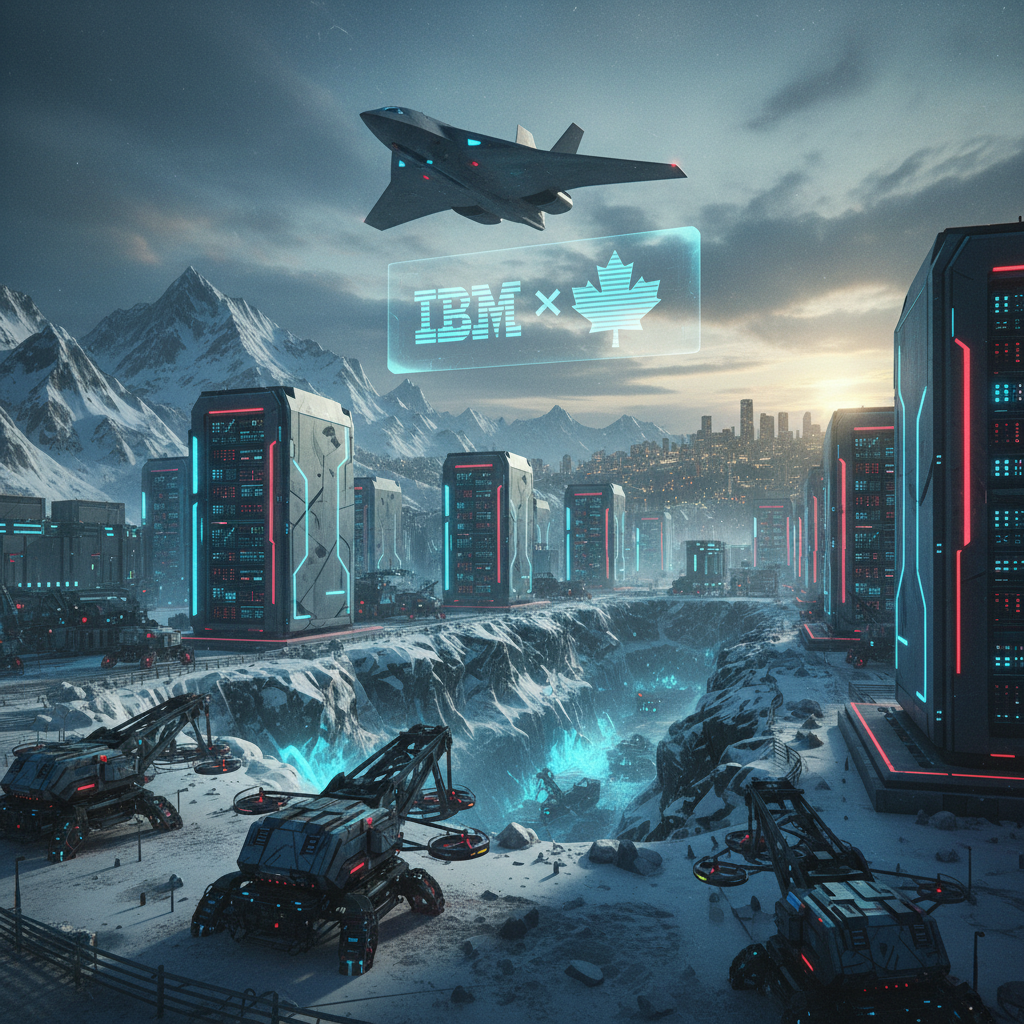
Let me break down what this means. Imagine AI models sifting through geological data, satellite imagery, and seismic readings with a speed and precision no human team could ever match, identifying promising new deposits in remote northern territories. Think about predictive analytics optimizing the routes of autonomous haul trucks, minimizing fuel consumption and wear and tear. Picture AI-powered sensors monitoring structural integrity in underground tunnels, flagging potential hazards long before they become critical. This isn't science fiction anymore, it's the operational reality Quebec is now pursuing.
The official reactions have been overwhelmingly positive, and frankly, a little relieved. Quebec Premier François Legault, speaking at the announcement in Montreal, emphasized the strategic importance of the initiative. "Quebec possesses immense natural wealth, and with this partnership, we are not just extracting resources, we are extracting value in a smarter, more sustainable way," Legault stated, his voice resonating with pride. "This is about securing our economic future, creating high-tech jobs right here in Quebec, and leading the world in responsible resource development. We are leveraging our strengths, our innovation capacity, and our incredible talent pool."
From IBM's side, the enthusiasm was palpable. Arvind Krishna, Chairman and CEO of IBM, highlighted the potential for transformative impact. "Our collaboration with Quebec represents a significant step forward in applying hybrid cloud and AI technologies to complex industrial challenges," Krishna remarked via video link from Armonk, New York. "The mining sector is ripe for disruption, and by bringing our Watson AI capabilities and expertise in industrial IoT to the table, we believe we can help Quebec achieve new benchmarks in operational efficiency, environmental stewardship, and most importantly, worker safety. This is about creating intelligent operations from the ground up."
But what do the experts think? Montreal's AI scene is world-class, here's the proof, and the local academic community has been quick to weigh in. Dr. Yoshua Bengio, the scientific director of Mila, the Quebec AI Institute, expressed cautious optimism, stressing the need for ethical deployment. "The research is fascinating, and the potential for AI to enhance safety and efficiency in mining is undeniable," Dr. Bengio told DataGlobal Hub. "However, we must ensure that these systems are developed and deployed responsibly, with robust oversight and a focus on human well-being. This is not just about profit, it is about people, and the environment. We need to avoid algorithmic bias in geological surveys and ensure that autonomous systems are truly fail-safe."
Indeed, the safety aspect is a major selling point. Mining, by its very nature, is a hazardous profession. According to statistics from Natural Resources Canada, while safety has improved significantly over the decades, incidents still occur. The promise of AI to predict equipment failures, monitor air quality, detect unstable ground, and even guide rescue operations in real time could dramatically reduce risks. Imagine a miner's helmet equipped with an AI assistant, constantly analyzing the environment and providing immediate alerts. This is the kind of future this partnership envisions.
The implications extend beyond Quebec's borders. Canada is a vast country, rich in minerals, and what succeeds here could become a blueprint for other provinces and even other nations. The global demand for critical minerals like lithium, nickel, and cobalt is skyrocketing, driven by the clean energy transition. Countries are scrambling to secure supply chains, and Canada, with its stable political environment and commitment to responsible practices, is uniquely positioned to capitalize on this. This AI initiative could give Canadian miners a crucial competitive edge, allowing them to extract resources more economically and sustainably than rivals.
What happens next? The immediate focus will be on integrating IBM's AI platforms, including their advanced analytics and machine learning tools, with existing operational data from Quebec's major mining companies. Pilot projects are expected to roll out in select sites over the next 12 to 18 months, focusing initially on predictive maintenance, geological modeling, and autonomous fleet management. Training programs for the existing workforce will be critical, ensuring that human operators are equipped to work alongside these intelligent systems, not replaced by them. This is about upskilling, not downsizing.
This isn't just about technology, it's about sovereignty. As global supply chains become increasingly volatile, the ability to independently and efficiently extract our own resources becomes paramount. This partnership represents a strategic investment in Canada's future, safeguarding our economic interests and strengthening our position on the world stage. It's a bold bet on the power of Canadian innovation and the transformative potential of AI.
Why should you care? Because the metals and minerals extracted from these mines are the very building blocks of our modern world. From the smartphone in your hand to the electric car in your driveway, these resources are indispensable. Making their extraction safer, more efficient, and more environmentally sound benefits everyone. This initiative isn't just about a few mines in Quebec; it's about setting a new global standard for how we interact with our planet's resources, powered by the smartest technology humanity has ever created. For more on how AI is impacting global industries, you can follow developments on Reuters Technology or TechCrunch AI. The future of mining, it seems, will be written in code as much as it is in rock.
This is a story about Canada's embrace of a future where hard hats meet neural networks, where the rugged terrain of the north becomes a proving ground for cutting-edge algorithms. It's a testament to the idea that even the oldest industries can be revitalized with a healthy dose of innovation and a commitment to progress. For more in-depth analysis on how AI is transforming various sectors, including defense and security, keep an eye on our coverage, such as our article on Washington's AI Gold Rush: Will Jamaican Voices Be Heard Above the Lobbyists' Din? [blocked].